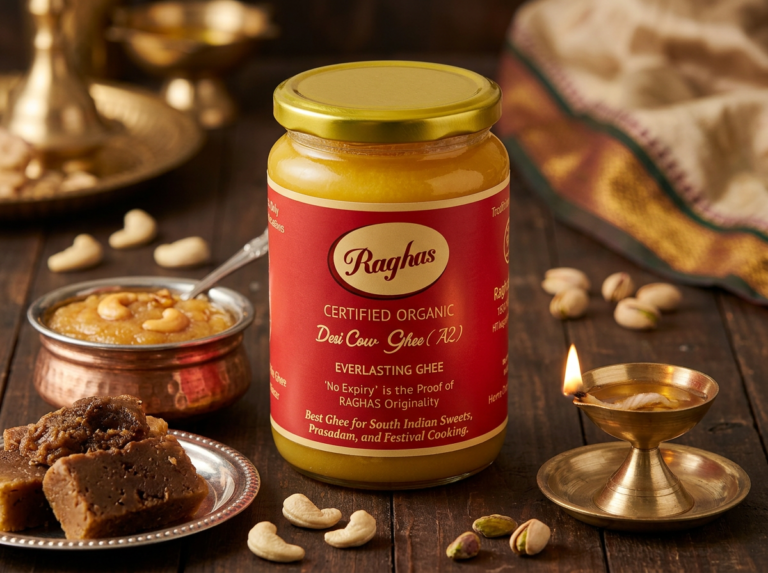
A2 Bilona Ghee vs Regular A2 Ghee: What’s the Difference?
A2 Bilona Ghee vs Regular A2 Ghee: What’s the Difference?
A2 Bilona ghee is made by hand-churning curd from A2 desi cow milk using the ancient Bilona method, while regular A2 ghee is made by machine-separating cream directly from A2 milk. The difference lies in the process — and that process changes the nutrition, flavour, and quality of the final ghee dramatically.
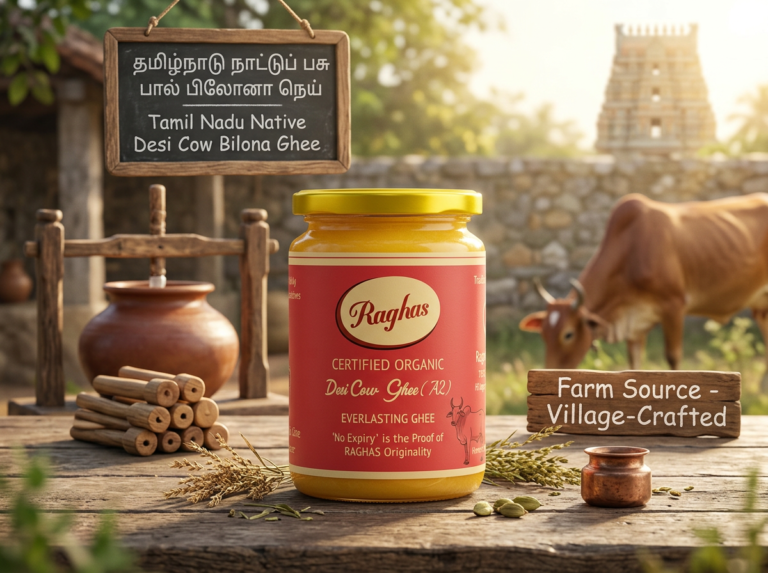
At Raghas Dairy, we make every batch of ghee using the traditional Bilona method with milk from milk sourced from Tamil Nadu native desi cows raised in Madurai. This article explains exactly what sets Bilona ghee apart, so you can make an informed choice.
Table of Contents
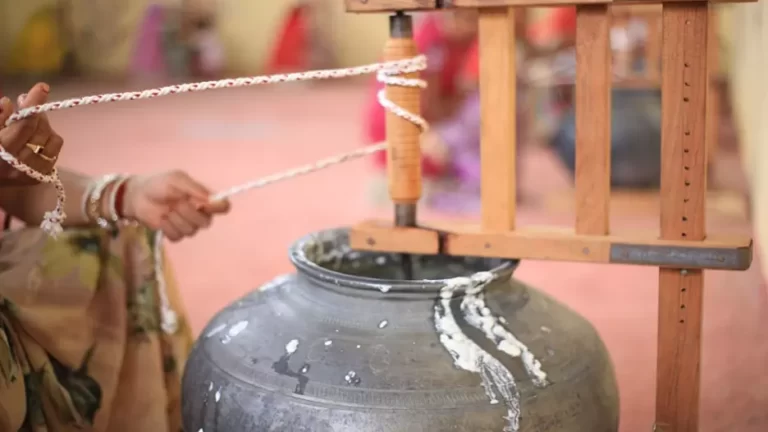
What Is the Bilona Method?
The Bilona method is a centuries-old Indian technique for making ghee. Here’s how it works:
- Milk is boiled and cooled — Fresh A2 cow milk is gently boiled and allowed to cool to room temperature.
- Curd is set — A natural starter culture is added. The milk ferments overnight into thick dahi (curd).
- Curd is hand-churned — Using a wooden churner (bilona), the curd is churned slowly. This separates the butter (makkhan) from the buttermilk.
- Butter is slow-cooked — The makkhan is heated on a low flame until the water evaporates and the milk solids settle, leaving pure golden ghee.
The key difference: the entire process goes through a curd stage. This fermentation step is what gives Bilona ghee its distinct cooking profile.
How Regular A2 Ghee Is Made
Regular A2 ghee skips the fermentation step entirely:
- Cream is separated — A mechanical cream separator extracts cream directly from A2 milk.
- Cream is heated — The cream is heated at high temperatures to produce ghee.
This method is faster and yields more ghee per litre of milk. But it misses the probiotic fermentation that makes Bilona ghee nutritionally richer.
How bilona ghee is made the traditional way
Key Differences: Bilona vs Regular A2 Ghee
| Parameter | A2 Bilona Ghee | Regular A2 Ghee |
|---|---|---|
| Process | Curd → hand-churned → slow-cooked | Cream separated → heated |
| Fermentation | Yes (overnight curd setting) | No |
| Milk required per litre | 25–30 litres | 15–20 litres |
| Temperature | Low and slow | High heat |
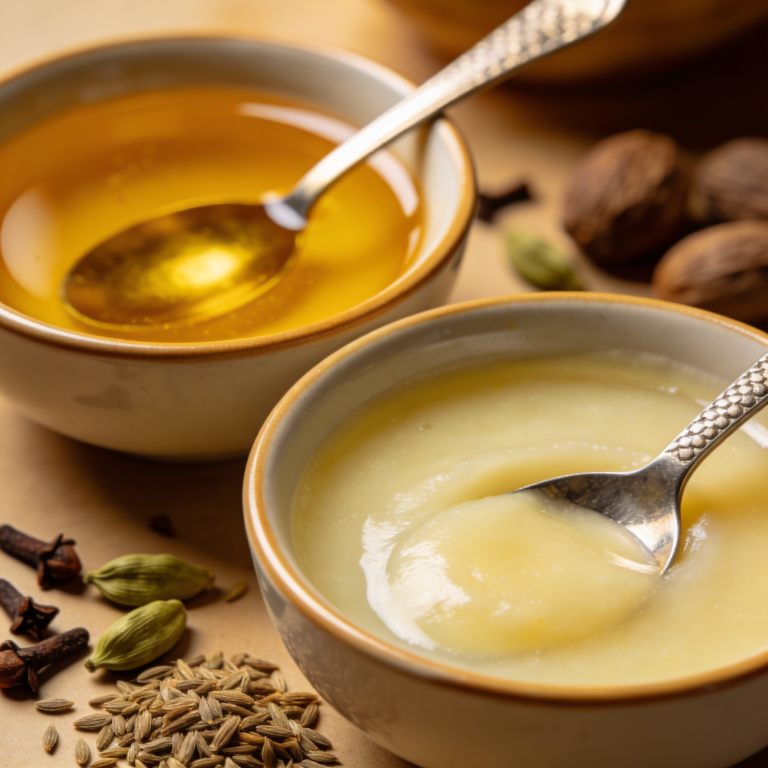
| Colour | Deep golden yellow | Light to medium yellow |
| Texture when set | Grainy, granular | Smooth, uniform |
| Aroma | Rich, nutty, earthy | Mild, less complex |
| Shelf life | 12+ months (naturally) | 12+ months |
Nutritional Comparison
The fermentation stage in the Bilona process makes a measurable difference:
- Fat-soluble vitamins (A, D, E, K2) — Better preserved due to low-temperature processing. Vitamin K2 in particular supports calcium absorption and heart health.
- CLA (Conjugated Linoleic Acid) — Higher in Bilona ghee. CLA is linked to improved metabolism and anti-inflammatory properties.
- Butyric acid — The fermentation process enhances butyrate content, which supports gut lining health.
- Omega-3 to Omega-6 ratio — More favourable in Bilona ghee from desi cow breeds, especially grass-fed native breeds like Kangayam and Bargur.
Regular A2 ghee still contains A2 beta-casein protein (in trace amounts from milk solids), but the high-heat process degrades some of the delicate nutrients.
Taste and Texture Differences
If you’ve tasted both, you already know.
Bilona ghee has a deep, complex flavour — nutty, slightly sweet, with an earthy richness that comes from the fermented curd. When you open a jar, the aroma fills the room. The texture is grainy when solid, which is a sign of authentic slow-cooked ghee.
Regular A2 ghee tastes cleaner and milder. It’s perfectly fine for cooking, but it lacks the depth that makes Bilona ghee special for rice, dal, or a simple roti.
At Raghas Dairy, our customers often tell us they can smell the difference before they even taste it. That’s the Bilona process at work.
Why the Price Difference?
Bilona ghee costs more — and there’s a genuine reason. Here’s the math:
- Milk yield: 25–30 litres of milk for 1 litre of Bilona ghee vs 15–20 litres for regular
- Labour: Hand-churning takes 30–45 minutes per batch. Machine separation takes seconds.
- Time: Curd needs to set overnight. You can’t rush fermentation.
- Native cow source: Tamil Nadu native desi cows give lower daily milk yields than commercial HF cows, which is one reason traditional ghee costs more.
Learn more about why A2 ghee is expensive — it comes down to honest economics, not marketing markup.
Which Should You Buy?
Choose A2 Bilona ghee if:
- You want maximum nutritional benefit
- You value traditional, time-tested methods
- You use ghee for Ayurvedic purposes or pooja
- You appreciate rich flavour and aroma in cooking
- You want to support native breed conservation
Regular A2 ghee is acceptable if:
- Budget is a primary concern
- You use ghee mainly for high-heat frying where subtle flavours don’t matter
For us at Raghas Dairy, the choice is clear. We’ve seen the difference in the milk, in the process, and in the final product. Every jar we sell is Bilona-made — no shortcuts.
Try Raghas Dairy A2 Bilona Ghee
Made from milk sourced from Tamil Nadu native desi cows in Madurai. Free shipping on orders above ₹1,750.
Frequently Asked Questions
Is A2 Bilona ghee better than regular A2 ghee?
Yes. A2 Bilona ghee retains more fat-soluble vitamins (A, D, E, K2) and CLA because the traditional curd-churning process uses lower temperatures than machine separation. It also has a richer aroma and grainy texture that regular A2 ghee lacks.
Why is Bilona ghee more expensive than regular A2 ghee?
Bilona ghee requires about 25–30 litres of milk to produce 1 litre of ghee, compared to 15–20 litres for machine-separated ghee. The hand-churning process is also more time-intensive, which adds to the cost.
How can I tell if my ghee is truly Bilona-made?
Genuine Bilona ghee has a grainy texture when set, a deep golden colour, and a rich nutty aroma. It melts quickly on warm skin. Always buy from trusted brands that are transparent about their process.
Written by the Raghas Dairy Team — makers of A2 Bilona ghee from Tamil Nadu native cow breeds, based in Madurai.
Frequently Asked Questions
What makes A2 desi ghee different from regular ghee?
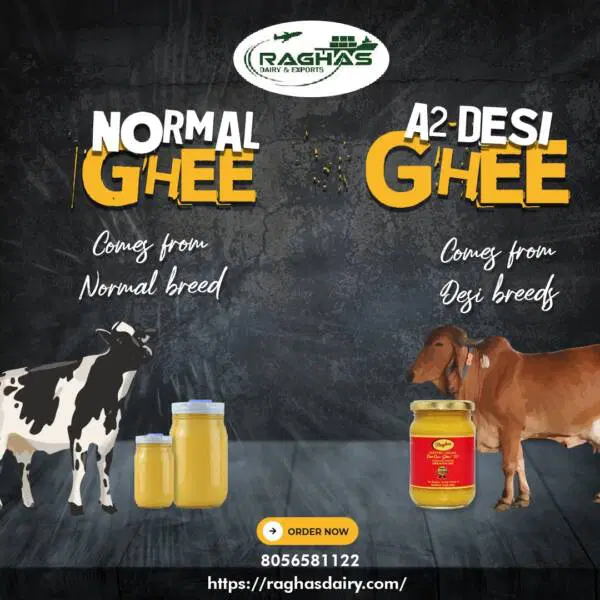
A2 desi ghee is made from milk of indigenous cows that produce A2 beta-casein protein, which is easier to digest and more beneficial for health compared to A1 protein found in regular ghee.
How should I store desi ghee?
Store desi ghee in a cool, dry place away from direct sunlight. It can be kept at room temperature for months without refrigeration due to its natural preservation properties.
What are the traditional food value of consuming desi ghee?
Desi ghee is rich in fat-soluble vitamins (A, D, E, K), helps improve digestion, boosts immunity, and provides healthy fats that support everyday nourishment and overall health.