
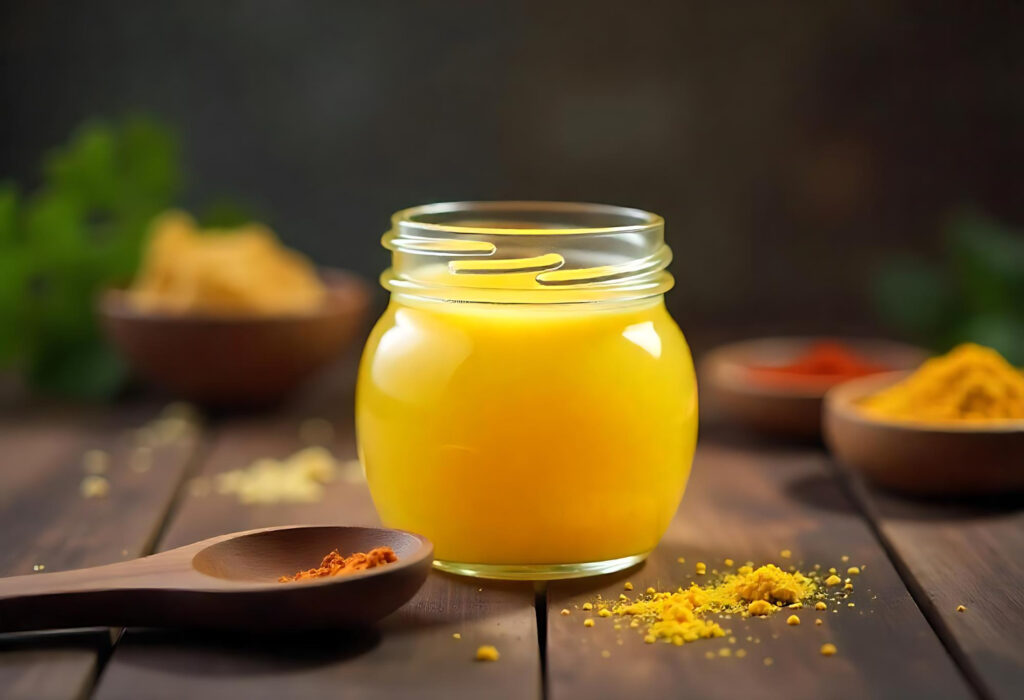
Why A2 Desi Ghee is the Best and Healthiest Fat for Cooking
For thousands of years, Indian kitchens have relied on pure desi cow ghee as the primary cooking fat. From the sizzle of a perfect tadka to the richness of a biryani, from crispy pooris to moist cakes, ghee has been the secret ingredient that makes Indian food legendary. But in recent decades, aggressive marketing of refined vegetable oils convinced many families to abandon ghee in favour of heart-healthy alternatives. Today, modern science is proving what our ancestors always knew: pure A2 desi ghee is not just the most flavourful, but also the safest and healthiest fat for cooking.
At Raghas Dairy in Madurai, Tamil Nadu, we produce pure A2 bilona ghee from our own indigenous desi cows. Made using the traditional hand-churned method on our family farm, our FSSAI-certified ghee is trusted by over 248+ families who use it daily for cooking, seasoning, and baking.
The Science of Smoke Point: Why It Matters
The smoke point is the temperature at which a cooking fat begins to break down, producing harmful compounds like free radicals, aldehydes, and acrolein. A2 desi ghee has a smoke point of approximately 250°C (482°F) — one of the highest among all cooking fats.
- Deep frying: 170-190°C — well within ghee’s safe range
- Stir-frying: 150-200°C — perfectly safe with ghee
- Tadka/Tempering: 180-220°C — ghee handles this effortlessly
- Roasting/Baking: 150-230°C — ghee excels here
- Searing: 200-250°C — ghee can handle even this
A2 Ghee vs Common Cooking Oils: Detailed Comparison
| Cooking Fat | Smoke Point | Saturated Fat | MUFA | PUFA | Heat Stability | Trans Fat Risk |
|---|---|---|---|---|---|---|
| A2 Desi Ghee | 250°C | 62% | 29% | 4% | Excellent | None |
| Coconut Oil (Virgin) | 177°C | 82% | 6% | 2% | Good | None |
| Mustard Oil | 254°C | 12% | 60% | 21% | Good | Low |
| Olive Oil (Extra Virgin) | 191°C | 14% | 73% | 11% | Moderate | Low |
| Sunflower Oil (Refined) | 227°C | 10% | 20% | 66% | Poor | High |
| Soybean Oil | 230°C | 16% | 23% | 58% | Poor | High |
| Rice Bran Oil | 232°C | 25% | 38% | 37% | Moderate | Moderate |
| Groundnut Oil | 232°C | 17% | 46% | 32% | Good | Low |
Key insight: Oils high in polyunsaturated fatty acids (PUFA) like sunflower and soybean oil are the most unstable when heated. Ghee, with its high saturated fat content and very low PUFA, is one of the most stable cooking fats available.
The Problem with Refined Vegetable Oils
Many families switched from ghee to refined vegetable oils based on the now-debunked theory that saturated fat causes heart disease. Here is what we now know:
- High PUFA content: Polyunsaturated fats oxidise easily when heated, creating toxic aldehyde compounds linked to inflammation and disease.
- Chemical extraction: Most refined oils use hexane (a petroleum solvent) and undergo chemical processing including deodorising and bleaching.
- Trans fat formation: When high-PUFA oils are heated repeatedly, they form trans fats — the most dangerous type of fat.
- Omega-6 overload: Refined oils are extremely high in omega-6 fatty acids, promoting chronic inflammation.
- Nutrient void: Refined oils contain virtually no vitamins, antioxidants, or beneficial compounds.
In contrast, A2 desi ghee is a whole, natural food rich in fat-soluble vitamins (A, D, E, K2), antioxidants, CLA, butyric acid, and beneficial fatty acids.
Indian Cooking with A2 Ghee: Traditional Uses
Tadka (Tempering) — The Soul of Indian Cooking
Tadka is the technique of blooming whole spices in hot fat to release their essential oils and flavours. Ghee is the traditional and best fat for tadka because its high smoke point allows spices to crackle and bloom perfectly without burning. Whether it is mustard seeds for a South Indian sambar, cumin and hing for a North Indian dal, or curry leaves for a Tamil rasam — ghee tadka transforms a simple dish into something extraordinary. The rich, nutty flavour of A2 bilona ghee adds a depth of taste that no oil can match.
Frying — Crispy, Golden, and Healthy
From pooris and bhatures to pakoras and vadas, when you fry with A2 ghee you get:
- Crispier texture that stays crispy longer
- Better flavour with a rich, aromatic quality
- Safer cooking due to the high smoke point and oxidative stability
- Less oil absorption — ghee-fried foods tend to absorb less fat
- No harmful breakdown products at frying temperatures
Baking — The Secret Ingredient
Ghee has always been the fat of choice in Indian sweet-making. From Mysore pak to besan ladoo, from halwa to ghevar. A2 ghee also works beautifully in modern baking:
- Cakes and muffins: Replace butter with ghee for richer flavour and moister crumb
- Cookies: Ghee creates crispier, more flavourful cookies than butter
- Pie crusts: Ghee produces exceptionally flaky pastry
- Brownies: Ghee brownies are richer and fudgier
- Bread: A spoonful of ghee creates softer, more tender crumb
Since ghee has no water content (unlike butter at 15-20% water), use about 80% of the butter quantity when substituting.
Rice and Dal — Everyday Staples
A teaspoon of A2 ghee on hot rice, drizzled over dal, or mixed into khichdi provides:
- Better absorption of nutrients from rice and lentils
- Lower glycaemic index of rice (ghee slows carbohydrate absorption)
- Improved digestion (ghee stimulates digestive enzymes)
- Enhanced taste and satiety
Cost Per Meal Analysis: Is A2 Ghee Really Expensive?
| Factor | A2 Desi Ghee | Refined Sunflower Oil |
|---|---|---|
| Price per litre (approx.) | Rs 2,000-2,500 | Rs 120-180 |
| Amount per meal (family of 4) | 1-2 tsp (5-10ml) | 2-4 tbsp (30-60ml) |
| Meals per litre | 100-200 | 16-33 |
| Cost per meal | Rs 10-25 | Rs 4-11 |
| Health benefits | Vitamins A,D,E,K2, CLA, butyric acid | None (empty calories) |
| Hidden health costs | None | Inflammation, oxidative stress |
The real difference is only Rs 6-14 per meal — less than a cup of tea! And ghee is used in much smaller quantities than oil because of its concentrated flavour. A litre of ghee lasts much longer than a litre of oil in practical daily cooking.
Tips for Cooking with A2 Ghee
- Don’t overheat: Medium heat is perfect for most cooking despite ghee’s high smoke point.
- Use less than oil: Ghee is more concentrated. Start with less.
- Add at the end: For maximum flavour, add raw ghee on hot food before serving.
- Combine with oils: For economy, use ghee for tadka and finishing, stable oils for base cooking.
- Store properly: Clean, dry container. Always use a dry spoon.
- Re-use carefully: Ghee can be safely reused 2-3 times for frying due to high oxidative stability.
A2 Ghee for Special Diets
- Keto diet: High in healthy fats with zero carbs. Bulletproof coffee with A2 ghee is a popular keto breakfast.
- Paleo diet: Approved as a traditional, minimally processed animal fat.
- Whole30: One of the few dairy products allowed since it is free of casein and lactose.
- Lactose-free diets: Pure ghee contains virtually no lactose.
- Ayurvedic diets: The most sattvic cooking fat, suitable for all body types.
- Gluten-free diets: Naturally gluten-free, adds richness to GF cooking.
Why Choose Raghas Dairy A2 Ghee for Your Kitchen
- 100% A2 milk from our own indigenous desi cows
- Traditional bilona method — hand-churned and slow-cooked
- Family farm in Madurai, Tamil Nadu — complete traceability
- FSSAI certified — meets all food safety standards
- No preservatives, no additives
- 248+ positive reviews from families across India
- Rich, grainy texture and golden colour — hallmark of genuine bilona ghee
Frequently Asked Questions: A2 Ghee for Cooking
1. Is ghee really healthier than olive oil for cooking?
For Indian cooking — absolutely yes. Extra virgin olive oil has a lower smoke point (191°C) and is best used raw. When heated for Indian cooking methods like tadka and frying, olive oil breaks down and loses beneficial properties. A2 ghee at 250°C is far more suitable for high-heat Indian cooking. Olive oil excels in Mediterranean cuisine at low temperatures, but for Indian cooking, A2 ghee is superior.
2. Can I reuse ghee after frying?
Yes, unlike most vegetable oils, ghee can be safely reused 2-3 times due to its high oxidative stability. After frying, cool slightly, strain through fine muslin cloth, and store in a clean container. Discard if it develops off smell, dark colour, or excessive foaming.
3. How much ghee should I use for daily cooking?
For a family of 4, 2-4 teaspoons per day for cooking is a good starting point. This includes tadka, cooking, and a dollop on rice or chapati. Ghee is more flavour-concentrated than oil, so you need less. Ayurveda recommends each adult consume 1-2 teaspoons daily.
4. Does cooking with ghee make food heavy or difficult to digest?
No — this is a misconception. Ghee actually improves digestion in appropriate quantities. It stimulates digestive acids and enzymes, and contains butyric acid that nourishes intestinal cells. Food becomes heavy when too much fat of any kind is used. In the right amounts, ghee makes food easier to digest.
5. Can I use A2 ghee for non-Indian cooking?
Absolutely! A2 ghee is incredibly versatile — use it for searing steaks, roasting vegetables, scrambled eggs, popcorn, baking cookies, grilling sandwiches, or as toast spread. Its nutty flavour enhances any dish, and the high smoke point makes it safe for all cooking methods. Many international chefs now prefer ghee over butter.
6. Is it true that ghee lowers the glycaemic index of rice?
Yes, research supports this. Adding ghee to rice coats starch molecules, slowing digestion and absorption, resulting in more gradual blood sugar rise. This is beneficial for diabetes management and blood sugar control. Our grandmothers’ practice of always eating rice with ghee was scientifically sound.
7. How should I store ghee for daily cooking use?
Keep ghee in a clean, dry, airtight container at room temperature. A wide-mouthed glass jar is ideal. Always use a completely dry spoon. Keep away from direct sunlight. Raghas Dairy A2 ghee stays fresh 12-18 months without refrigeration. Ghee may be liquid in heat or solid in cold — both are normal and do not affect quality.
8. Why is Raghas Dairy A2 ghee the best choice for cooking?
Raghas Dairy A2 ghee is made from milk of our own indigenous desi cows on our family farm in Madurai, Tamil Nadu, using the traditional bilona method. This produces ghee with highest nutritional value, best flavour, and maximum cooking stability. FSSAI certified, no preservatives, trusted by 248+ families across India. The rich golden colour, grainy texture, and nutty aroma will transform your everyday cooking. Once you cook with real A2 bilona ghee, you will never go back to refined oils.