Ghee for Face: 7 DIY Face Masks with A2 Ghee for Glowing Skin
Ghee for Face: 7 DIY Face Masks with A2 Ghee for Glowing Skin
Using ghee for face care is one of India’s oldest beauty secrets—and it’s making a major comeback. Pure A2 desi cow ghee is packed with vitamin A (natural retinol), vitamin E, essential fatty acids, and antioxidants that moisturise, brighten, and repair skin without a single synthetic chemical. Whether you’re battling dryness, dull skin, pigmentation, or early wrinkles, there’s a ghee face mask for you.
Below are 7 tested DIY face mask recipes, plus the science behind why ghee works so well on facial skin.
Ghee as skincare: In Ayurveda, ghee is classified as the most snigdha (unctuous) substance—ideal for nourishing and softening skin. Ancient texts describe its use in mukha lepana (facial application) for radiance, healing, and anti-ageing. Modern science confirms its rich profile of fat-soluble vitamins and antioxidants.
Why Use Ghee on Your Face?
- Natural retinol (Vitamin A): Promotes cell turnover, fades pigmentation, reduces fine lines
- Vitamin E: Powerful antioxidant that protects against UV damage and free radicals
- Essential fatty acids: Repair the skin barrier, lock in moisture, reduce inflammation
- Butyric acid: Anti-inflammatory; soothes irritated or sunburnt skin
- CLA (Conjugated Linoleic Acid): May help reduce acne-related inflammation
- No chemicals: Pure ghee is a single ingredient—no parabens, sulphates, or fragrances
For a complete overview of ghee’s beauty benefits, read our guide on A2 ghee for hair and skin.
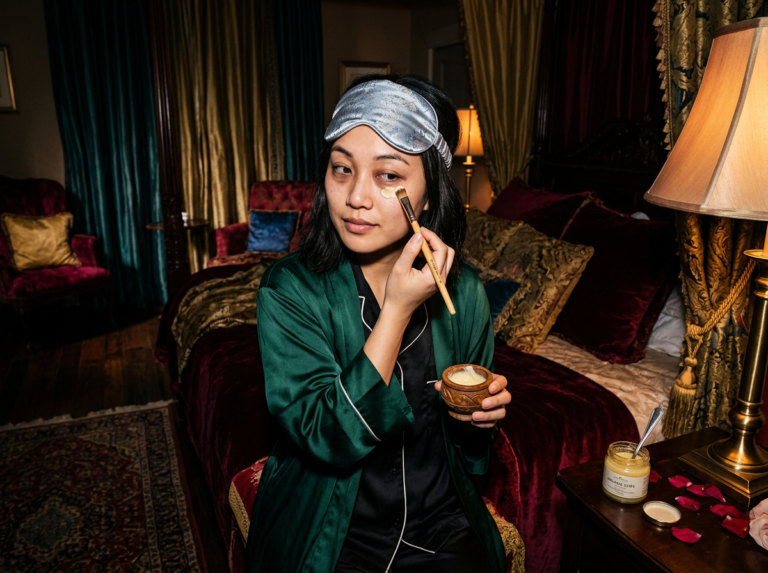
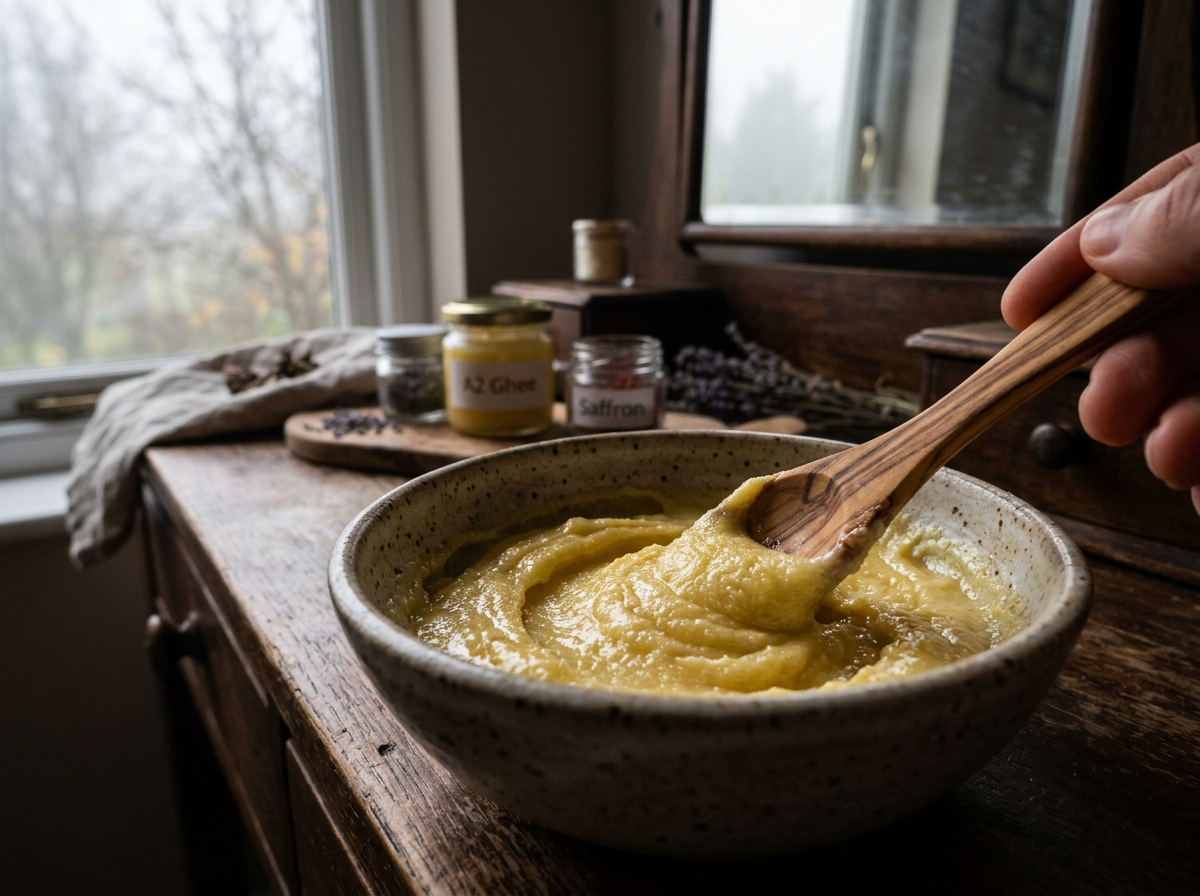
Ghee face mask — traditional beauty secret
Which Skin Types Benefit Most?
| Skin Type | Can Use Ghee? | Notes |
|---|---|---|
| Dry skin | Excellent — best match | Deep moisturisation; use as overnight treatment |
| Normal skin | Yes | Weekly mask for glow; thin layer overnight |
| Combination skin | Yes — with care | Apply only on dry areas; skip oily T-zone |
| Oily / acne-prone skin | Use cautiously | Spot-treat scars only; avoid full-face application. Patch test first |
| Sensitive skin | Yes — ghee is gentle | Fewer ingredients = less irritation risk. Always patch test |
| Mature skin | Excellent | Anti-ageing benefits from vitamin A and E |
7 DIY Ghee Face Mask Recipes
1. Classic Ghee Glow Mask (All Skin Types)
For: Overall radiance and moisture
- 1 tsp A2 ghee
- 1 tsp raw honey
- Mix well, apply evenly on face
- Leave for 20 minutes, rinse with lukewarm water
Why it works: Honey is a natural humectant that draws moisture into skin. Combined with ghee’s fatty acids, this mask delivers deep hydration and a visible glow in one application.
2. Anti-Pigmentation Ghee + Turmeric Mask
For: Uneven skin tone, dark spots, tan
- 1 tsp A2 ghee
- ¼ tsp turmeric powder
- 1 tsp besan (gram flour)
- Mix into a paste, apply for 15 minutes
- Wash off gently with water
Why it works: Curcumin in turmeric inhibits tyrosinase (the enzyme that produces melanin). Ghee enhances curcumin absorption into skin. Besan gently exfoliates dead cells.
3. Anti-Ageing Ghee + Aloe Vera Mask
For: Fine lines, wrinkles, mature skin
- 1 tsp A2 ghee
- 1 tbsp fresh aloe vera gel
- 2 drops rosehip oil (optional)
- Apply for 20–25 minutes, rinse
Why it works: Aloe vera stimulates collagen production. Ghee’s vitamin A (natural retinol) promotes cell renewal. Together, they’re a potent anti-ageing duo.
4. Dry Skin Rescue: Ghee + Milk Cream Mask
For: Extremely dry, flaky, or winter-stressed skin
- 1 tsp A2 ghee
- 1 tsp fresh malai (milk cream)
- A few drops of lemon juice (optional—skip if sensitive)
- Apply for 15–20 minutes
Why it works: Malai and ghee together deliver intense moisture. Lactic acid in malai provides gentle exfoliation. Perfect for harsh winter months.
5. Acne Scar Fading Mask
For: Post-acne marks (not active acne)
- ½ tsp A2 ghee
- 1 tsp sandalwood (chandan) powder
- Rose water to make a paste
- Apply to scarred areas, leave 20 minutes, rinse
Why it works: Sandalwood has proven skin-lightening properties. Ghee delivers vitamin A directly to scar tissue, promoting cell regeneration. Not for active breakouts.
6. Brightening Ghee + Saffron Mask
For: Dull skin that needs instant radiance
- 1 tsp A2 ghee
- 3–4 strands of saffron (kesar), soaked in 1 tsp warm milk for 10 minutes
- Mix saffron milk with ghee, apply for 20 minutes
Why it works: Saffron contains crocin and crocetin—natural brightening compounds. Ghee carries them deep into the skin. This is the classic Indian bridal glow remedy.
7. Soothing Ghee + Cucumber Mask
For: Sunburnt, irritated, or inflamed skin
- 1 tsp A2 ghee
- 2 tbsp freshly grated cucumber
- Mix and apply for 15 minutes
Why it works: Cucumber cools and reduces inflammation. Ghee’s butyric acid is anti-inflammatory. Together they soothe sun damage and redness.
For under-eye specific treatments, see our guide on ghee for dark circles. For lip care, check out ghee for lips.
Key Takeaways: Ghee for Face
- A2 ghee contains natural retinol and vitamin E—proven skincare actives
- Best suited for dry, normal, sensitive, and mature skin types
- Oily/acne-prone skin should use ghee only for spot treatment on scars
- Combine ghee with honey, turmeric, saffron, or aloe for targeted benefits
- Use 1–2 times per week as a mask; daily as a thin overnight moisturiser (dry skin)
- Always use pure A2 desi cow ghee without additives for skincare
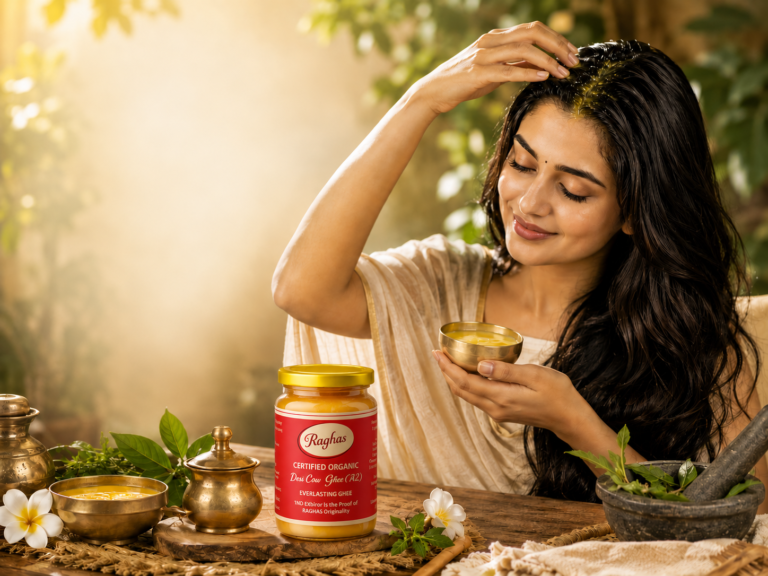
Nourish your skin with pure desi ghee
How to Apply Ghee on Face (Do’s & Don’ts)
Do’s
- Always start with a clean face
- Use room temperature ghee (slightly warm is fine; never hot)
- Apply a thin layer—a little goes a long way
- Patch test on your jawline for 24 hours before full application
- Rinse with lukewarm water, not hot
- Follow with your regular sunscreen if applying in the morning
Don’ts
- Don’t apply a thick layer if you have oily or acne-prone skin
- Don’t use ghee on active acne or open wounds
- Don’t use flavoured, adulterated, or large-scale ghee on your face
- Don’t expect overnight miracles—give it 2–4 weeks of consistent use
Can You Leave Ghee on Your Face Overnight?
Yes—for dry, normal, and mature skin types. Apply a very thin layer after cleansing, let it absorb for a few minutes, then sleep as usual. You’ll wake up with softer, more supple skin.
For combination or oily skin, overnight application is Best avoided. Use ghee as a 20-minute mask and rinse off instead.
Explore all the benefits of A2 ghee for both internal and external use.
Get the Glow with Pure A2 Desi Cow Ghee
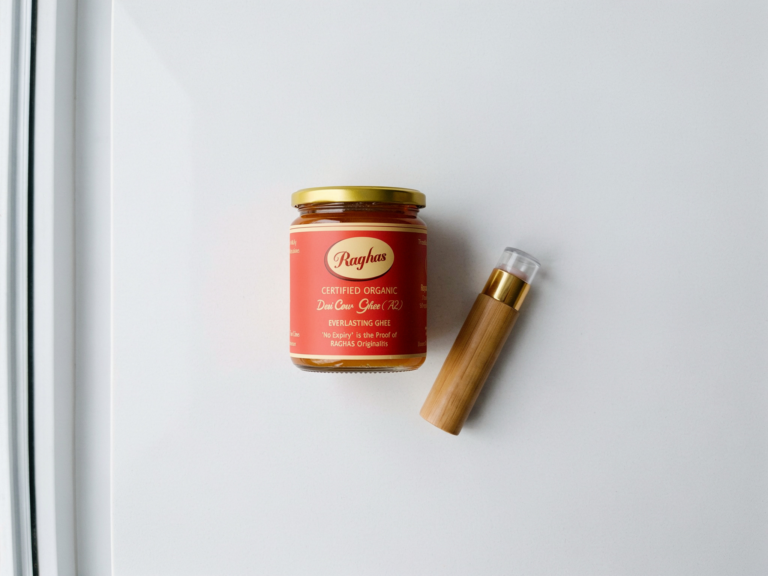
Raghas Dairy A2 ghee — made from milk sourced from Tamil Nadu native desi cows in Madurai. 100% pure, zero additives.
Free shipping on orders above ₹1,750
Frequently Asked Questions
Is ghee good for face skin?
Yes. Pure A2 ghee is rich in vitamin A (natural retinol), vitamin E, and essential fatty acids that moisturise, brighten, and repair facial skin. It’s been used in Indian skincare for centuries and is especially effective for dry, normal, and mature skin types.
Can ghee remove pimples?
Ghee is Best avoided for active acne, as it’s an occlusive (barrier-forming) substance that could trap bacteria. However, it can help fade post-acne scars and marks due to its vitamin A content, which promotes cell turnover.
How often should I apply ghee on my face?
For dry and normal skin, you can use a thin layer of ghee daily (overnight). For face masks with ghee, 1–2 times per week is ideal. Oily skin types should limit use to spot treatment on scars, no more than 2–3 times per week.
Can ghee make my face oily or cause breakouts?
If you have oily or acne-prone skin, applying ghee all over your face may clog pores. Stick to small amounts on dry patches or scars only. For dry to normal skin, ghee absorbs well and doesn’t typically cause breakouts.
Which is better for face: ghee or coconut oil?
Both are natural moisturisers, but ghee has a richer vitamin A and E profile, making it better for anti-ageing and pigmentation. Coconut oil has a higher comedogenic rating (more likely to clog pores). For facial use, A2 ghee is generally the better choice.
Can men use ghee on their face?
Absolutely. Ghee for face care has no gender restriction. It’s especially useful for men with dry skin from shaving or sun exposure. Apply a thin layer after shaving for a natural, soothing after-shave balm.