Umbalachery, Pulikulam & Bargur Cows: India’s Hidden A2 Treasures
Umbalachery, Pulikulam & Bargur Cows: India’s Hidden A2 Treasures
When people think of A2 desi cow milk, they think of Gir or Sahiwal. But Tamil Nadu is home to three remarkable native breeds — Umbalachery, Pulikulam, and Bargur — that produce equally pure A2 milk and are virtually unknown outside the state. These breeds are India’s hidden A2 treasures, and they deserve recognition.
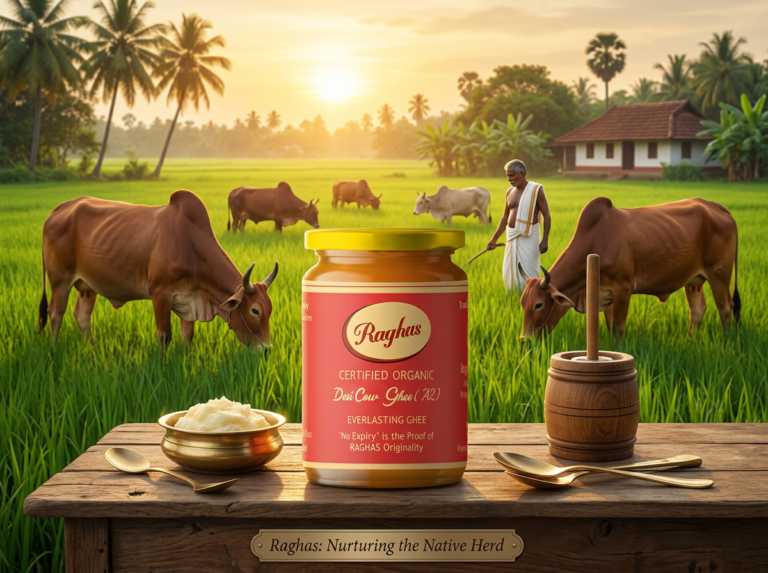
At Raghas Dairy, our farm source is described as a mixed Tamil Nadu native desi cow herd. We make our A2 Bilona ghee from milk sourced from Tamil Nadu native desi cows. Here’s what makes each breed tradition special.
Table of Contents
Native TN breeds — guardians of A2 milk heritage
Umbalachery Cow: The Delta Breed
Origin and Region
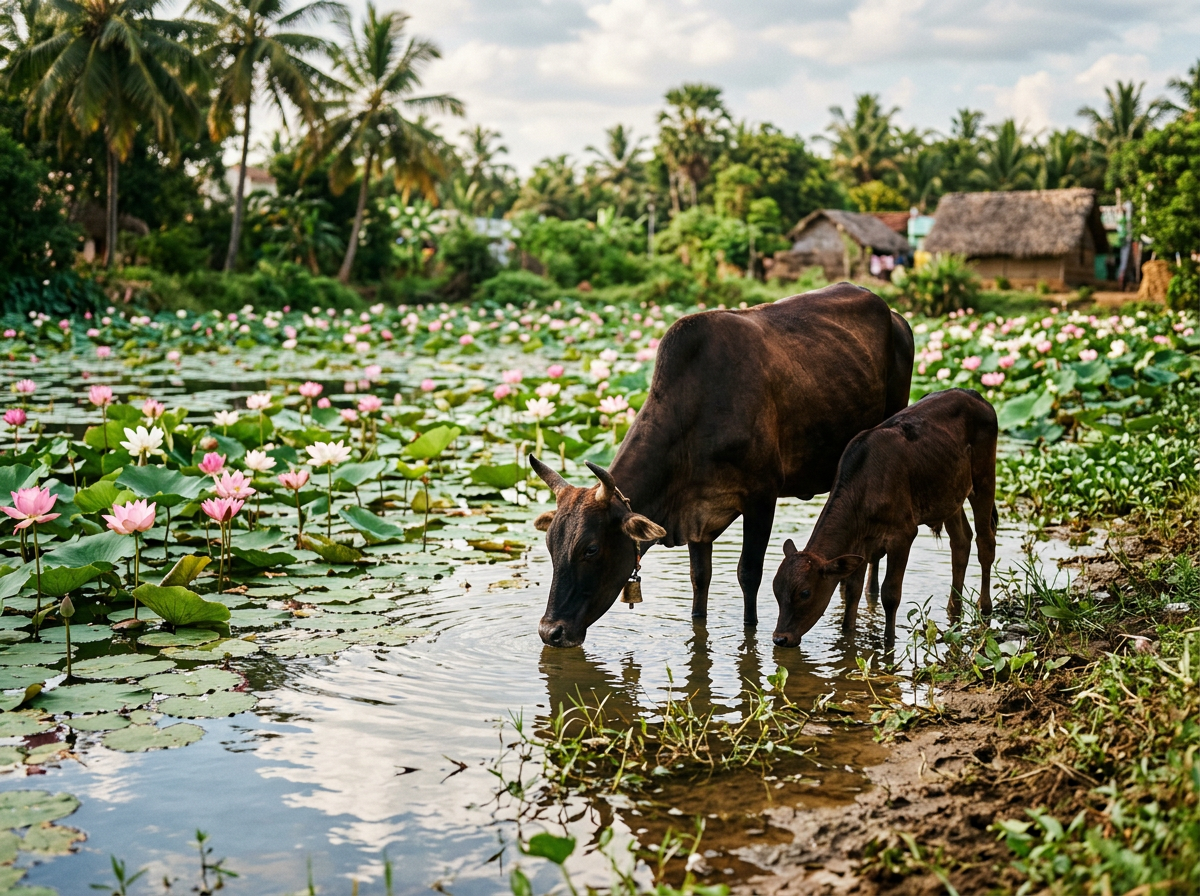
The Umbalachery cow (also called Jathi Madu or Mottai Madu) originates from the Nagapattinam and Thanjavur districts — the Cauvery delta region of Tamil Nadu. This is one of India’s most fertile rice-growing areas, and the Umbalachery was bred to work in waterlogged paddy fields.
Physical Characteristics
- Size: Medium-built, compact body
- Colour: Usually grey to dark grey, sometimes with white markings
- Horns: Short, curved, and forward-pointing
- Hooves: Hard, wide-set — adapted for walking through wet mud and slush
- Hump: Small but defined (characteristic of Bos indicus)
Temperament and Adaptability
Umbalachery cows are known for being calm, docile, and easy to handle. They thrive in humid, tropical conditions that would stress many other breeds. Their resistance to foot-related diseases makes them ideal for the delta’s wet environment.
Milk Production
Umbalachery cows produce 2–4 litres per day. The milk is rich in fat (4.5–5.5%) and carries the A2 beta-casein protein. While the yield is modest by large-scale standards, the milk quality is excellent for ghee production.
Pulikulam Cow: The Jallikattu Breed
Origin and Region
The Pulikulam cow (also called Palingu Madu or Kilarai Madu) comes from the Sivaganga and Madurai districts of Tamil Nadu. The name derives from Pulikulam village in Sivaganga district. These cows are famously associated with Jallikattu — the traditional bull-taming sport of Tamil Nadu.
Physical Characteristics
- Size: Small to medium, agile build
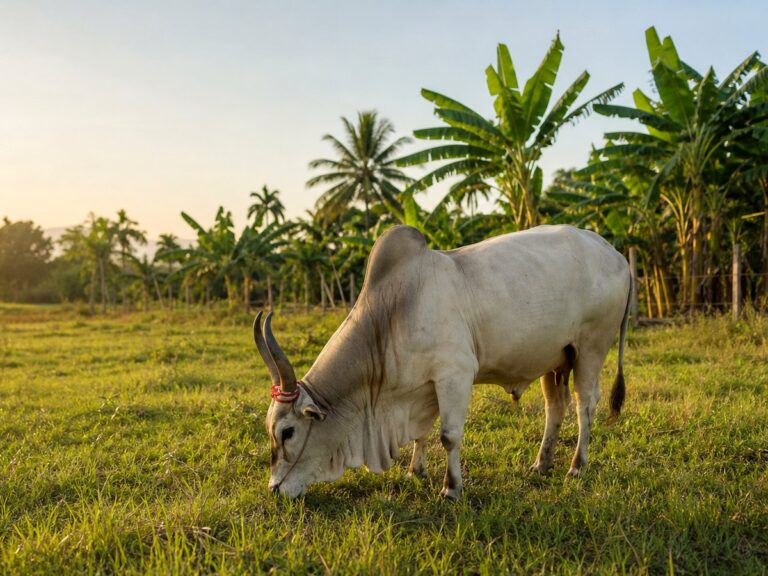
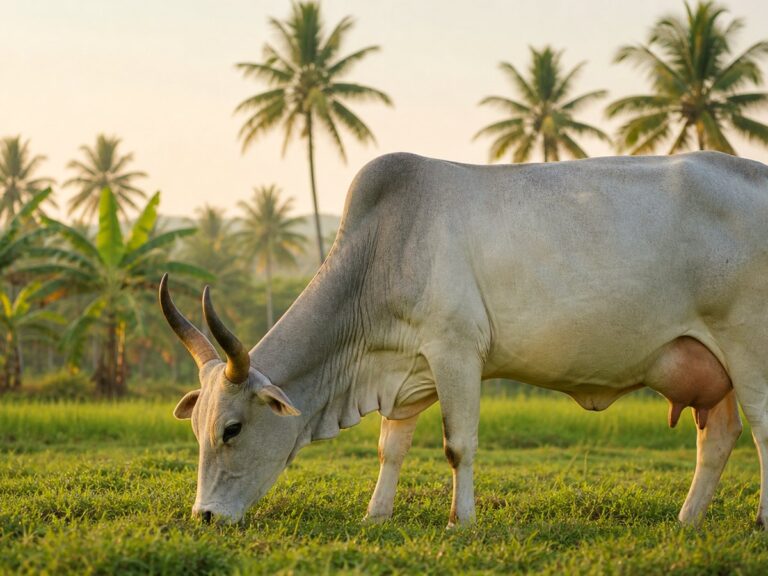
- Colour: Predominantly white or grey with dark face markings
- Horns: Long, curved upwards and outwards — distinctive and impressive
- Build: Lean and muscular, built for speed and stamina
- Hump: Moderate, well-defined in bulls
Temperament and Adaptability
Pulikulam cattle are spirited and energetic — which is exactly why their bulls are prized in Jallikattu. The cows are hardier than they appear, thriving in the dry scrublands of southern Tamil Nadu with minimal water and feed inputs.
Milk Production
Pulikulam cows produce 2–3 litres per day. The yield is among the lowest of Tamil Nadu’s native breeds, but the fat content is high (5–6%), making this milk excellent for ghee. The A2 protein content is confirmed by genetic studies of indigenous Bos indicus breeds.
Jallikattu Connection
Jallikattu isn’t just a sport — it’s a breed conservation mechanism. The strongest, healthiest bulls are selected for the event, and prize-winning bulls are used for breeding. Without Jallikattu (which was briefly banned and then restored in 2017), the Pulikulam breed would likely face extinction. The sport ensures that the best native cow source are preserved.
Bargur Cow: The Hill Breed
Origin and Region
The Bargur cow comes from the Bargur hills in the Anthiyur taluk of Erode district. These are semi-wild cattle that have lived in the forested hills of the Eastern Ghats for centuries. The Bargur is the rarest of Tamil Nadu’s Tamil Nadu native desi cows.
Physical Characteristics
- Size: Medium, well-proportioned, athletic build
- Colour: Brown to dark reddish-brown — unique among Tamil Nadu breeds
- Horns: Medium-length, curved backwards and upwards
- Build: Strong legs, deep chest — adapted for hill terrain
- Hump: Prominent, well-developed
Temperament and Adaptability
Bargur cattle are semi-feral. They’re accustomed to roaming freely in hilly forest areas and are not easily domesticated. They’re incredibly hardy — resistant to most common cattle diseases, ticks, and parasites that plague crossbreed cattle in the region.
Milk Production
Bargur cows produce only 1–3 litres per day. This is the lowest yield of any Tamil Nadu breed. However, the milk is exceptionally rich — fat content can reach 6–7%. For ghee making, this high-fat milk is gold. A smaller quantity of Bargur milk can yield proportionally more ghee than higher-yield, lower-fat breeds.
Endangered Status
With an estimated population of under 15,000, the Bargur is considered endangered. Mechanisation has reduced demand for draught cattle, and crossbreeding with higher-yielding cattle threatens genetic purity. Conservation efforts are critical.
Breed Comparison Table
| Feature | Umbalachery | Pulikulam | Bargur |
|---|---|---|---|
| Origin | Nagapattinam-Thanjavur | Sivaganga-Madurai | Bargur Hills, Erode |
| Terrain | Delta/wetlands | Dry scrubland | Hilly forests |
| Colour | Grey to dark grey | White/grey | Brown to reddish-brown |
| Milk yield | 2–4 L/day | 2–3 L/day | 1–3 L/day |
| Fat content | 4.5–5.5% | 5–6% | 6–7% |
| A2 milk | Yes | Yes | Yes |
| Temperament | Calm, docile | Spirited, energetic | Semi-wild, independent |
| Special trait | Wet-terrain adapted | Jallikattu breed | Forest-dwelling, rarest |
| Population | Declining | Declining | Endangered (<15,000) |
A2 Milk Quality
All three breeds — like all indigenous Indian cattle (Bos indicus) — produce A2 beta-casein milk. This is genetically determined and is a trait shared by every native Indian cow breed.
What makes these breeds special for ghee:
- Higher fat percentage — More ghee per litre of milk compared to breeds like Gir or Sahiwal.
- Natural grazing — These breeds graze on native grasses and herbs, which influences the fatty acid profile of the milk.
- No crossbreeding — When properly maintained, these breeds have pure A2 native cow source without contamination from A1 breeds.
- Disease resistance — Healthier cows produce cleaner milk. These breeds rarely need antibiotics.
Learn more about A2 milk in our A2 ghee ultimate guide.
Conservation Status and Challenges
All three breeds face serious threats:
Why Numbers Are Declining
- Mechanisation: Tractors replaced draught cattle. Farmers no longer need bulls for ploughing.
- Crossbreeding: Government AI (artificial insemination) programmes often push HF or Jersey semen, diluting native native cow source.
- Economics: Low milk yield makes these breeds commercially unviable for conventional dairy farming.
- Urbanisation: Grazing lands shrinking as cities expand.
What’s Being Done
- Tamil Nadu government runs breed conservation programmes and maintains germplasm centres.
- Jallikattu revival (2017) gave Pulikulam conservation a boost — breeders have financial incentive to maintain pure bulls.
- Private dairies like Raghas Dairy create economic value for native breed milk through premium A2 ghee, giving farmers a reason to keep these breeds.
- NGOs and research institutions are documenting and preserving genetic material.
Why These Breeds Matter
Conserving Umbalachery, Pulikulam, and Bargur isn’t just about nostalgia. These breeds carry:
- Genetic resilience — Disease resistance, heat tolerance, and low-input survival traits that crossbreeds lack.
- Climate adaptation — Each breed evolved for a specific Tamil Nadu ecosystem. As climate changes, these adaptations become more valuable.
- Biodiversity — Each breed is a unique genetic library. Once lost, it cannot be recreated.
- Cultural heritage — These cows are part of Tamil Nadu’s identity, festivals, and traditions.
When you buy A2 ghee from Tamil Nadu native desi cow milk, you’re directly supporting breed conservation. Every litre sold makes it more economically viable for farmers to keep these animals.
Support Native Breed Conservation
Raghas Dairy A2 Bilona Ghee is made from milk sourced from Tamil Nadu native desi cows in Madurai. Every purchase supports these breeds. Free shipping on orders above ₹1,750.
Frequently Asked Questions
Do Umbalachery, Pulikulam, and Bargur cows produce A2 milk?
Yes. All three are indigenous Indian (Bos indicus) breeds and produce milk with the A2 beta-casein protein. Like all native Indian cattle, they carry the A2 gene variant, making their milk suitable for A2 ghee production.
Why are these breeds less well-known than Gir or Sahiwal?
Umbalachery, Pulikulam, and Bargur were historically valued as draught animals for farming, not primarily for dairy. The A2 ghee marketing wave initially focused on higher-yielding breeds like Gir and Sahiwal, leaving these Tamil Nadu breeds underrepresented despite their excellent milk quality.
Are these breeds endangered?
Bargur is considered endangered with an estimated population of under 15,000. Pulikulam and Umbalachery have declining numbers due to mechanisation replacing draught animals. Conservation efforts by Tamil Nadu’s government and private dairies like Raghas Dairy are helping sustain their populations.
Written by the Raghas Dairy Team — makers of A2 Bilona ghee from Tamil Nadu native cow breeds, based in Madurai.
Frequently Asked Questions
What makes your dairy products special?
Our dairy products are made from fresh milk of indigenous A2 cows, ensuring better digestibility, superior taste, and maximum nutritional benefits for your family.
How do you ensure the freshness of your dairy products?
We maintain a cold chain from farm to your doorstep, use hygienic processing methods, and deliver products within optimal time frames to ensure maximum freshness.
Can I order your dairy products online?
Yes, you can order our fresh dairy products online through our website and we provide home delivery services with proper temperature-controlled packaging.