A2 Ghee from South India vs North India: What’s Different?
A2 Ghee from South India vs North India: What’s Different?
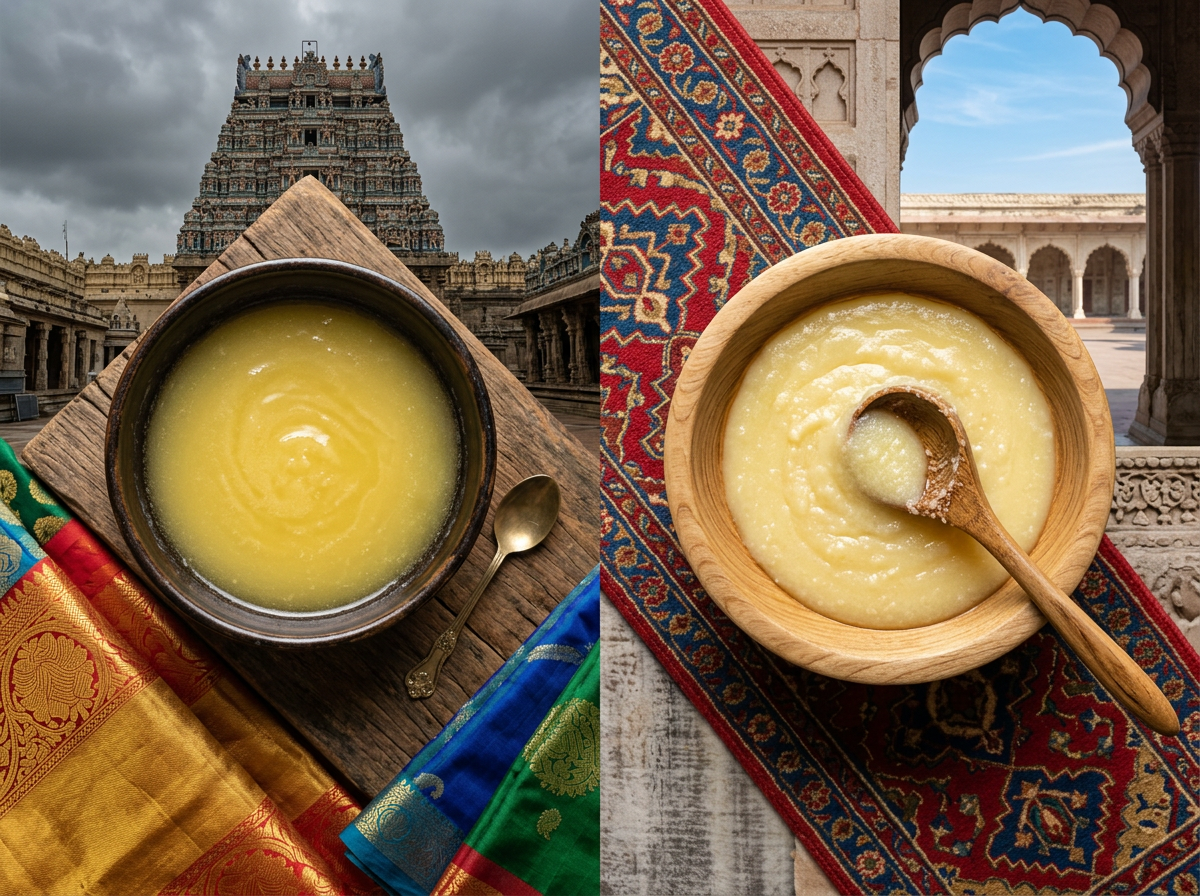
South Indian ghee and North Indian ghee differ in three fundamental ways: the cow breeds that produce the milk, the climate those cows live in, and the regional traditions used to make the ghee. Both can be excellent — but they are not the same product.
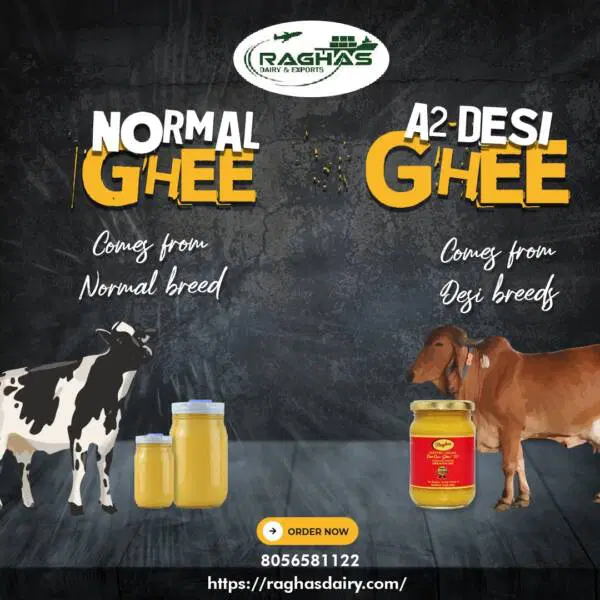
Most A2 ghee brands in India focus on North Indian breeds like Gir and Sahiwal. At Raghas Dairy, we make our ghee from milk sourced from a mixed Tamil Nadu native desi cow herd and there are real differences worth understanding.
Table of Contents
Breed Differences
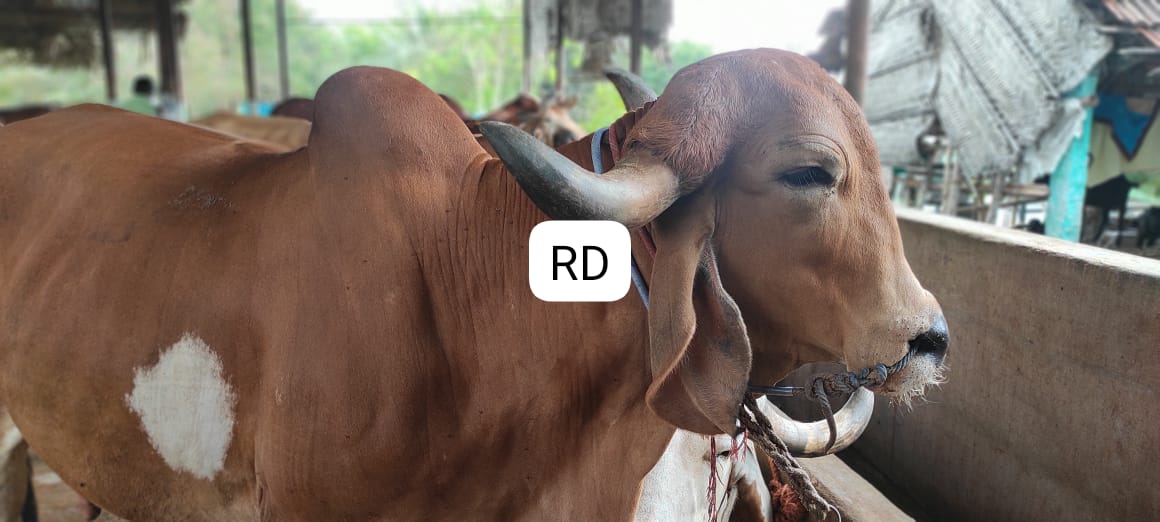
This is the biggest factor. India has 50+ recognised native cattle breeds, and they’re regionally distributed:
South Indian A2 Breeds
- Kangayam (Tamil Nadu) — Compact, muscular. Produces 3–5 litres/day of rich milk.
- Umbalachery (Tamil Nadu) — Delta breed from Nagapattinam. Adapted to wet conditions.
- Pulikulam (Tamil Nadu) — From Sivaganga-Madurai. Hardy, heat-resistant.
- Bargur (Tamil Nadu) — Semi-wild hill breed from Erode. Rarest of the four.
- Hallikar (Karnataka) — Draught breed with good milk quality.
- Vechur (Kerala) — Smallest Indian breed. High-fat milk.
North Indian A2 Breeds
- Gir (Gujarat) — The most marketed A2 breed. 6–10 litres/day.
- Sahiwal (Punjab) — High milk yield among native breeds. 8–12 litres/day.
- Red Sindhi (Rajasthan/Sindh) — Good yield, heat-tolerant.
- Tharparkar (Rajasthan) — Desert-adapted, moderate yield.
- Rathi (Rajasthan) — Known for rich milk fat.
Key difference: South Indian breeds generally produce less milk per day but with higher fat concentration. This means you need more milk per litre of ghee — but the ghee is richer.
Compare specific breeds in our desi cow ghee vs Gir cow ghee guide.
How Climate Affects Milk and Ghee
Climate doesn’t just affect the cow — it affects the grass, the water, and ultimately the milk composition.
- South India (tropical/semi-tropical): Year-round green fodder availability. Higher humidity. Cows adapted to heat produce milk with slightly different fatty acid profiles — often higher in short-chain fatty acids like butyric acid.
- North India (semi-arid/continental): Seasonal fodder variations. Cold winters and hot summers create distinct milk composition changes across seasons. Gir cows in Gujarat graze on different grasses than Kangayam cows in Tamil Nadu.
The result: South Indian ghee and North Indian ghee can differ subtly in fatty acid composition even when both are pure A2 Bilona ghee. Neither is “better” — they’re different.
Traditional Methods: South vs North
The Bilona method exists in both regions, but with local variations:
South Indian Tradition
- Curd is set using buttermilk starter (mor in Tamil) from the previous batch.
- Churning is done using a mathani (wooden churner) or sometimes a clay pot method.
- Ghee is often slow-cooked in brass or bronze vessels (vengala paanai), which some believe adds trace minerals.
- Connected to Siddha medicine traditions specific to Tamil Nadu.
North Indian Tradition
- Similar curd-churning process using the bilona (wooden churner).
- Some regions use a rope-pull method with the bilona.
- Often cooked in iron or steel vessels.
- Connected to Ayurvedic tradition and Vedic ghrita preparations.
At Raghas Dairy, we follow the South Indian brass-vessel tradition, combined with the classic Bilona churn. It’s the method that Tamil families in Madurai have used for generations.
Taste and Flavour Profile
Here’s what we’ve observed from our own production and from tasting ghee across regions:
| Characteristic | South Indian Ghee (TN Breeds) | North Indian Ghee (Gir/Sahiwal) |
|---|---|---|
| Colour | Deep golden to amber | Bright yellow to golden |
| Aroma | Earthy, nutty, slightly sweet | Buttery, creamy, mild sweetness |
| Taste | Rich, complex, lingering | Smooth, clean, lighter |
| Texture (set) | Grainy, dense | Grainy to semi-smooth |
| Best for | Rice dishes, Pongal, South Indian cuisine | Rotis, parathas, North Indian sweets |
Neither profile is superior. But if you eat South Indian food, South Indian ghee complements it naturally — the flavour profiles evolved together.
Nutritional Angle
All pure A2 desi cow ghee — whether from Kangayam or Gir — shares the same core benefits:
- A2 beta-casein protein (easier to digest)
- Rich in CLA (conjugated linoleic acid)
- Fat-soluble vitamins A, D, E, K2
- Butyric acid for gut health
- High smoke point (~250°C) for safe cooking
The differences are in degree, not kind. Studies suggest that breed, diet, and climate can affect the ratio of specific fatty acids — but all native breed A2 ghee is nutritionally excellent.
The Market Reality
The A2 ghee market in India is dominated by North Indian brands promoting Gir cow ghee. South Indian breeds are underrepresented — not because they’re inferior, but because:
- Gir cows received early marketing attention from the organic/A2 movement.
- Gujarat and Rajasthan have larger dairy cooperatives with national reach.
- Tamil Nadu breeds were historically valued more for draught (farm work) than dairy.
This is changing. Consumers are discovering that A2 ghee from South India — made from breeds like Kangayam, Umbalachery, Pulikulam, and Bargur — is just as authentic and often more flavourful for South Indian cooking.
South Indian A2 Bilona Ghee from Raghas Dairy
Made in Madurai from milk sourced from Tamil Nadu native desi cows. True South Indian ghee for South Indian food. Free shipping on orders above ₹1,750.
Frequently Asked Questions
Is South Indian ghee different from North Indian ghee?
Yes. The main differences come from cow breeds (Kangayam, Umbalachery, Pulikulam, Bargur in the South vs Gir, Sahiwal, Red Sindhi in the North), climate (tropical vs semi-arid), and traditional preparation methods. South Indian ghee tends to have a slightly nuttier, earthier flavour profile.
Which cow breeds produce the best A2 ghee in South India?
Tamil Nadu’s native breeds — Kangayam, Umbalachery, Pulikulam, and Bargur — all produce pure A2 milk. Karnataka has Hallikar and Amrit Mahal, while Kerala has Vechur. All are excellent A2 sources.
Does climate affect ghee quality?
Yes. Tropical climates in South India produce milk with different fat composition compared to the drier North. Heat-adapted Southern breeds produce slightly less milk but with higher fat content per litre, resulting in rich, flavourful ghee.
Written by the Raghas Dairy Team — makers of A2 Bilona ghee from Tamil Nadu native cow breeds, based in Madurai.
Frequently Asked Questions
What makes A2 desi ghee different from regular ghee?
A2 desi ghee is made from milk of indigenous cows that produce A2 beta-casein protein, which is easier to digest and more beneficial for health compared to A1 protein found in regular ghee.
How should I store desi ghee?
Store desi ghee in a cool, dry place away from direct sunlight. It can be kept at room temperature for months without refrigeration due to its natural preservation properties.
What are the traditional food value of consuming desi ghee?
Desi ghee is rich in fat-soluble vitamins (A, D, E, K), helps improve digestion, boosts immunity, and provides healthy fats that support everyday nourishment and overall health.