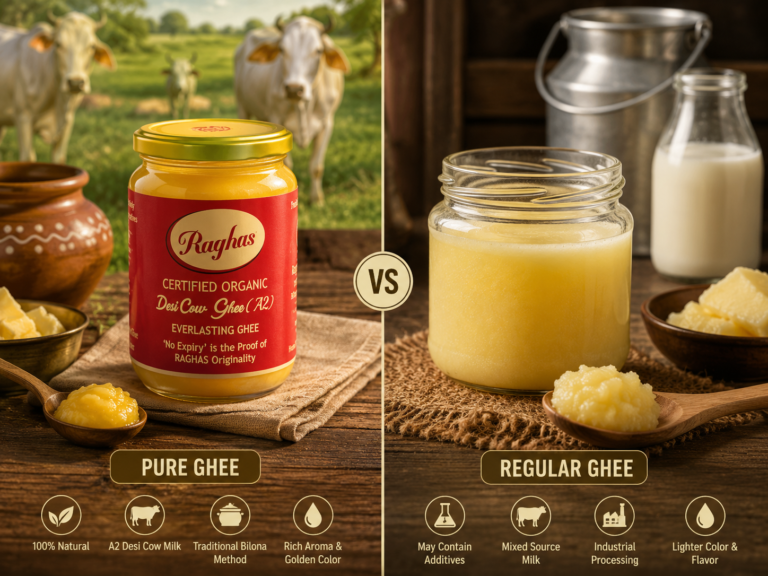
A2 Ghee vs Regular Ghee – What’s the Real Difference?
A2 Ghee vs Regular Ghee – What’s the Real Difference?
The difference between A2 ghee and regular ghee is real, measurable, and starts at the molecular level. A2 ghee comes from indigenous Indian cow breeds that produce A2 beta-casein protein — which does NOT release the inflammatory peptide BCM-7 during digestion. Regular regular market ghee comes from crossbred cattle producing A1 protein, which does release BCM-7 and can cause bloating, gut inflammation, and digestive discomfort.
Beyond the protein difference, A2 ghee (when from grass-fed desi cows and made via the bilona method) has higher CLA, more vitamin K2, more beta-carotene, and a richer nutritional profile. Here’s the complete breakdown.
Understanding the A1 vs A2 Protein Difference
All cow milk contains beta-casein protein (~30% of total protein). It comes in two variants:
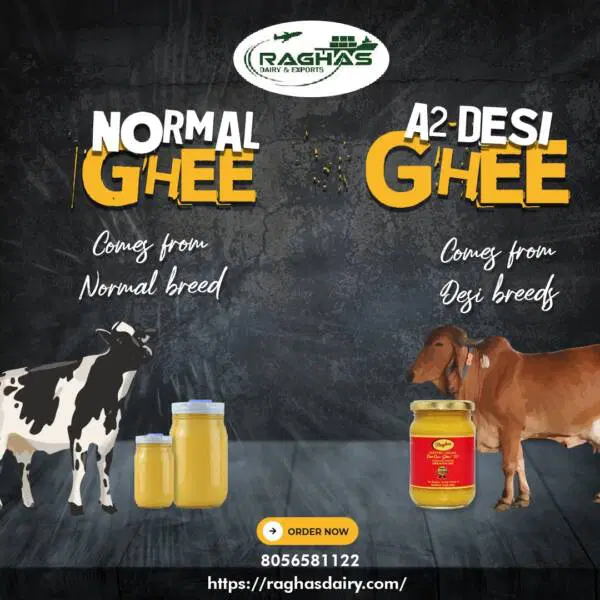
- A2 beta-casein — the original form, produced by indigenous Indian breeds: Kangayam, Umbalachery, Pulikulam, Bargur (Tamil Nadu), Gir (Gujarat), Sahiwal (Punjab), Red Sindhi (Rajasthan)
- A1 beta-casein — a mutated form from European breeds (Holstein Friesian, Jersey, Ayrshire) that entered India through crossbreeding programs
The difference is a single amino acid at position 67: A2 has proline, A1 has histidine. This one change has major consequences for digestion.
The BCM-7 Problem with A1 Protein
When A1 beta-casein is digested, the histidine at position 67 allows a peptide called beta-casomorphin-7 (BCM-7) to break off. BCM-7 is an opioid peptide that:
- Causes digestive discomfort — bloating, gas, stomach pain (often misdiagnosed as “lactose intolerance”)
- Triggers gut inflammation
- Slows gut motility — can cause constipation
- Has potential links to Type 1 diabetes, heart disease, and neurological conditions (research ongoing)
A2 beta-casein does NOT release BCM-7. The proline at position 67 creates a stronger bond that prevents the peptide from breaking free. This is why many people who think they’re “lactose intolerant” actually tolerate A2 dairy perfectly — they were reacting to A1 protein, not lactose.
A 2016 study in the Nutrition Journal confirmed that A2 milk caused significantly less digestive discomfort than A1 milk in sensitive individuals.
Nutritional Comparison: A2 Ghee vs Regular Ghee
| Nutrient (per tbsp) | A2 Desi Cow Ghee (Bilona) | Regular regular market ghee |
|---|---|---|
| CLA | 6-8mg | 2-3mg |
| Omega-3 | Higher (grass-fed) | Lower |
| Vitamin A | ~8% DV | ~5% DV |
| Vitamin K2 | Present (significant) | Trace/absent |
| Butyric Acid | 4-5% | 3-4% |
| Beta-Carotene | High (deep golden) | Low (pale) |
| BCM-7 Risk | None | Present (from A1 traces) |
The nutritional advantage comes from two factors: the A2 protein source itself and the fact that authentic A2 ghee comes from grass-fed desi cows raised traditionally — not factory-farmed crossbred cattle eating grain-based feed.
Upgrade from regular ghee to authentic A2
Taste and Texture Differences
You can taste the difference immediately:
- Colour: A2 ghee is deep golden-yellow (natural beta-carotene from grass). Regular ghee is pale yellow to white.
- Aroma: A2 bilona ghee has a rich, nutty, intensely aromatic smell. regular market ghee is mild or bland.
- Texture: A2 ghee forms grainy crystals when cool (natural crystallisation). regular market ghee is smooth and uniform.
- Taste: A2 ghee has complex, layered flavour — sweet, nutty, caramel undertones. Regular ghee tastes flat.
- Mouthfeel: A2 ghee melts quickly and feels lighter. Regular ghee can feel heavier or greasier.
How Each Is Made
Regular regular market ghee (2-3 hours)
- Bulk milk from mixed/crossbred cows (mostly A1)
- Cream separated using centrifugal machines
- Cream heated rapidly at high temperatures
- Preservatives may be added
A2 Desi Ghee — Bilona Method (24-48 hours)
- Fresh milk exclusively from indigenous A2 desi cows
- Milk boiled, cooled, set as curd in earthen pots (6-8 hours)
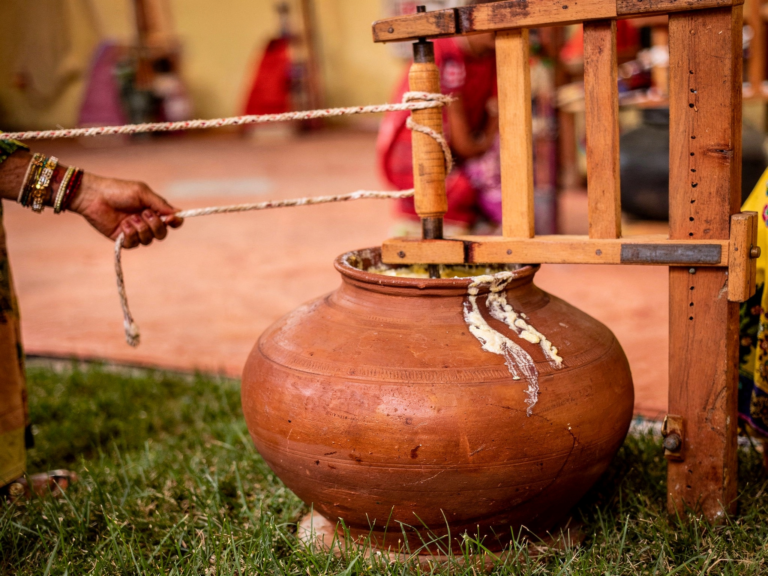
- Curd hand-churned with wooden bilona to extract makhan
- Makhan slow-cooked over gentle flame (3-4 hours)
- Zero preservatives, zero additives
It takes 25-30 litres of A2 milk to produce 1 litre of bilona ghee, compared to 15-18 litres for industrial cream-separation ghee. Read the complete bilona method guide for the full process.
Price Comparison — Is A2 Ghee Worth It?
- Regular regular market ghee (Amul, Mother Dairy): ₹500-600/litre
- A2 desi cow ghee (bilona): ₹1,500-2,500/litre
Yes, A2 ghee costs 2-3x more. But consider:
- You use less per serving — the flavour is more concentrated
- The traditional food value mean better gut health, immunity, and nutrition for your family
- You’re supporting indigenous cow breeds and traditional farming
- Per meal, the cost difference is just ₹5-10 extra
Compare current prices of the top A2 ghee brands in our best A2 ghee brands guide, or check Raghas Dairy pricing.
Who Should Choose A2 Ghee?
A2 ghee is beneficial for everyone, but especially important for:
- Pregnant and breastfeeding women — gentle A2 protein, vitamins for fetal development (pregnancy guide)
- Babies and toddlers (6+ months) — easier to digest, supports brain growth (baby guide)
- People with digestive sensitivity — no BCM-7 means no gut inflammation
- Elderly family members — K2 for bone health, butyric acid for gut health
- Fitness enthusiasts — higher CLA supports lean muscle and metabolism
- Anyone who values chemical-free, traditional food
How to Identify Genuine A2 Ghee
Many brands falsely claim “A2” or “desi cow” labels. Quick checks:
- Cow breed specified? — Should name Kangayam, Gir, Sahiwal, etc.
- Method stated? — “Bilona” or “hand-churned,” not “cream-separated”
- Colour: Deep golden, not pale yellow
- Grain test: Cool the ghee — should form crystals, not stay smooth
- Palm test: Melts quickly from body heat on your palm
- Price check: Below ₹1,200/litre? Almost certainly not genuine bilona A2 ghee
For the full set of home tests, read our complete guide to identifying pure A2 ghee.
Key Takeaways
- The A1/A2 difference is real — it’s one amino acid that determines whether BCM-7 (an inflammatory peptide) is released during digestion.
- A2 ghee is nutritionally superior — higher CLA, vitamin K2, omega-3, and beta-carotene, especially from grass-fed desi cows.
- The bilona method matters — it preserves nutrients that large-scale processing destroys, and yields ghee with richer flavour and texture.
- Per-meal cost difference is only ₹5-10 — worth it for the traditional food value.
- Not all “A2 ghee” is genuine — check breed, method, colour, texture, and price.
- Especially important for: pregnant women, babies, elderly, digestive-sensitive individuals.
Frequently Asked Questions
Is A2 ghee better than regular ghee?
Yes. A2 ghee from indigenous cows does not release BCM-7 during digestion. It also has higher CLA, omega-3, vitamin K2, and beta-carotene — especially when made from grass-fed desi cows using the bilona method.
Why is A2 ghee more expensive?
It takes 25-30L milk per litre of ghee (vs 15-18L for commercial), uses labour-intensive bilona processing (24-48 hours), and comes from desi cows that produce less milk. The per-meal difference is just ₹5-10.
Can lactose intolerant people eat A2 ghee?
Yes. Ghee has virtually no lactose. Many people who react to regular dairy find A2 ghee completely digestible — they were reacting to A1 protein, not lactose.
How can I tell if my ghee is real A2?
Deep golden colour, grainy texture when cool, rich nutty aroma, melts quickly on palm. Price below ₹1,200/L for “bilona A2 ghee” is a red flag. The label should explain cow source and method.
Is Amul ghee A2?
No. Amul ghee is made from mixed buffalo and cow milk (primarily A1). It does not use the bilona method and does not offer A2-specific traditional food value.
Does A2 ghee need refrigeration?
No. Pure A2 bilona ghee lasts 12-18 months at room temperature. Keep dry, use clean spoon, store away from sunlight.
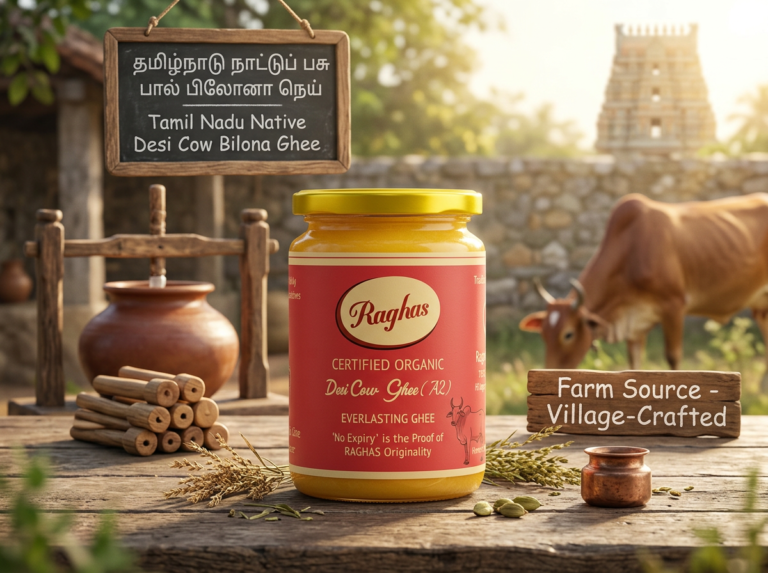
We produce A2 desi cow ghee at our family farm in Madurai, Tamil Nadu, from milk sourced from Tamil Nadu native desi cows. Traditional bilona method, FSSAI certified, no preservatives, no additives. Every jar is batch-traceable. Visit our shop | raghasdairy.com
Taste the Difference for Yourself
Raghas Dairy A2 bilona ghee — deep golden, grainy, intensely aromatic. The way ghee should be.
Free shipping on orders above ₹1,750
Frequently Asked Questions
What makes A2 desi ghee different from regular ghee?
A2 desi ghee is made from milk of indigenous cows that produce A2 beta-casein protein, which is easier to digest and more beneficial for health compared to A1 protein found in regular ghee.
How should I store desi ghee?
Store desi ghee in a cool, dry place away from direct sunlight. It can be kept at room temperature for months without refrigeration due to its natural preservation properties.
What are the traditional food value of consuming desi ghee?
Desi ghee is rich in fat-soluble vitamins (A, D, E, K), helps improve digestion, boosts immunity, and provides healthy fats that support everyday nourishment and overall health.