A2 Ghee vs Organic Ghee: What’s the Difference?
A2 Ghee vs Organic Ghee: What’s the Difference?
A2 ghee vs organic ghee — these terms are everywhere on ghee labels, but they measure completely different things. A2 refers to the type of protein in the milk (from native Indian cow breeds). Organic refers to how the cows were raised (without synthetic chemicals). One is about native cow source, the other about farming. And yes, ghee can be both.
This guide breaks down exactly what each term means, which matters more for your health, whether you need both, and how to choose the right ghee.
What Is A2 Ghee?
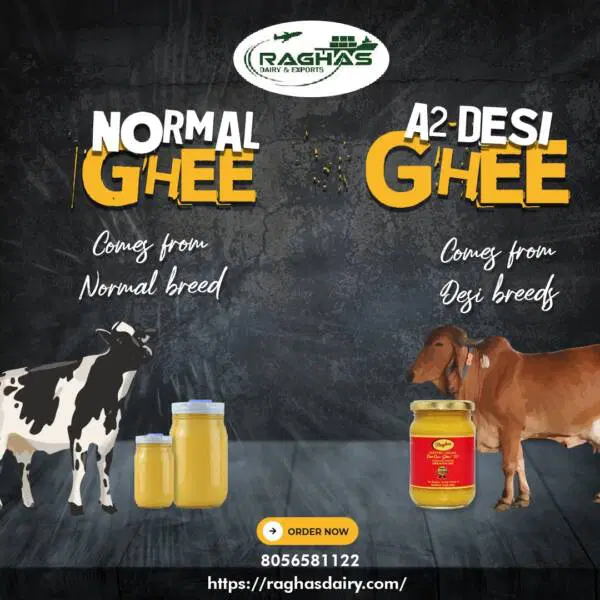
A2 ghee is made from the milk of cows that produce only A2 beta-casein protein. This includes all native Indian breeds:
- Tamil Nadu breeds: Kangayam, Umbalachery, Pulikulam, Bargur
- Other Indian breeds: Gir, Sahiwal, Red Sindhi, Tharparkar, Rathi
- Other A2 breeds globally: Guernsey, some Jersey lines
Why A2 matters:
A2 beta-casein is the original form of milk protein. When digested, it breaks down cleanly without producing BCM-7 — a peptide linked to digestive discomfort, inflammation, and other health concerns. A1 beta-casein (from Holstein, Friesian, and many crossbred cows) does produce BCM-7.
A2 is about what’s in the milk — the protein native cow source of the cow.
What Is Organic Ghee?
Organic ghee means the ghee comes from cows raised under organic farming standards:
- No synthetic pesticides on feed/pasture
- No antibiotics (or limited, regulated use)
- No growth hormones
- Organic feed — certified organic grains and forage
- Certified by a regulatory body (FSSAI Organic, India Organic, USDA Organic, etc.)
Important: Organic certification says nothing about the breed of cow. Organic ghee can come from Holstein or Jersey cows (A1 milk) raised organically. It addresses farming practices, not milk composition.
Organic is about how the cow was raised — the farming environment.
Key Differences: A2 vs Organic
| Factor | A2 Ghee | Organic Ghee |
|---|---|---|
| What it means | From cows producing A2 protein | From organically raised cows |
| Cow breed | Native/indigenous breeds only | Any breed (can be Holstein) |
| Protein type | A2 beta-casein (no BCM-7) | Could be A1 or A2 |
| Farming method | Not specified by “A2” label | Certified chemical-free |
| Certification | No standard certification body | FSSAI/India Organic/USDA |
| Health focus | Protein quality, digestion | Chemical-free, cleaner feed |
| Price | Premium (due to native breeds) | Premium (due to organic farming) |
Upgrade from regular ghee to authentic A2
Which Matters More for Health?
Both matter, but for different reasons:
A2 Protein Has More Direct Health Impact
The A2 vs A1 distinction affects what happens inside your body when you digest the milk protein. Even though ghee has most proteins removed during clarification, the A2 distinction reflects the overall quality of milk from native breeds — which also tends to have:
- Higher butyric acid content
- More CLA (conjugated linoleic acid)
- Richer fat-soluble vitamin profile
- Better omega-6 to omega-3 ratio
Organic Certification Addresses Chemical Exposure
Organic practices ensure you’re not consuming residual pesticides, antibiotics, or synthetic hormones through your ghee. This is important for long-term health, especially for children and pregnant women.
Our recommendation: Prioritise A2 first, organic second. A2 from native breeds raised on natural forage (even without formal organic certification) is often superior to certified organic ghee from A1 Holstein cows. Learn more in our A2 ghee vs regular ghee comparison.
Can Ghee Be Both A2 and Organic?
Absolutely — and this is the gold standard.
Many traditional Indian dairy farms naturally meet both criteria:
- They raise native breeds (A2 milk)
- Cows graze on natural pasture (no synthetic inputs)
- No antibiotics or hormones are used
- Traditional feeding with natural forage, hay, and oil cakes
The challenge is that formal organic certification is expensive and involves paperwork that many small, traditional farms can’t afford — even though their practices are organic in spirit.
At Raghas Dairy in Madurai, our Tamil Nadu native desi cows are raised on natural forage without synthetic chemicals. Our ghee is A2 by breed native cow source and follows organic principles in practice.
Understanding Certifications
A2 Claims
Currently, there is no single standardised A2 certification in India. A2 claims are based on:
- The breed of cow (all native Indian breeds are A2)
- Genetic testing of individual animals (for mixed herds)
- Trust in the producer’s transparency
Organic Certifications in India
- India Organic (NPOP) — Government of India certification
- FSSAI Organic — Food safety authority certification
- Jaivik Bharat — Indian organic logo
- USDA Organic — For export to the US
Look for certifications, but don’t dismiss uncertified producers who follow traditional practices. Visit their farms if possible, check reviews, and ask about their cattle breeds and feeding practices.
What to Look for When Buying Ghee
Here’s a priority checklist when choosing between A2 ghee and organic ghee — or finding ghee that’s both:
- Cow breed — Native Indian breeds (A2). Ask specifically which breeds
- Method — Bilona (curd-churned) is superior to cream-separated
- Feed — Natural forage, pasture-raised. No silage or processed feed
- Transparency — Can you learn about the farm, the cows, the process?
- Certifications — Organic certification is a plus but not essential if practices are transparent
- Taste and colour — Good A2 ghee has a natural golden colour and rich, nutty aroma
Check out our guide to the best A2 ghee brands in India for detailed comparisons.
Frequently Asked Questions
What is the difference between A2 ghee and organic ghee?
A2 ghee is from cows producing A2 beta-casein protein (native Indian breeds). Organic ghee is from cows raised without synthetic chemicals. They measure different things — protein native cow source vs farming practices. A2 ghee can be organic, and organic ghee can be A1.
Can ghee be both A2 and organic?
Yes. When native Indian breed cows are raised using organic principles, the ghee is both A2 and organic. Many traditional farms meet both criteria even without formal certification.
Which is better — A2 ghee or organic ghee?
A2 has more direct health impact (protein quality, better fatty acid profile). Organic addresses chemical exposure. Ideally, choose both. If you must pick one, prioritise A2 from native breeds.
Key Takeaways
- A2 = protein type (from native Indian cow breeds). Organic = farming method (no synthetic chemicals)
- They’re not the same thing — organic ghee can be A1, A2 ghee can be non-organic
- The ideal ghee is both A2 AND organic in practice
- Prioritise A2 for direct traditional food value — better protein, more butyric acid, higher CLA
- Many traditional Indian farms follow organic practices without formal certification
- Look at breed, method, feed, and transparency — not just labels
A2 Ghee Made the Traditional Way
Raghas Dairy’s ghee comes from milk sourced from Tamil Nadu native desi cows raised on natural forage. Traditional Bilona method. A2 by native cow source, organic by practice.
Free shipping on orders above ₹1,750.
Written by the Raghas Dairy Team from Madurai, Tamil Nadu. We make A2 ghee from milk sourced from Tamil Nadu native desi cows using the traditional Bilona method — hand-churned from curd, slow-cooked over wood fire.
Frequently Asked Questions
What makes A2 desi ghee different from regular ghee?
A2 desi ghee is made from milk of indigenous cows that produce A2 beta-casein protein, which is easier to digest and more beneficial for health compared to A1 protein found in regular ghee.
How should I store desi ghee?
Store desi ghee in a cool, dry place away from direct sunlight. It can be kept at room temperature for months without refrigeration due to its natural preservation properties.
What are the traditional food value of consuming desi ghee?
Desi ghee is rich in fat-soluble vitamins (A, D, E, K), helps improve digestion, boosts immunity, and provides healthy fats that support everyday nourishment and overall health.