Best Ghee for Biryani: Why A2 Desi Ghee Makes the Difference
Best Ghee for Biryani: Why A2 Desi Ghee Makes the Difference
The best ghee for biryani is A2 desi cow ghee made using the traditional Bilona method. Biryani without ghee is like chai without tea — technically possible, but missing the soul. Great ghee provides the signature aroma, golden colour, rich mouthfeel, and flavour depth that elevates biryani from good to unforgettable.
In this guide, we cover why ghee matters in biryani, which type gives the best results, how much to use, and tips for Hyderabadi, Lucknowi, and South Indian biryani styles.
Why Ghee Matters in Biryani
Ghee isn’t just an ingredient in biryani — it’s the medium through which flavours are built, carried, and delivered. Here’s what ghee does in biryani:
- Aroma carrier — Ghee dissolves and carries the aromatic compounds from whole spices (cardamom, cinnamon, cloves, bay leaf). These fat-soluble compounds bloom in ghee far better than in water or oil
- Flavour depth — The nutty, caramelised flavour of ghee adds a layer of richness that no other fat can replicate
- Mouthfeel — Ghee coats every grain of rice, giving biryani its characteristic silky, luxurious texture
- Golden colour — Natural beta-carotene in desi ghee gives biryani its appetising golden hue
- Even heat distribution — During dum (slow cooking), ghee helps distribute heat evenly, preventing hot spots
- Prevents sticking — Ghee-coated rice grains stay separate and fluffy
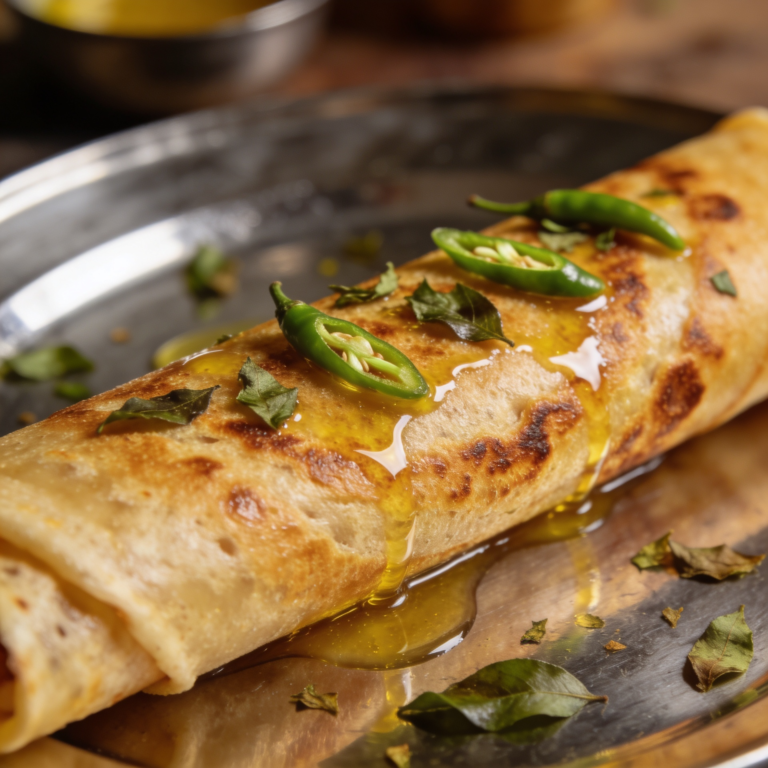
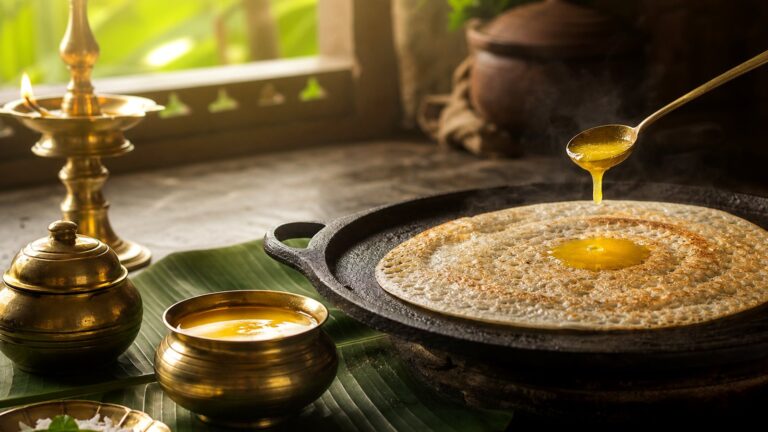
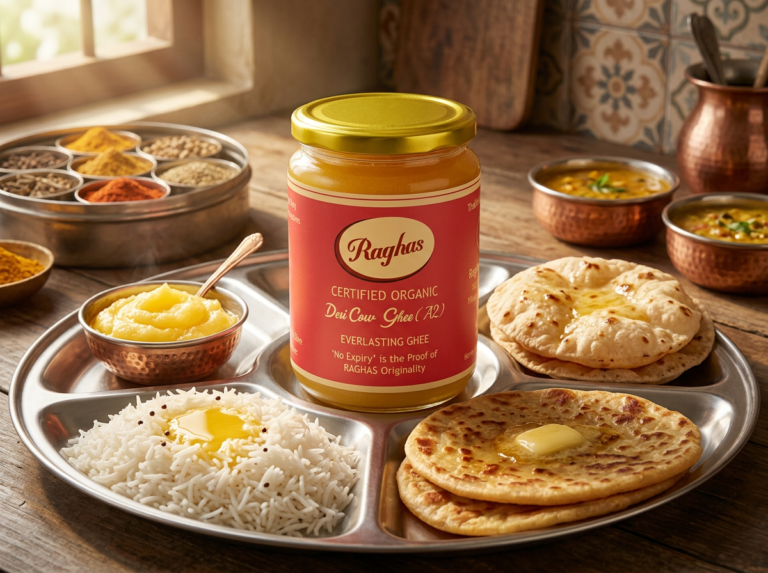
Biryani cooked in pure A2 ghee for rich flavor
The Best Type of Ghee for Biryani
Not all ghee works equally well in biryani. Here’s a ranking:
| Ghee Type | Biryani Rating | Why |
|---|---|---|
| A2 Bilona Desi Cow Ghee | ⭐⭐⭐⭐⭐ | Rich aroma, complex flavour, golden colour, high smoke point |
| Regular Desi Cow Ghee | ⭐⭐⭐⭐ | Good flavour, may lack depth of Bilona method |
| Buffalo Ghee | ⭐⭐⭐ | Heavier, white colour, strong flavour (some prefer for specific styles) |
| Commercial/large-scale ghee | ⭐⭐ | Flat flavour, less aroma, works but doesn’t shine |
| Vanaspati (Dalda) | ⭐ | Not real ghee. Contains trans fats. Avoid |
Why Bilona method matters for biryani: The traditional curd-churning process preserves volatile aromatic compounds — the same compounds responsible for ghee’s distinctive nutty fragrance. Industrial cream-separated ghee loses many of these during high-heat processing. When ghee flavour is the star (as in biryani), this difference is obvious.
A2 Ghee vs Regular Ghee for Cooking
For cooking, A2 ghee offers several advantages over regular (potentially A1) ghee:
- Richer aroma — Native breed milk has a naturally more complex flavour profile
- Better fat composition — Slightly higher butyric acid and CLA content
- Natural golden colour — Beta-carotene from pasture-raised cows
- Cleaner taste — No off-notes from large-scale processing
- Same high smoke point — ~250°C, perfect for searing and dum cooking
For more on cooking with A2 ghee vs other fats, see our A2 ghee vs olive oil comparison.
Smoke Point: Why Ghee Outperforms Other Fats
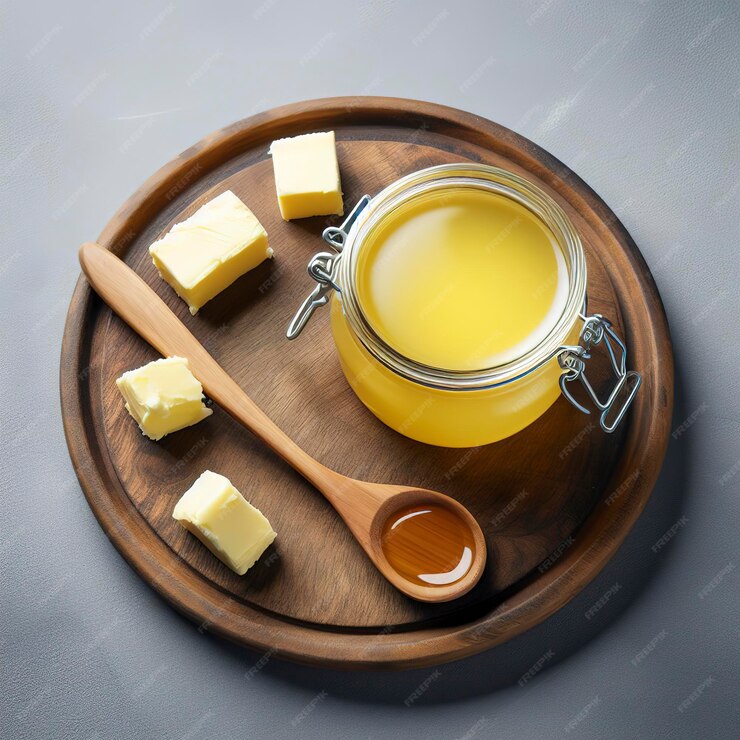
Biryani involves high-heat cooking — searing meat, blooming spices, and long dum. The smoke point matters:
| Fat | Smoke Point | Suitable for Biryani? |
|---|---|---|
| A2 Ghee | ~250°C (482°F) | Excellent ✓ |
| Butter | ~175°C (347°F) | Burns too easily ✗ |
| Olive Oil | ~190°C (374°F) | Wrong flavour profile ✗ |
| Coconut Oil | ~175°C (347°F) | Overpowers biryani spices ✗ |
| Sunflower Oil | ~230°C (446°F) | Works but no flavour depth |
Ghee’s high smoke point means you can sear meat at high temperatures without the fat burning or producing harmful compounds. It also stays stable during the long, slow dum phase. Read about A2 ghee nutrition for the full breakdown.
How Much Ghee to Use in Biryani
The right amount depends on your style and preference:
| Biryani Type | Ghee per kg of Rice | Notes |
|---|---|---|
| Home-style (lighter) | 3-4 tablespoons | Flavourful but not heavy |
| Restaurant-style | 5-6 tablespoons | Rich, indulgent |
| Hyderabadi dum | 5-6 tablespoons | Generosity is key to authentic taste |
| Lucknowi (Awadhi) | 4-5 tablespoons | Balanced, aromatic |
| South Indian (Ambur/Dindigul) | 3-4 tablespoons | Spice-forward, less ghee-heavy |
Pro tip: It’s better to use generous ghee in biryani and eat a moderate portion than to skimp on ghee and eat more rice to feel satisfied.
Ghee Tips by Biryani Style
Hyderabadi Dum Biryani
- Use ghee liberally — 5-6 tablespoons per kg of rice
- Sear the meat in ghee first for deep caramelisation
- Drizzle melted ghee between rice layers
- Add a generous tablespoon of ghee on top before sealing the pot for dum
- The ghee-soaked bottom layer (tah dig) is a prized part of the dish
Lucknowi (Awadhi) Biryani
- Ghee is used more subtly — 4-5 tablespoons per kg
- Cook the meat (korma-style) in ghee with yoghurt
- Par-boil rice separately with whole spices
- Layer with ghee, saffron milk, and kewra water
- The focus is on aromatic balance, not heavy ghee flavour
South Indian Biryani (Ambur/Dindigul/Thalassery)
- 3-4 tablespoons per kg — spices take centre stage
- Use ghee for the initial masala fry
- Seeraga samba rice (Dindigul style) absorbs ghee beautifully
- Finish with a drizzle of ghee and fried onions
- In Madurai, we prefer a slightly more generous hand with ghee
Step-by-Step: Using Ghee in Biryani
Here’s how ghee is used at each stage:
- Stage 1: Blooming spices (1 tbsp) — Heat ghee, add whole spices (bay leaf, cardamom, cloves, cinnamon, star anise). The fat-soluble aromatic compounds dissolve into the ghee
- Stage 2: Cooking onions (1 tbsp) — Fry sliced onions in ghee until deep golden. Ghee’s high smoke point prevents burning
- Stage 3: Searing meat (1 tbsp) — Brown the meat in ghee for Maillard reaction (caramelisation). This builds the flavour foundation
- Stage 4: Layering (1-2 tbsp) — Drizzle melted ghee between rice and meat layers. This ensures every bite is flavoured
- Stage 5: Dum seal (½ tbsp) — Final ghee on top before sealing. Creates steam that carries ghee flavour through all layers
Ghee vs Oil for Biryani
Can you substitute oil for ghee? Here’s the honest comparison:
| Factor | A2 Ghee | Vegetable Oil |
|---|---|---|
| Aroma | Rich, nutty, complex | Neutral |
| Flavour | Deep, warm, traditional | Flat, one-dimensional |
| Mouthfeel | Silky, luxurious | Light, thin |
| Rice texture | Each grain coated, separated | Less coating |
| Colour | Natural golden | No colour contribution |
| Smoke point | 250°C | Varies (190-230°C) |
| Nutrition | Butyric acid, vitamins, CLA | High omega-6 (inflammatory) |
Compromise option: If you want to reduce ghee, use a 2:1 ratio of ghee to oil (e.g., 3 tbsp ghee + 1.5 tbsp oil). You’ll retain most of the flavour while using less ghee.
Frequently Asked Questions
Which ghee is best for biryani?
A2 desi cow ghee made using the Bilona method. It has the richest aroma, best flavour depth, natural golden colour, and high smoke point (250°C). Avoid vanaspati or commercial large-scale ghee.
How much ghee should I use in biryani?
3-4 tablespoons per kg of rice for home-style, 5-6 tablespoons for restaurant-style richness. Add at multiple stages: spice blooming, onion frying, meat searing, layering, and final dum.
Can I use regular oil instead of ghee for biryani?
You can, but the result will lack the signature aroma, flavour, and mouthfeel. For a lighter option, use a mix of ghee and oil rather than eliminating ghee entirely.
Is A2 ghee better than regular ghee for biryani?
Yes. A2 Bilona ghee has richer aroma and more complex flavour from the traditional slow-churning process. For biryani, where ghee flavour is prominent, this difference is noticeable.
Key Takeaways
- A2 Bilona desi cow ghee is the best ghee for biryani — rich aroma, golden colour, high smoke point
- Ghee is the flavour carrier in biryani — it dissolves and distributes spice aromas
- Use 3-6 tablespoons per kg of rice depending on style
- Add ghee at every stage — spices, onions, meat, layering, and dum
- Don’t substitute entirely with oil — the result won’t taste like real biryani
- Ghee’s 250°C smoke point makes it perfect for high-heat biryani cooking
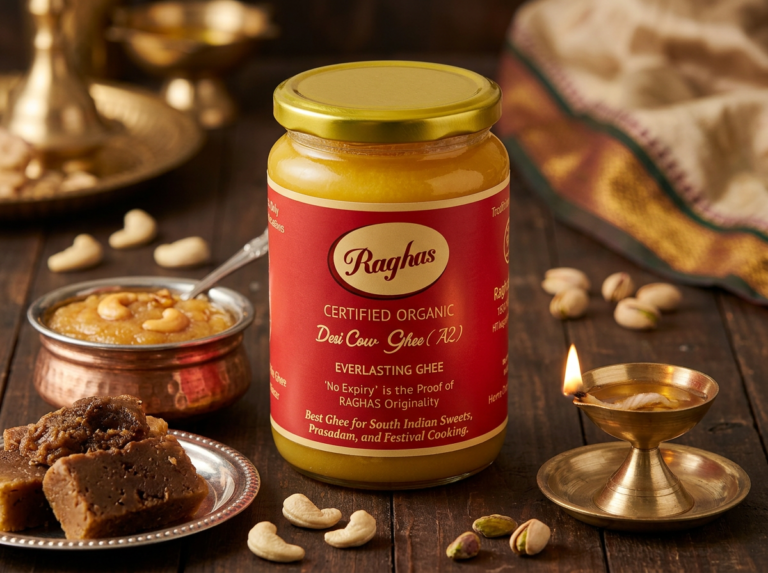
Make Your Best Biryani with Raghas A2 Ghee
Traditional Bilona-method ghee made from milk sourced from Tamil Nadu native desi cows. Rich aroma, golden colour, and the authentic flavour your biryani deserves.
Free shipping on orders above ₹1,750.
Written by the Raghas Dairy Team from Madurai, Tamil Nadu. We make A2 ghee from milk sourced from Tamil Nadu native desi cows using the traditional Bilona method — hand-churned from curd, slow-cooked over wood fire.
Frequently Asked Questions
What makes A2 desi ghee different from regular ghee?
A2 desi ghee is made from milk of indigenous cows that produce A2 beta-casein protein, which is easier to digest and more beneficial for health compared to A1 protein found in regular ghee.
How should I store desi ghee?
Store desi ghee in a cool, dry place away from direct sunlight. It can be kept at room temperature for months without refrigeration due to its natural preservation properties.
What are the traditional food value of consuming desi ghee?
Desi ghee is rich in fat-soluble vitamins (A, D, E, K), helps improve digestion, boosts immunity, and provides healthy fats that support everyday nourishment and overall health.