Pure Ghee vs Regular Ghee: Buyer Comparison
Pure ghee vs regular ghee is mainly a question of milk source, process clarity, taste, use case and how clearly the brand explains its claims.
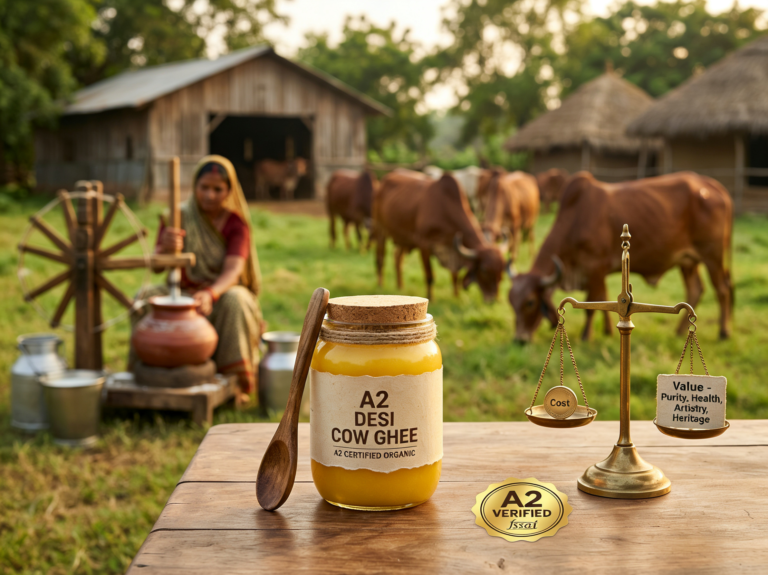
Raghas Dairy keeps this page focused on customer buying clarity: source, method, taste, price, storage, delivery and support. For current product pricing and availability, use the live product selector on the Raghas A2 Desi Cow Ghee product page.
Pure Desi Ghee vs Regular Ghee: 10 Key Differences (2026)
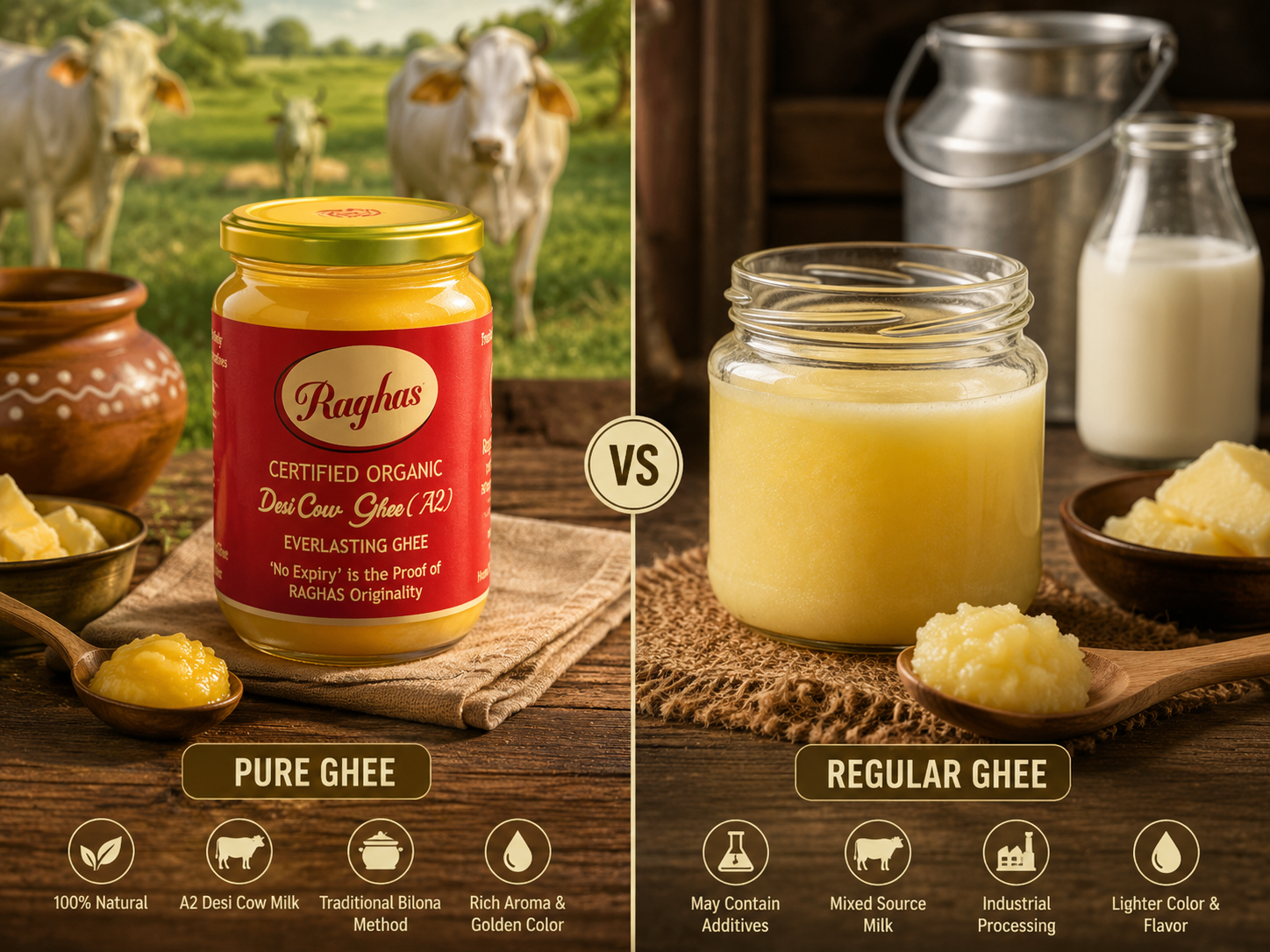
Core Difference: Pure desi ghee from native Indian breeds like Raghas Dairy’s mixed native herd blend offers A2 proteins, traditional processing, and authentic nutrition, while regular ghee often contains A1 proteins from large-scale processing of mixed-breed milk.
In the growing ghee market, the distinction between “pure desi ghee” and “regular ghee” often confuses consumers. While both products may look similar, the differences in source, processing, nutritional value, and traditional food value are substantial enough to significantly impact your family’s health and culinary experience.
This comprehensive guide examines 10 key differences between pure desi ghee and regular regular market ghee, helping you make informed decisions about which product delivers the best value for your health and taste preferences.
Understanding the Terminology
What is Pure Desi Ghee?
- Source: Indigenous Indian cow breeds (Gir, Sahiwal, Kangayam, Umbalachery, etc.)
- native cow source: Naturally A2 beta-casein producing cows
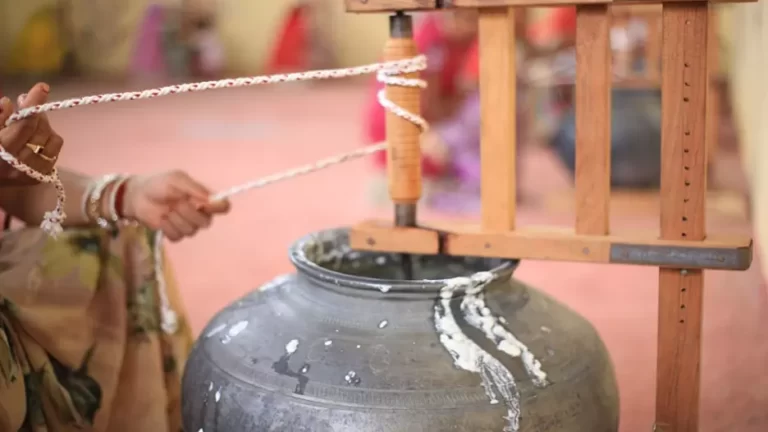
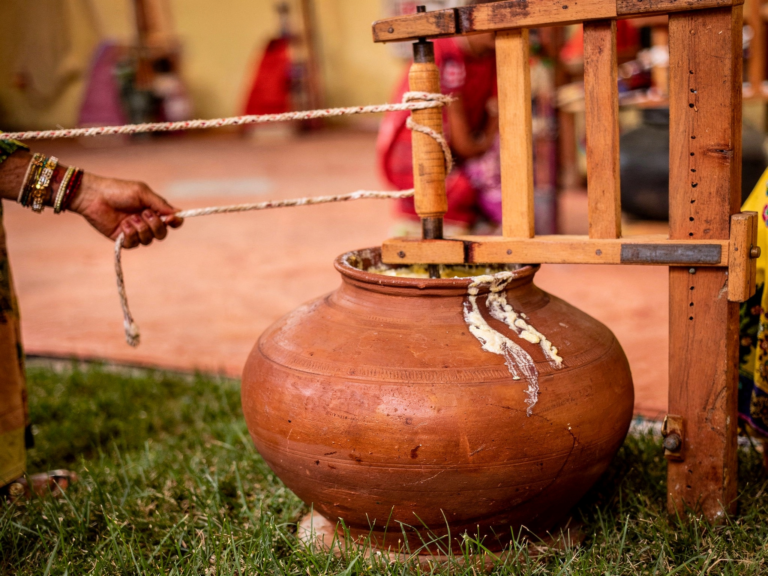
- Method: Traditional Bilona hand-churning process
- Processing: From milk → curd → butter → ghee
- Scale: Often small-batch, artisan production
- Philosophy: Preserving traditional methods and native native cow source
What is Regular Ghee?
- Source: Mixed breed cows or buffalo milk
- native cow source: Often A1 or mixed A1/A2 proteins
- Method: large-scale processing from cream or butter
- Processing: Directly from cream → ghee (skips curd stage)
- Scale: Large-scale commercial production
- Philosophy: Efficiency and cost optimization
10 Key Differences: Pure Desi Ghee vs Regular Ghee
Difference #1: Source and Cow Breeds
| Aspect | Pure Desi Ghee | Regular Ghee | Impact on Consumer |
|---|---|---|---|
| Cow Breeds | Indigenous Indian breeds only | Mixed breeds, often crossbred | Genetic purity affects milk quality |
| A2/A1 Proteins | 100% A2 beta-casein | Mixed A1/A2 or predominantly A1 | Digestibility and traditional food value |
| Regional Adaptation | Climate-adapted native breeds | Commercial breeds not locally adapted | Milk quality and consistency |
| mixed Tamil Nadu native desi cow herd | May include multiple native breeds | Limited breed diversity | Nutritional complexity |
Difference #2: Production Methods
| Process Stage | Pure Desi Ghee | Regular Ghee | Quality Difference |
|---|---|---|---|
| Starting Material | Fresh A2 milk | Cream, butter, or mixed milk | Freshness and purity |
| Curd Formation | Natural fermentation (12-24 hours) | Often skipped or accelerated | Probiotic benefits |
| Churning | Hand-operated wooden bilona | Machine churning | Nutrient retention |
| Time Investment | 2-3 days complete process | Few hours rapid processing | Flavor development |
| Temperature Control | Low-temperature slow heating | High-temperature rapid processing | Nutritional preservation |
Difference #3: Nutritional Profile
| Nutrient | Pure Desi Ghee | Regular Ghee | Significance |
|---|---|---|---|
| Vitamin A Content | 800-1200 mcg/100g | 400-700 mcg/100g | Eye health, immunity |
| Beta-Carotene | High levels (golden color) | Moderate to low levels | Antioxidant activity |
| CLA Content | 8-12 mg/g fat | 3-6 mg/g fat | Anti-inflammatory |
| Omega-3 Fatty Acids | Higher levels | Standard levels | Brain and heart health |
| Butyric Acid | Enhanced by fermentation | Standard levels | Gut health |
| Fat-Soluble Vitamins | D, E, K2 in higher concentrations | Standard levels | Bone health, metabolism |
Difference #4: Taste and Sensory Experience
Pure Desi Ghee Characteristics:
- Color: Natural golden to deep golden (beta-carotene)
- Aroma: Rich, complex, nutty fragrance
- Texture: Naturally granular when solid
- Taste: Multi-layered, authentic ghee flavor
- Seasonal Variation: Natural changes based on cow’s diet
- Terroir: Reflects regional characteristics
Regular Ghee Characteristics:
- Color: Uniform yellow (may have artificial coloring)
- Aroma: Standard ghee smell, sometimes processed
- Texture: Smooth, uniform consistency
- Taste: Standardized flavor profile
- Consistency: Same taste year-round
- Processing Notes: May have slight artificial undertones
Difference #5: Price and Value Proposition
| Price Factor | Pure Desi Ghee | Regular Ghee | Value Analysis |
|---|---|---|---|
| Price Range (₹/kg) | ₹1,500-3,000 | ₹400-800 | 3-4x price difference |
| Cost Drivers | Native breeds, traditional methods | Industrial efficiency | Quality vs quantity approach |
| Health Value | Superior nutrition and digestibility | Basic nutrition | Long-term health investment |
| Usage Efficiency | Richer flavor = less quantity needed | Standard flavor intensity | May offset higher unit cost |
Difference #6: Digestibility and Health Impact
Pure Desi Ghee traditional food value:
- Easy Digestion: A2 proteins don’t produce BCM-7 peptide
- Anti-Inflammatory: Higher CLA and butyric acid content
- Gut Health: Beneficial for microbiome balance
- Lactose Tolerance: Better tolerated by sensitive individuals
- Nutrient Absorption: Enhanced bioavailability of nutrients
Regular Ghee Limitations:
- Digestive Issues: A1 proteins may cause problems for some
- Inflammatory Potential: BCM-7 peptide may trigger inflammation
- Standard Benefits: Basic ghee benefits without enhancement
- Processing Impact: Some nutrients lost in rapid processing
Difference #7: Quality Control and Standards
| Quality Aspect | Pure Desi Ghee | Regular Ghee |
|---|---|---|
| Source Control | Complete farm-to-jar traceability | Multiple suppliers, less control |
| Production Monitoring | Artisan oversight, small batches | Automated systems, large batches |
| Consistency | Natural variation accepted | Artificially standardized |
| Contamination Risk | Lower due to controlled environment | Higher due to multiple sources |
Difference #8: Environmental and Cultural Impact
Pure Desi Ghee Impact:
- Breed Conservation: Supports endangered native breed preservation
- Cultural Heritage: Maintains traditional dairy practices
- Environmental Sustainability: Native breeds better adapted to local climate
- Farmer Support: Better returns for traditional farmers
- Biodiversity: Promotes mixed Tamil Nadu native desi cow herd in cattle
Regular Ghee Impact:
- Industrial Model: Focus on yield over sustainability
- Breed Homogenization: Preference for high-yield commercial breeds
- Environmental Stress: Less adapted breeds may need more resources
- Cultural Loss: Traditional methods being abandoned
Difference #9: Storage and Shelf Life
| Storage Aspect | Pure Desi Ghee | Regular Ghee | Practical Impact |
|---|---|---|---|
| Natural Preservation | Higher antioxidant content | May require added preservatives | Longer natural shelf life |
| Shelf Life | 12-18 months without additives | 8-12 months, may need preservatives | Better storage stability |
| Temperature Sensitivity | Natural texture changes acceptable | Expected to maintain uniform texture | Different quality expectations |
| Quality Indicators | Natural granulation shows purity | Smooth texture maintained artificially | Understanding quality signs |
Difference #10: Authenticity and Market Context
Pure Desi Ghee Market Position:
- Premium Segment: Targets health-conscious consumers
- Authenticity Claims: Traditional methods and native breeds
- Limited Availability: Specialty stores and direct sales
- Brand Trust: Based on transparency and heritage
- Customer Education: Requires explanation of benefits
Regular Ghee Market Position:
- Mass Market: Wide consumer accessibility
- Convenience Focus: Easy availability and standardized quality
- Price Competition: Competitive pricing as key differentiator
- Brand Recognition: Marketing and distribution-driven
- Immediate Acceptance: Familiar taste and texture
How to Identify Pure Desi Ghee
Visual Identification Tests
Color Test:
- Pure Desi Ghee: Natural golden to deep golden color from beta-carotene
- Regular Ghee: May be artificially bright yellow or pale yellow
- Red Flag: Unnaturally bright or uniform coloring
Texture Test:
- Pure Desi Ghee: Naturally granular when solid, especially in winter
- Regular Ghee: Smooth, uniform texture maintained artificially
- Melting Test: Pure ghee melts easily at body temperature
Aroma Test:
- Pure Desi Ghee: Rich, complex, nutty fragrance
- Regular Ghee: Standard ghee smell, may have processing notes
- Warning Signs: Artificial fragrances or chemical odors
Taste Test:
- Pure Desi Ghee: Complex, satisfying flavor with no bitterness
- Regular Ghee: Standard ghee taste, may have slight artificial notes
- Quality Indicator: Lingering pleasant aftertaste
Label Reading Guide
- Look For: Specific native breed mentions (Gir, Kangayam, etc.)
- Production Method: “Bilona” or “hand-churned” mentioned
- Source Information: Farm location and cow breed details
- Certifications: A2 testing, organic certifications
- Avoid: Vague terms like “desi cows” without specifics
Making the Right Choice
When to Choose Pure Desi Ghee:
- Health Priority: Family members with digestive sensitivities
- Authenticity Seekers: Want traditional taste and methods
- Special Occasions: Festivals, religious ceremonies, gifting
- Therapeutic Use: Ayurvedic treatments and health applications
- Quality Focus: Willing to pay premium for superior benefits
- Supporting Heritage: Want to preserve traditional practices
When Regular Ghee Might Suffice:
- Budget Constraints: Need basic ghee benefits at lower cost
- Bulk Cooking: Large quantity cooking where premium may be wasted
- No Sensitivities: Family has no digestive issues with regular dairy
- Convenience Priority: Easy availability and consistent supply needed
- Mixed Usage: Combining with other cooking fats anyway
Value Proposition Analysis
Cost-Benefit Analysis
| Factor | Pure Desi Ghee Value | Regular Ghee Value | Winner |
|---|---|---|---|
| traditional food value per Rupee | High due to A2 proteins and nutrients | Basic ghee benefits only | Pure Desi |
| Flavor Enhancement | Superior taste complexity | Standard ghee flavor | Pure Desi |
| Quantity Efficiency | Rich flavor = less needed | Standard intensity | Pure Desi |
| Immediate Cost | Higher upfront investment | Lower immediate cost | Regular |
| Long-term Health Value | Potentially reduces health costs | Standard health impact | Pure Desi |
Experience the Pure Desi Difference
Why settle for commercial limitations when you can have the full benefits of pure desi ghee? Raghas Dairy’s unique four Tamil Nadu breed approach represents the pinnacle of pure desi ghee excellence.
✅ 100% Pure A2 from Tamil Nadu native desi cows
✅ Traditional Bilona Hand-Churning Only
✅ Complete Farm-to-Jar Transparency
✅ Superior Nutrition and Digestibility
✅ mixed Tamil Nadu native desi cow herd Unavailable Elsewhere
✅ Supporting Native Breed Conservation
Frequently Asked Questions
1. Is pure desi ghee worth the 3-4x higher price than regular ghee?
For many families, yes. The A2 proteins, enhanced nutrition, traditional processing benefits, and superior digestibility often justify the premium, especially for health-conscious consumers and those with dairy sensitivities.
2. Can I tell the difference in taste between pure desi and regular ghee?
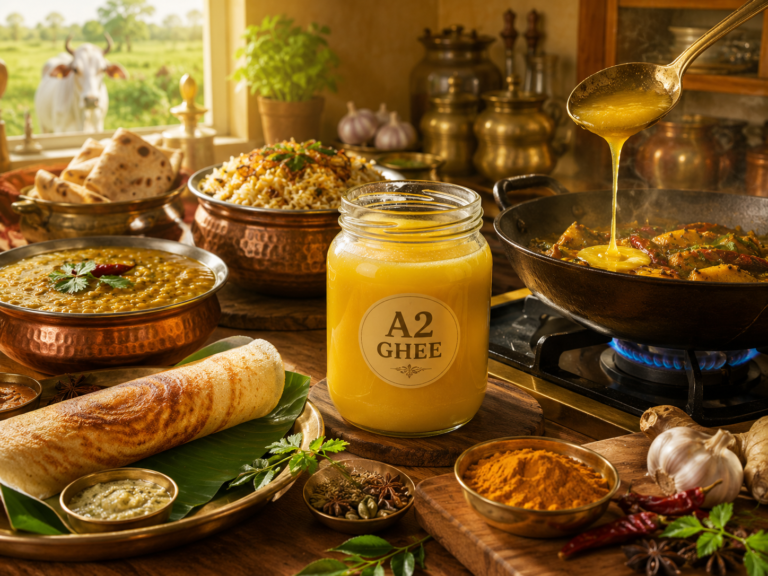
Most people notice a significant difference – pure desi ghee has richer, more complex flavors and a more satisfying taste. The difference is especially noticeable in simple preparations like ghee rice or on rotis.
3. Are all expensive ghees necessarily pure desi ghee?
No, high price doesn’t guarantee authenticity. Check for specific native breed mentions, traditional processing methods, and source transparency. Some brands charge premium prices without offering genuine pure desi benefits.
4. How can I verify if a brand is selling genuine pure desi ghee?
Look for specific cow breed information, traditional Bilona processing claims, source farm details, A2 testing certificates, and realistic pricing (genuine pure desi costs ₹1,500+ per kg).
5. Does regular ghee have any advantages over pure desi ghee?
Regular ghee offers lower cost, wider availability, consistent taste and texture, and familiar flavor profile. It’s adequate for basic cooking needs and budget-conscious households.
6. Can people with lactose intolerance use both types of ghee?
Both are generally safe for lactose intolerant individuals as clarification removes most lactose. However, pure desi ghee with A2 proteins is often better tolerated and less likely to cause digestive issues.
7. Which type of ghee is better for cooking at high temperatures?
Pure desi ghee often has slightly higher smoke point and better heat stability due to traditional processing methods. Both are suitable for high-heat cooking, but pure desi may perform marginally better.
8. How do I store pure desi ghee differently from regular ghee?
Storage methods are similar – clean, airtight containers away from heat and light. Pure desi ghee may show natural granulation which is normal and indicates quality, while regular ghee maintains uniform texture.
9. Can I gradually switch from regular to pure desi ghee?
Yes, many families start by using pure desi ghee for special occasions and gradually increase usage as they experience the benefits and adjust to the taste difference.
10. What’s the difference between pure desi ghee from different native breeds?
Each breed offers unique characteristics – Gir for consistency, Kangayam for richness, etc. Multi-breed options like Raghas Dairy’s mixed native herd blend provide complex nutritional and flavor benefits unavailable from single breeds.
Conclusion: Making an Informed Choice
The differences between pure desi ghee and regular ghee extend far beyond price points. Understanding these distinctions helps you make choices aligned with your family’s health goals, taste preferences, and budget considerations.
Key Takeaways:
- Pure desi ghee offers A2 proteins, traditional processing, and enhanced nutrition
- Regular ghee provides basic benefits at accessible prices with wide availability
- Quality identification requires checking breeds, methods, and source transparency
- Price premiums for pure desi ghee are justified by superior traditional food value
- Mixed usage strategies can optimize both benefits and budget efficiency
The Bottom Line: Pure desi ghee represents an investment in health, tradition, and culinary excellence that many families find worthwhile despite the higher cost. Regular ghee serves the mass market need for affordable cooking fat with basic benefits.
Your choice depends on prioritizing long-term traditional food value and authentic taste (pure desi ghee) versus immediate affordability and convenience (regular ghee). Many families successfully use both strategically – pure desi for health and special occasions, regular for everyday bulk cooking.
Whatever you choose, ensure you’re getting authentic products from transparent sources that deliver the benefits they promise. In the world of ghee, quality and authenticity matter more than marketing claims.
Simple Buying Difference: Source, Method and Use
Pure desi ghee vs regular ghee is mainly a question of source clarity and production method. A buyer should ask: what milk is used, how is butter made, how is the ghee clarified, and does the brand explain its claims plainly?
Raghas A2 desi cow ghee is positioned around Tamil Nadu native desi cow milk and a curd-first bilona approach. Regular ghee may still be useful in many kitchens, but it may not offer the same source or method story.
Continue Your A2 Ghee Buying Research
If you are choosing A2 desi cow ghee for your home, compare source clarity, bilona method, price per litre, storage guidance and delivery support before ordering.