Why Real Bilona Ghee Uses Curd, Not Cream
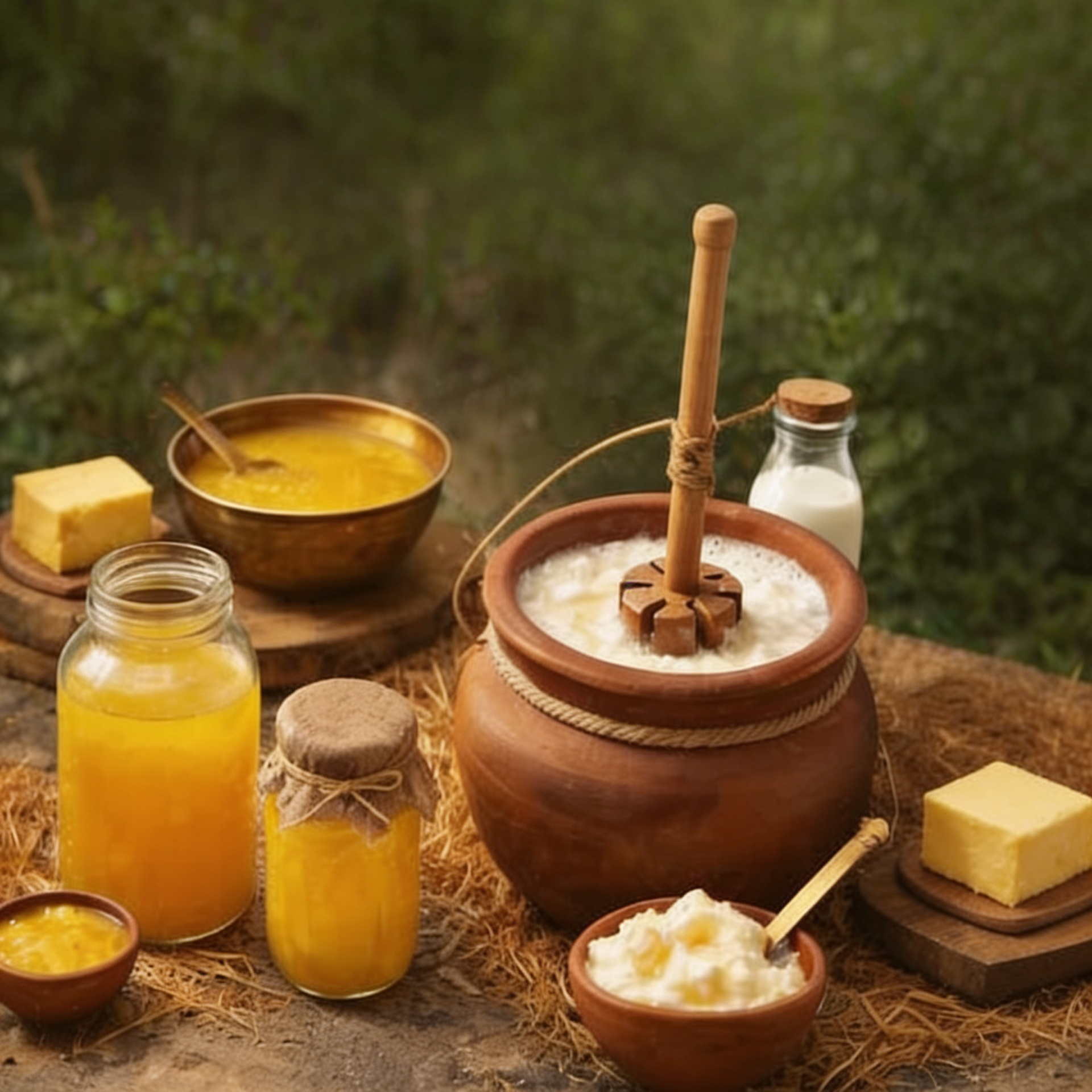
Real bilona-style ghee is built around a curd-first process. Milk is set into curd, curd is churned to separate butter, and butter is slowly heated into ghee. This is different from taking separated cream and melting it into ghee.
Quick answer
- Curd is the heart of traditional bilona-style ghee.
- Cream-based ghee can be faster, but it does not follow the same food pathway.
- Ask brands to explain the process in plain words: milk to curd to butter to ghee.
What bilona means in practice
Bilona is commonly used to describe the traditional churning route. The word itself is often used loosely in marketing, so buyers should focus on the actual process. A clear brand should be able to say whether the ghee came from curd-churned butter.
The process matters because each step changes flavour and texture. Setting curd introduces a cultured stage. Churning separates butter. Slow heating develops the nutty aroma that many families associate with traditional ghee.
Why cream is different
Cream separation is a more direct route. Cream is collected and heated into ghee. It can produce usable ghee, but it is not the same as the curd-first bilona route.
For customers, this is not about attacking another method. It is about clarity. If a product is curd-churned, say so. If it is cream-based, say so. Buyers can then choose the taste and method they prefer.
The buyer questions that cut through marketing
| Ask this | Good answer |
|---|---|
| Is the ghee made from curd? | Yes, milk is set into curd before churning. |
| Is butter churned before heating? | Yes, butter is separated through churning. |
| What is the milk source? | The source is clearly described without confusing breed claims. |
| Is FSSAI information visible? | Licence and product details are easy to find. |
How this shows up in food
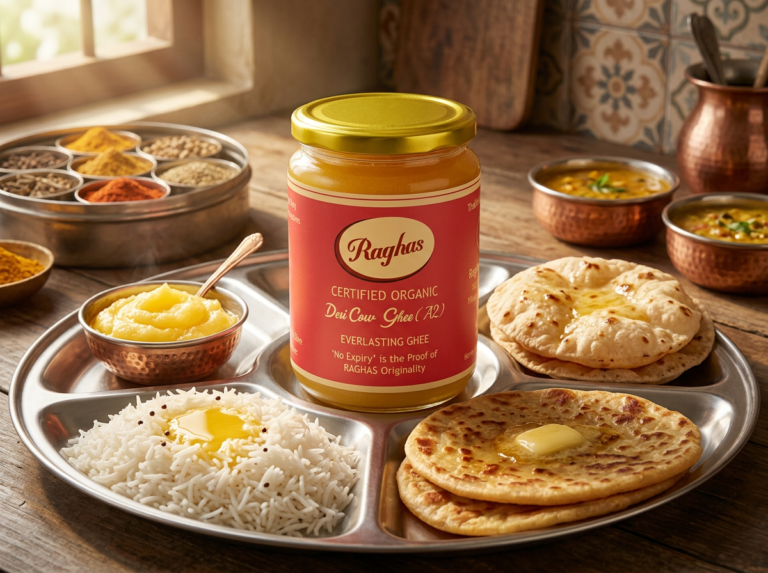
Curd-churned ghee is especially noticeable in simple food. Try a small spoon over hot rice, idli podi, pongal or a crisp dosa. When the food is simple, aroma and mouthfeel are easier to judge.
If you want a deeper practical comparison, read curd-churned ghee vs cream-separated ghee. For lab and food-standard checks, see lab-tested ghee values.
Raghas Dairy’s source and method note
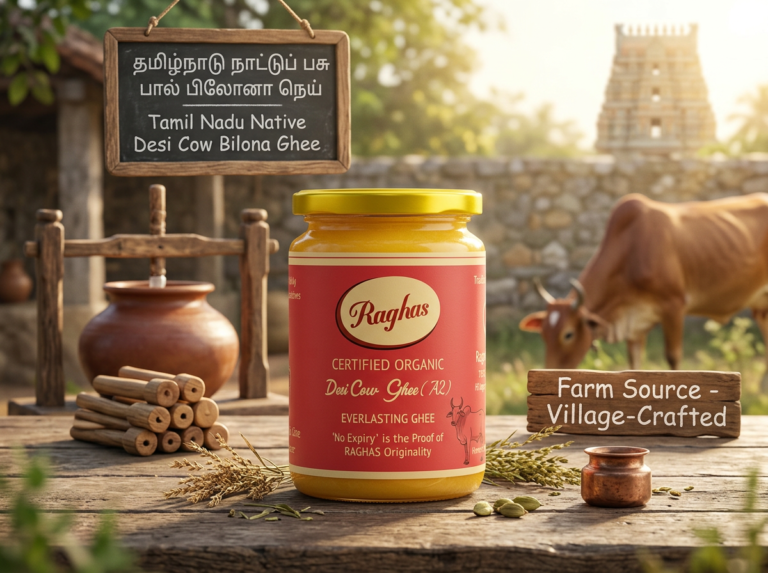
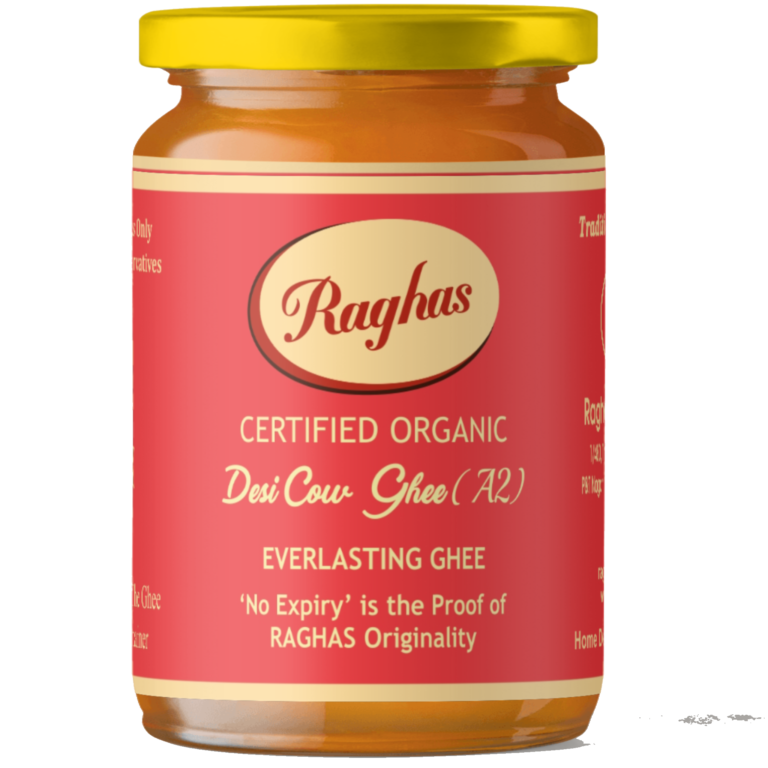
Raghas Dairy uses milk sourced from Tamil Nadu native desi cows only, as a mixed native herd. The ghee is positioned around native source clarity and traditional preparation, not a single-breed story.
Helpful next reads
Frequently asked questions
Can cream-separated ghee still be real ghee?
Yes, it can be ghee. The distinction is whether it follows the traditional curd-first bilona route.
How can I identify bilona-style ghee?
Look for a clear explanation that says milk is set into curd, churned into butter and then heated into ghee.
Does bilona always mean better?
It depends on source, hygiene, handling and taste. Bilona describes the method; the full product still needs quality checks.
Where can I buy Raghas Dairy ghee?
See Pure A2 Desi Cow Ghee and current pack options on the product page.
Useful official references
Shop Raghas Dairy ghee
Raghas Dairy ghee is made from milk sourced from Tamil Nadu native desi cows only, as a mixed native herd. See Pure A2 Desi Cow Ghee or compare it with Full Moon Ghee.
Good label language is plain language
A strong ghee label does not need complicated claims. It should explain the source, method and pack clearly. For bilona-style ghee, the plain-language test is whether the brand can say: milk was set into curd, curd was churned into butter, and butter was heated into ghee.
That sentence tells a buyer more than decorative words. It also lets customers compare products fairly without attacking other methods.
When buying online, read the full product description before checkout. If the method is important to you, choose the product that explains it clearly.
For Raghas Dairy, that clarity is part of the product promise. The customer should understand what is being bought, how it is meant to be used, and why the source matters for everyday food.
What customers should see on a bilona product page
A good bilona product page should explain the process without making the customer work too hard. It should mention curd, churning, butter and slow heating. It should also show pack size, price, delivery area and contact details.
Photos and labels help, but the written process still matters. Many customers search “bilona ghee” because they are trying to avoid vague marketplace claims. A clear explanation reduces doubt and makes the purchase easier.
For Raghas Dairy, the bilona explanation should always sit next to the source explanation: milk from Tamil Nadu native desi cows only, as a mixed native herd.
Best next step for buyers
If you are buying bilona ghee for the first time, do not start by comparing too many claims. Start with one product that clearly explains curd, churning and butter. Use it in hot rice, dosa and dal for one week. If the aroma, texture and digestion comfort suit your family, then consider a larger pack or subscription.