Is A2 Ghee Lactose Free? Everything You Need to Know
Is A2 Ghee Lactose Free? Everything You Need to Know
Is A2 ghee lactose free? Yes — properly made A2 ghee is virtually free of lactose and casein. During the clarification process, butter is heated until all water evaporates and milk solids (containing lactose and casein) separate and are removed. What remains is pure butterfat with only trace amounts of lactose — well below the threshold that triggers symptoms.
If you’re lactose intolerant and miss the rich taste of dairy in your cooking, A2 ghee is your answer. Let’s break down exactly how clarification works, what “trace amounts” means, and how A2 ghee differs from milk, butter, and regular ghee.
- Quick Answer: A2 Ghee and Lactose
- What Is Lactose and Why Does It Cause Problems?
- How the Clarification Process Removes Lactose
- What About Trace Amounts?
- Lactose vs Casein: The Important Difference
- A2 Ghee vs A1 Ghee for Dairy Sensitivity
- Dairy Products Lactose Comparison
- Practical Advice for Lactose Intolerant People
- Frequently Asked Questions
- Key Takeaways
Quick Answer: A2 Ghee and Lactose
A2 ghee is virtually lactose free. It contains less than 0.1% lactose — a negligible amount. The clarification (heating and filtering) process removes water, lactose, and casein proteins. Most lactose intolerant individuals can consume A2 ghee without any digestive symptoms.
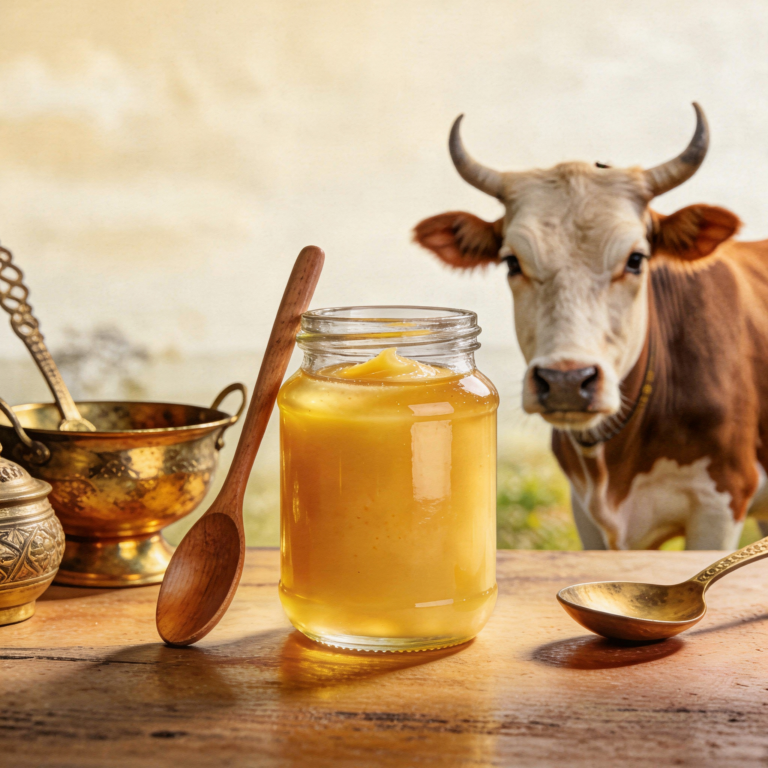
Ghee is naturally lactose-free
What Is Lactose and Why Does It Cause Problems?
Lactose is a sugar found in milk. To digest it, your body needs an enzyme called lactase. About 60-70% of Indian adults have some degree of lactose malabsorption — their bodies produce less lactase after childhood.
Symptoms of lactose intolerance:
- Bloating and gas
- Stomach cramps
- Diarrhoea or loose stools
- Nausea after consuming dairy
These symptoms occur because undigested lactose ferments in the colon, producing gas and drawing water into the intestine. The threshold varies — most people can tolerate 12g of lactose (about 1 glass of milk) before symptoms appear.
How the Clarification Process Removes Lactose
Understanding how ghee is made explains why it’s lactose free:
- Milk → Curd → Butter (Bilona method) — At Raghas Dairy, we follow the traditional Bilona process. Milk sourced from Tamil Nadu native desi cows is set into curd, then hand-churned to extract butter.
- Butter is slowly heated — The butter is cooked over gentle heat. Water evaporates first (butter is about 15-17% water).
- Milk solids separate — As heating continues, the milk solids (containing lactose and casein) settle at the bottom and brown.
- Filtering — The clear golden liquid is filtered through cloth, leaving behind all milk solids.
- What remains — Pure butterfat: 99.7%+ fat, less than 0.1% lactose, virtually no casein.
The Bilona method is actually more effective at removing milk solids than large-scale ghee production because the slow heating allows complete separation. Learn more about what A2 ghee means.
Clarification removes lactose from ghee
What About Trace Amounts?
Let’s put “trace amounts” in perspective:
- 1 glass of milk contains about 12g of lactose
- 1 tablespoon of butter contains about 0.01g of lactose
- 1 tablespoon of ghee contains less than 0.001g of lactose
Most lactose intolerant people start experiencing symptoms at 6-12g of lactose. You would need to consume several kilograms of ghee to reach that threshold — a physically impossible amount.
Even people with severe lactose intolerance can typically consume ghee without any issues. The trace amounts are clinically insignificant.
Lactose vs Casein: The Important Difference
Many people confuse lactose intolerance with milk protein allergy. They’re different conditions:
- Lactose intolerance = Can’t digest lactose sugar. Digestive symptoms. Ghee is safe ✓
- Casein sensitivity = Reacts to casein protein. Digestive/inflammatory symptoms. Ghee is generally safe ✓ (casein removed during clarification)
- Casein allergy (IgE-mediated) = Immune reaction to casein. Can be severe. Consult allergist before using ghee ⚠️
This is where A2 vs A1 becomes relevant. A2 beta-casein (from native Indian breeds) is structurally different from A1 beta-casein (from Holstein/Jersey cows) and doesn’t produce BCM-7, a peptide linked to digestive discomfort. So even if trace casein exists in ghee, A2 casein is less likely to cause issues.
Dairy Products Lactose Comparison
| Product | Lactose Content | Safe for Lactose Intolerant? |
|---|---|---|
| Whole milk | ~4.8g per 100ml | Usually not ✗ |
| Yoghurt/Curd | ~3.5g per 100ml | Better tolerated (bacteria pre-digest some lactose) |
| Paneer | ~2.0g per 100g | May cause mild symptoms |
| Butter | ~0.06g per 100g | Usually safe ✓ |
| A2 Ghee | <0.1g per 100g | Safe ✓✓ |
Practical Advice for Lactose Intolerant People
If you’re lactose intolerant and want to start using A2 ghee:
- Start small — Try ½ teaspoon with a meal and observe for 24 hours
- Increase gradually — If no symptoms, increase to 1-2 teaspoons daily
- Choose quality — Properly clarified ghee (like traditional Bilona ghee) has lower residual lactose than industrially produced ghee
- Don’t fear cooking with it — Heating ghee further reduces any remaining traces of lactose
- Enjoy the benefits — You can now have the rich flavour and nutrition of dairy fat without digestive issues
Read about the full range of A2 ghee benefits you can enjoy.
Frequently Asked Questions
Is A2 ghee lactose free?
Yes. The clarification process removes virtually all lactose. A2 ghee contains less than 0.1% lactose — a negligible, clinically insignificant amount that doesn’t cause symptoms in lactose intolerant individuals.
Can lactose intolerant people eat A2 ghee?
Yes. Most lactose intolerant people consume A2 ghee without any digestive issues. Start with ½ teaspoon to confirm tolerance, then use normally.
Is A2 ghee safe for casein allergy?
For casein sensitivity, yes — ghee has casein removed during clarification. For severe casein allergy (anaphylaxis risk), consult your allergist first, as trace amounts may remain.
What is the difference between A2 ghee and regular ghee for lactose intolerance?
Both are lactose free after clarification. The difference is the protein type — A2 ghee from native breeds has A2 beta-casein (easier to digest), while regular ghee may come from A1 cows. For lactose intolerance specifically, both work equally well.
Key Takeaways
- A2 ghee is virtually lactose free — less than 0.1% lactose remains after clarification
- The clarification process removes both lactose and casein from butter
- You’d need to eat kilograms of ghee to reach a symptom-causing lactose dose
- Bilona-method ghee is more thoroughly clarified than large-scale ghee
- A2 ghee is safe for lactose intolerant people — a way to enjoy dairy fat benefits
- For severe casein allergy, consult your allergist first
Enjoy Dairy Without the Discomfort
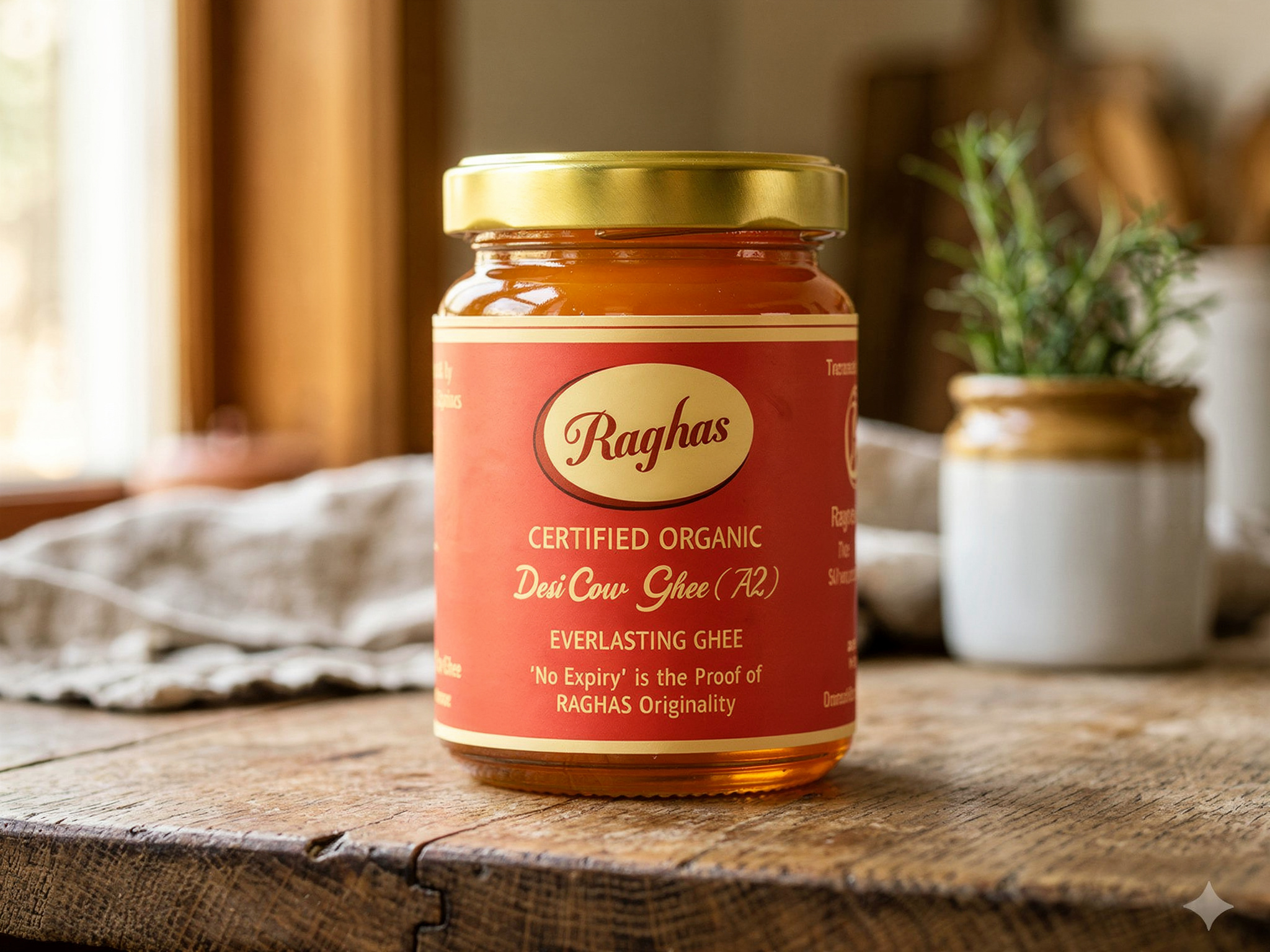
Raghas A2 Desi Cow Ghee is Made from milk sourced from Tamil Nadu native desi cows in Madurai. Thoroughly clarified, virtually lactose free, and full of flavour.
Free shipping on orders above ₹1,750.
Written by the Raghas Dairy Team from Madurai, Tamil Nadu. We make A2 ghee from milk sourced from Tamil Nadu native desi cows using the traditional Bilona method — hand-churned from curd, slow-cooked over wood fire.
Frequently Asked Questions
What makes A2 desi ghee different from regular ghee?
A2 desi ghee is made from milk of indigenous cows that produce A2 beta-casein protein, which is easier to digest and more beneficial for health compared to A1 protein found in regular ghee.
How should I store desi ghee?
Store desi ghee in a cool, dry place away from direct sunlight. It can be kept at room temperature for months without refrigeration due to its natural preservation properties.
What are the traditional food value of consuming desi ghee?
Desi ghee is rich in fat-soluble vitamins (A, D, E, K), helps improve digestion, boosts immunity, and provides healthy fats that support everyday nourishment and overall health.