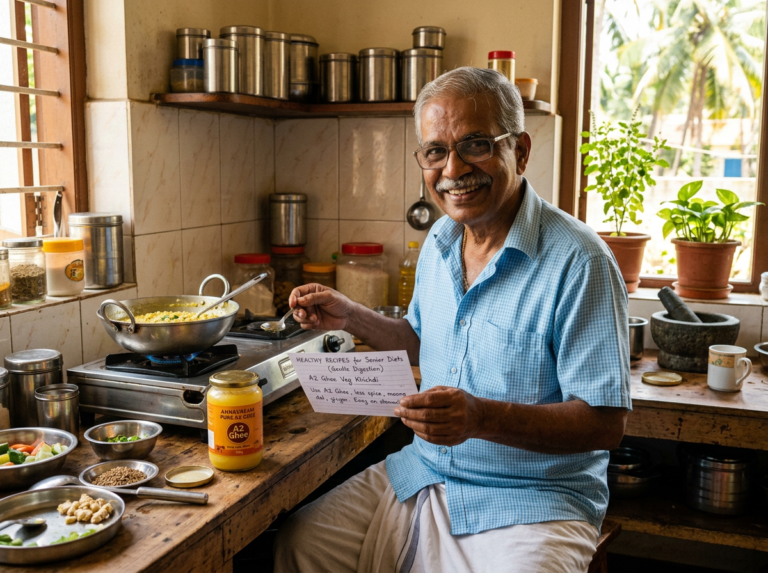
A2 Ghee for Bone and Joint Diets: What to Ask Your Doctor
Food note: This article is general food information, not medical advice. For babies, pregnancy, liver, heart, or diagnosed health conditions, please follow your doctor or dietitian’s guidance.
A2 Ghee for Bone & Joint Health: How Desi Cow Ghee Strengthens Your Skeleton
A2 ghee for joints is one of the most effective natural remedies rooted in centuries of Ayurvedic practice. Pure A2 desi cow ghee lubricates joints, supports calcium absorption for stronger bones, and delivers fat-soluble vitamins that modern diets often lack. If you’re dealing with stiff knees, creaky joints, or concerns about bone density, ghee for bone health deserves a permanent place in your kitchen.
In this guide, we’ll break down exactly how A2 ghee supports your skeletal system—backed by nutritional science and traditional wisdom—and show you the best ways to include it in your daily routine.
What is A2 Ghee? A2 ghee is clarified butter made exclusively from the milk of indigenous (desi) cow breeds that produce A2 beta-casein protein. Unlike A1 milk from crossbred cows, A2 milk is easier to digest and retains higher levels of bioactive nutrients when converted into ghee using the traditional Bilona (hand-churned) method.
What Makes A2 Ghee Good for Bones?
Bones aren’t static structures—they’re living tissue that constantly remodels itself. For this process to work well, your body needs:
- Fat-soluble vitamins (A, D, E, K2) to direct calcium into bones
- Healthy fats to absorb those vitamins in the first place
- Anti-inflammatory compounds to protect joints from wear and tear
A2 ghee delivers all three. Unlike refined oils, ghee is a whole food fat that acts as a carrier for the very nutrients your bones depend on. The nutrition profile of A2 ghee includes meaningful amounts of vitamins K2 and D—two nutrients most Indians are deficient in.
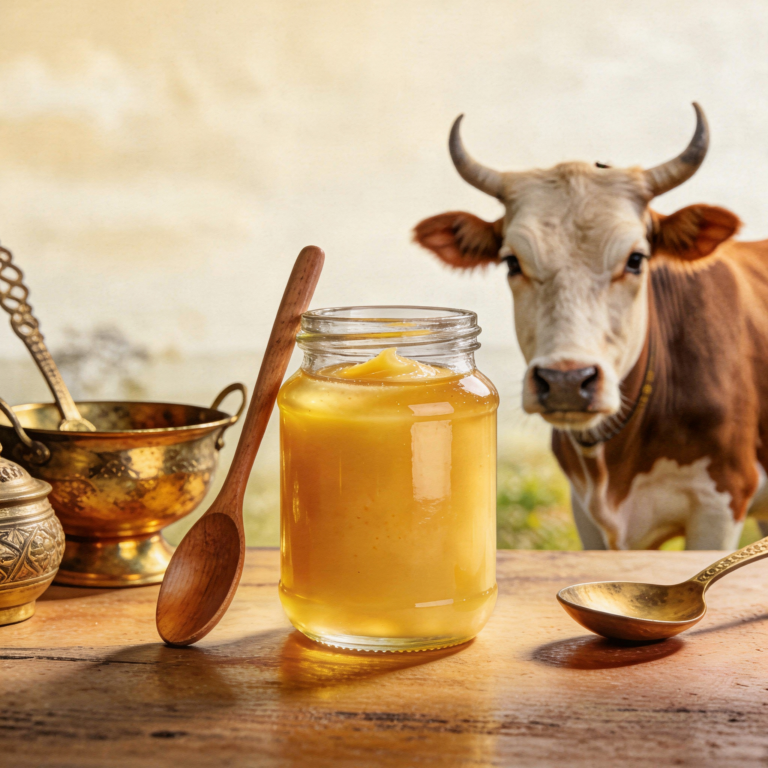
Happy cows, pure milk, authentic ghee
Key Nutrients in A2 Ghee for Skeletal Health
| Nutrient | Role in Bone & Joint Health | Present in A2 Ghee? |
|---|---|---|
| Vitamin K2 (MK-4) | Activates osteocalcin, directing calcium into bones instead of arteries | Yes — grass-fed desi cow ghee is a top dietary source |
| Vitamin D | Enhances calcium absorption from the gut | Yes — present in small but meaningful amounts |
| Vitamin A (retinol) | Supports osteoblast (bone-building cell) function | Yes — highly bioavailable form |
| CLA (Conjugated Linoleic Acid) | Reduces inflammation; may support bone mineral density | Yes — higher in grass-fed A2 ghee |
| Butyric Acid | Reduces gut inflammation, improving nutrient absorption | Yes — ghee is the richest dietary source |
| Omega-3 Fatty Acids | Anti-inflammatory; protects cartilage | Yes — in modest amounts from grass-fed sources |
The Vitamin K2 connection is critical. Research published in the Journal of Bone and Mineral Research shows that vitamin K2 reduces fracture risk by up to 80% in osteoporotic patients. Most Indians get almost no K2 in their diets—but traditional ghee consumption provided it for generations.
How Ghee Lubricates and Protects Joints
Joint pain often stems from two issues: inflammation and reduced synovial fluid. A2 ghee addresses both:
1. Natural Joint Lubrication
In Ayurveda, ghee is considered the best snehana (oleation) substance. When consumed regularly, it nourishes the synovial fluid that cushions your joints. Think of it as oiling a squeaky door hinge—the movement becomes smooth and painless.
2. Anti-Inflammatory Action
Butyric acid in ghee is a potent anti-inflammatory. It suppresses NF-kB pathways—the same inflammatory cascade targeted by many arthritis medications. Unlike NSAIDs, ghee has no side effects on the stomach lining; in fact, butyric acid heals the gut lining.
3. Cartilage Protection
The omega-3 fatty acids and CLA in A2 ghee help protect cartilage from oxidative damage. This is especially important for people over 40, when cartilage degradation accelerates.
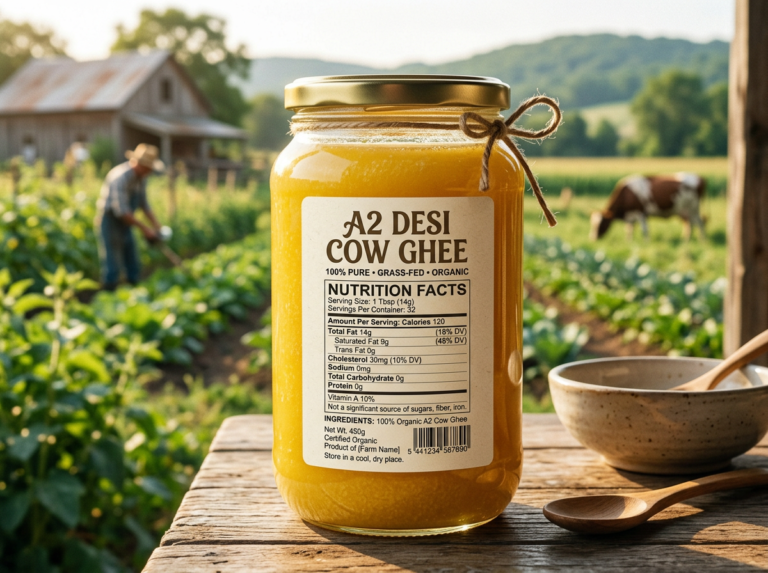
Farm-fresh A2 milk from native breeds
The Ayurvedic Perspective on Ghee and Bones
Ayurveda classifies ghee as the most sattvic (pure) fat, with a special affinity for asthi dhatu (bone tissue). Classical texts like the Charaka Samhita recommend ghee for:
- Vata disorders — Vata governs movement and dryness; excess Vata causes joint cracking, stiffness, and osteoporosis. Ghee pacifies Vata directly.
- Sandhi Vata (osteoarthritis) — Warm ghee massage on joints is a traditional remedy still practised in Kerala Panchakarma centres.
- Post-fracture recovery — Ghee with turmeric and milk is a time-tested home remedy to speed bone healing.
Learn more about A2 ghee’s role in Ayurveda and why ancient practitioners considered it essential medicine.
How to Use A2 Ghee for Bone & Joint Health
Daily Internal Consumption
- Morning: 1 teaspoon of warm A2 ghee on an empty stomach, or mixed into your morning coffee or porridge
- With meals: 1–2 teaspoons drizzled on rice, dal, or roti to enhance fat-soluble vitamin absorption
- Before bed: 1 teaspoon in warm milk with a pinch of turmeric (“golden milk”) — excellent for joint stiffness
For general bone health, 2–3 teaspoons per day is a good target for most adults.
Topical Application for Joints
- Warm 1–2 tablespoons of A2 ghee gently (not hot)
- Massage into stiff or painful joints in circular motions for 10–15 minutes
- Cover with a warm cloth and rest for 30 minutes
- Best done before bedtime for overnight absorption
Ghee + Turmeric for Inflammation
Combine 1 tsp A2 ghee with ½ tsp turmeric and a pinch of black pepper. The fat in ghee increases curcumin absorption by up to 2,000%. This simple combination is a powerful anti-inflammatory that supports both bones and joints.
Key Takeaways: A2 Ghee for Bones & Joints
- A2 ghee is rich in vitamin K2, which directs calcium into bones and away from arteries
- Butyric acid in ghee fights joint inflammation naturally
- Ghee enhances absorption of calcium and fat-soluble vitamins from your meals
- Both internal consumption (2–3 tsp/day) and topical massage benefit joints
- Ayurveda has prescribed ghee for bone and joint health for over 3,000 years
- Always choose traditional Bilona-method A2 ghee from native desi cow breeds
Who Benefits Most?
- Women over 40: Oestrogen decline accelerates bone loss; K2 and healthy fats in ghee help slow this process
- Elderly adults: Reduced nutrient absorption makes ghee’s bioavailable vitamins especially valuable
- Athletes and active individuals: Joint stress from exercise increases the need for anti-inflammatory fats
- People with arthritis: Both osteoarthritis and rheumatoid arthritis respond to ghee’s anti-inflammatory properties
- Anyone on a calcium supplement: Without K2 and vitamin D (both in ghee), calcium may deposit in arteries instead of bones
Choosing the Right Ghee for Bone Health
Not all ghee is created equal. For maximum bone and joint benefits, look for:
- A2 milk source: From native Indian breeds like Kangayam, Umbalachery, Pulikulam, and Bargur—not crossbred Holstein or Jersey cows
- Bilona method: Traditional hand-churned process that preserves vitamins and beneficial fatty acids
- Grass-fed cows: Higher K2, CLA, and omega-3 content compared to grain-fed
- No additives: Pure single-ingredient ghee with a rich golden colour and granular texture
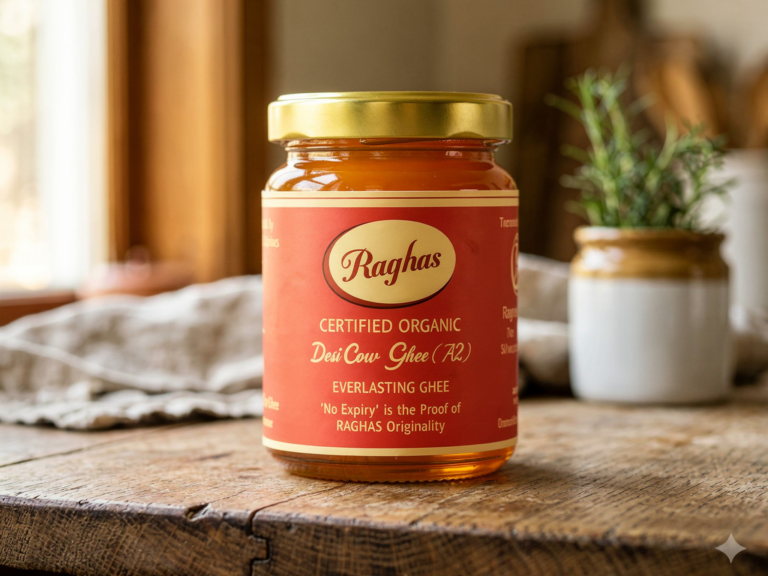
At Raghas Dairy, our ghee is made from milk sourced from a mixed Tamil Nadu native desi cow herd. Every batch is made from curd-cultured butter for maximum nutrition. Explore the full benefits of A2 ghee.
Strengthen Your Bones with Pure A2 Desi Cow Ghee
Made from milk sourced from Tamil Nadu native desi cows in Madurai.
Free shipping on orders above ₹1,750
Frequently Asked Questions
Is ghee good for joint pain?
Yes. A2 ghee contains butyric acid, a natural anti-inflammatory that reduces joint swelling and stiffness. It also lubricates joints by nourishing synovial fluid. Regular consumption of 2–3 teaspoons per day, combined with topical ghee massage, can significantly improve joint comfort.
Can ghee increase bone density?
Ghee supports bone density indirectly but powerfully. It provides vitamin K2 (which activates bone-building proteins), vitamin D (which enhances calcium absorption), and healthy fats that help your body absorb calcium from food. It won’t replace medical treatment for osteoporosis, but it’s an excellent dietary support.
How much ghee should I eat daily for bone health?
For general bone and joint support, 2–3 teaspoons (10–15 ml) of A2 ghee per day is recommended. Spread it across meals—on rice, in dal, or in warm milk before bed. Consistency matters more than quantity.
Is A2 ghee better than regular ghee for bones?
A2 ghee from native desi cow breeds (like Kangayam and Umbalachery) is generally richer in fat-soluble vitamins and CLA compared to ghee from crossbred cows. The Bilona method also preserves more nutrients than industrial cream-separation methods. For bone health specifically, the higher K2 content in A2 ghee is the key advantage.
Can I apply ghee on my knees for pain relief?
Yes. Warm (not hot) A2 ghee massaged into knee joints for 10–15 minutes can reduce stiffness and improve mobility. This is a traditional Ayurvedic practice called abhyanga. For best results, cover the area with a warm cloth after massage and leave it for 30 minutes.
Does ghee help with arthritis?
Ghee may help manage arthritis symptoms. Butyric acid and CLA in A2 ghee have anti-inflammatory properties that can reduce joint swelling. Ayurvedic practitioners have used ghee for Sandhi Vata (osteoarthritis) for centuries. However, severe arthritis requires medical treatment—ghee works best as a complementary dietary approach.