A2 Ghee Nutrition Facts: Complete Breakdown Per Serving
Understanding what is in your food matters — especially for something as calorie-dense and nutrient-rich as A2 desi cow ghee. Unlike many traditional foods that have been poorly studied, ghee has a reasonably well-characterised nutritional profile. This article provides a complete breakdown of A2 ghee’s nutritional composition, explains what the numbers mean for your health, and compares A2 bilona ghee to the regular regular market ghee you might find in supermarkets.
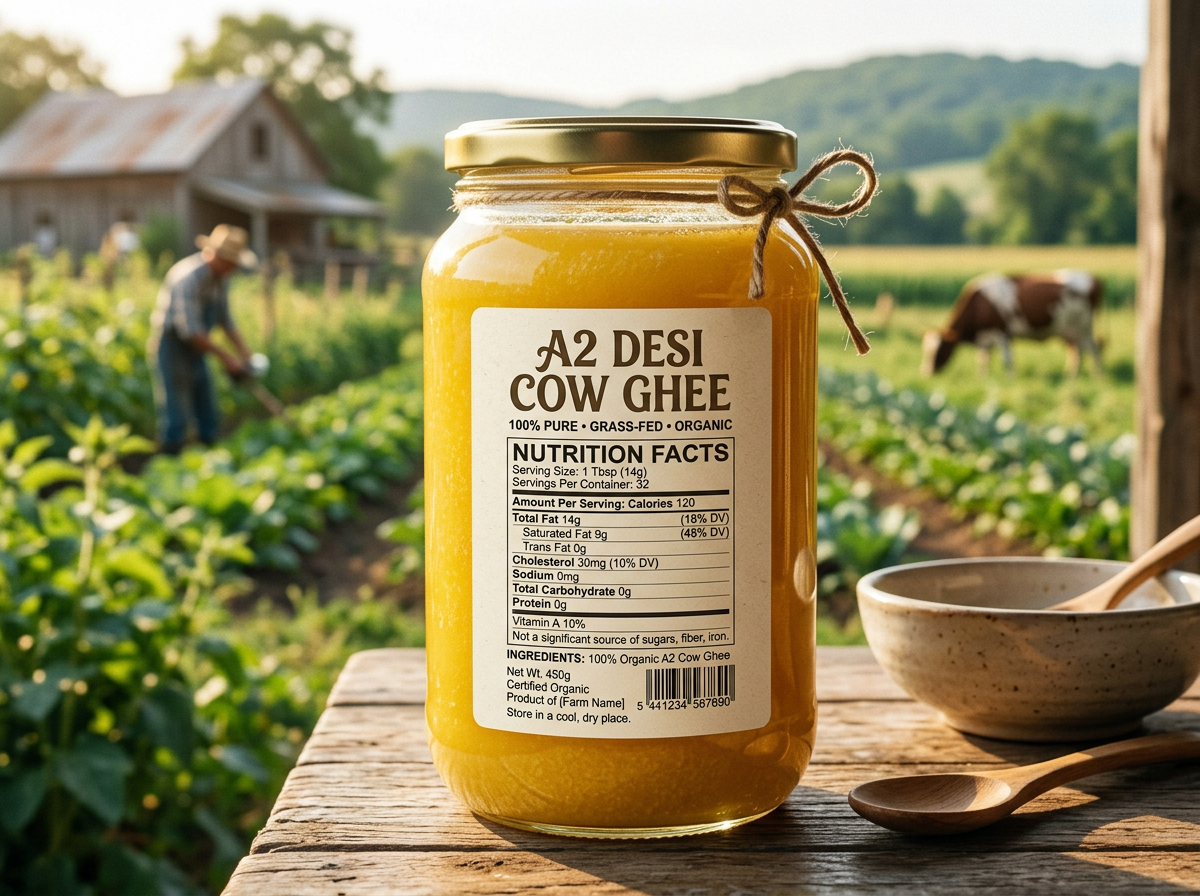
Per-Tablespoon Nutritional Breakdown
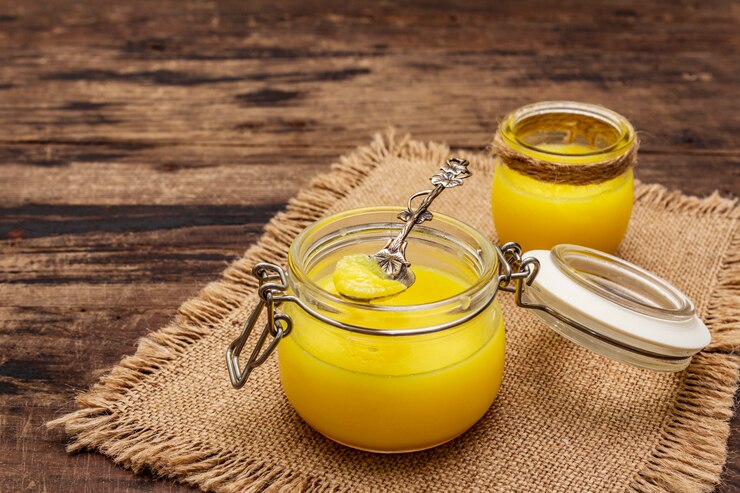
One tablespoon (approximately 13–14 grams) of pure A2 desi cow ghee provides:
- Calories: 112–130 kcal (varies slightly by source and moisture content)
- Total fat: 13–14 g (virtually 100% fat — ghee contains no carbohydrates and negligible protein after clarification)
- Saturated fat: 8–9 g
- Monounsaturated fat: 3–4 g (primarily oleic acid)
- Polyunsaturated fat: 0.5–1 g (including omega-3 alpha-linolenic acid)
- Trans fat: Trace naturally occurring vaccenic acid (not the industrial trans fats that are harmful)
- Cholesterol: 30–35 mg
- Vitamin A: 350–440 IU (approximately 8–10% of the RDA)
- Vitamin D: Present in small amounts (0.3–0.5 mcg); higher in ghee from pasture-raised cows
- Vitamin E: 0.4–0.5 mg (about 2–3% RDA)
- Vitamin K2 (MK-4 form): Approximately 1–2 mcg per tablespoon
- Butyric acid (C4): Approximately 3–4% of total fat, or 0.4–0.5 g per tablespoon
These numbers are for quality A2 bilona ghee from pasture-raised desi cows. regular market ghee from grain-fed crossbred cows will have lower fat-soluble vitamin content and less butyric acid.
What These Nutrients Actually Do
Raw numbers on a label are only meaningful if you understand what those nutrients do in the body.
Butyric acid is the standout nutrient in ghee that you will not find prominently in most other foods. It is a short-chain fatty acid that serves as the primary fuel for colonocytes (cells lining the colon), supports the gut mucosal barrier, reduces intestinal inflammation, and has demonstrated anti-tumour properties in cell studies. People with irritable bowel syndrome, inflammatory bowel disease, or leaky gut are increasingly being advised to include butyrate-rich foods like ghee in their diet.
Vitamin K2 (MK-4 form) is rare in food sources and critically important. It activates osteocalcin (which directs calcium into bones rather than arterial walls) and matrix Gla protein (which prevents arterial calcification). Most people in India consume inadequate K2 because their diet is low in dairy fat and fermented foods — the two main dietary sources. The K2 in ghee, though not high in absolute terms, is a meaningful dietary contribution given how little is available elsewhere.
Vitamin A in ghee is in the pre-formed retinol form, which the body absorbs directly. This is distinct from beta-carotene (the plant form of vitamin A), which must be converted by the body — a conversion that is inefficient in many people due to genetic variation. Ghee’s retinol is especially valuable for children, pregnant women, and individuals with compromised thyroid function who convert beta-carotene poorly.
CLA (Conjugated Linoleic Acid) deserves mention even though it does not appear on standard nutrition labels. A2 ghee from pasture-raised cows contains measurable CLA — a fatty acid associated with reduced body fat, improved immune function, and potential anti-cancer properties in animal studies.
A2 Bilona Ghee vs Regular regular market ghee: Comparison
Not all ghee is equal. The differences between A2 bilona ghee and mass-market regular market ghee are significant:
- Fatty acid profile: A2 bilona ghee from pasture-fed desi cows has higher omega-3 content, more CLA, and a better omega-3:omega-6 ratio (approximately 1:1.5) compared to regular market ghee where the ratio can reach 1:5 or higher. A lower omega-3:6 ratio is associated with higher systemic inflammation.
- Butyric acid: Bilona method ghee retains more short-chain fatty acids because the process does not involve high-heat large-scale processing. regular market ghee can have lower butyric acid concentrations.
- Vitamins: Pasture-raised cow ghee has significantly higher fat-soluble vitamin content, particularly vitamin A and K2, compared to ghee from cows fed large-scale dairy feed with limited sunlight exposure.
- Smoke point: Pure ghee (moisture under 0.1%) has a smoke point of approximately 250–252°C, making it one of the most stable cooking fats available. This is higher than butter (177°C), extra virgin olive oil (190°C), and most refined seed oils (200–210°C before oxidation begins).
- Lactose and casein: Properly clarified ghee contains essentially zero lactose and very low residual casein. Many people who are lactose intolerant or mildly casein-sensitive can consume ghee without difficulty.
How to Read Ghee Labels and What to Look For
When buying ghee, the nutrition label alone will not tell you whether it is A2 or A1, bilona or cream-separator. Here is what to look for beyond the label:
- Source breed mentioned (Kangayam, Gir, Sahiwal, Tharparkar, Umbalachery = A2 native breeds)
- Production method specified (bilona, hand-churned, curd-based)
- Grainy or crystalline texture at room temperature (indicates slow, traditional clarification)
- Golden-yellow colour from natural beta-carotene (not bright yellow from additives)
- FSSAI licensed with traceable source
For a ghee that meets all these criteria, the Raghas Dairy range offers A2 bilona ghee from Tamil Nadu native desi cows, FSSAI licensed and made without shortcuts. Understanding the nutritional profile gives you the basis to choose well — and to use ghee confidently as part of a balanced diet.