A2 Ghee for Elderly: Gentle Cooking Notes for Senior Diets
Food note: This article is general food information, not medical advice. For babies, pregnancy, liver, heart, or diagnosed health conditions, please follow your doctor or dietitian’s guidance.
A2 Ghee for Elderly: Senior traditional food value of Desi Cow Ghee
A2 ghee for elderly adults is far more than a cooking fat—it’s a nutrient-dense traditional kitchen staple that addresses the most common health concerns of ageing: weak bones, poor digestion, declining everyday nourishment, and low immunity. Pure A2 desi cow ghee made by the traditional Bilona method delivers fat-soluble vitamins, anti-inflammatory fatty acids, and gut-healing butyric acid in a form that ageing bodies can readily absorb.
This guide covers the specific benefits of ghee for old age, safe daily amounts, and practical ways seniors can add A2 ghee to their diet.
Why “A2” matters for the elderly: A2 ghee comes from native desi cow breeds that produce A2 beta-casein protein. This protein is easier to digest than A1 protein found in crossbred cows’ milk—a crucial advantage for seniors whose digestive capacity naturally declines with age.
Why Seniors Need Good Fats
After age 60, the body undergoes changes that make dietary fat more important, not less:
- Nutrient absorption declines: Fat-soluble vitamins (A, D, E, K) need dietary fat for absorption. Without adequate fat intake, even vitamin supplements won’t work properly.
- Bone density drops: Oestrogen and testosterone decline reduce bone-building activity. Vitamin K2 in ghee helps direct calcium to bones.
- Brain shrinkage accelerates: The brain is 60% fat. Adequate healthy fat intake supports cognitive function and may slow age-related decline.
- Gut lining weakens: Butyric acid (abundant in ghee) repairs and strengthens the intestinal lining.
The problem? Many seniors cut fat from their diets entirely—often on outdated medical advice. A2 ghee provides healthy saturated fats, short-chain fatty acids, and fat-soluble vitamins in a highly digestible form.
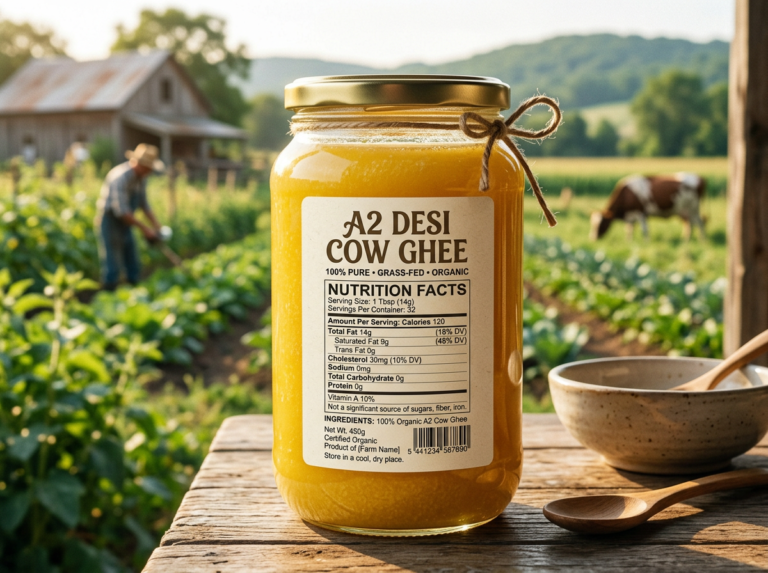
Happy cows, pure milk, authentic ghee
10 Benefits of A2 Ghee for Elderly Adults
1. Stronger Bones & Joints
A2 ghee is rich in vitamin K2, which activates osteocalcin—the protein that binds calcium to bone. This is critical for seniors at risk of osteoporosis. Ghee also lubricates joints, reducing stiffness and pain. Read our detailed guide on A2 ghee for bone and joint health.
2. Better Digestion
Ageing slows down gastric acid production and enzyme activity. Butyric acid in ghee stimulates digestive enzyme secretion and strengthens the gut lining. Unlike raw butter or cream, ghee is casein-free and lactose-free, making it gentle on sensitive senior stomachs.
3. Brain Health & Memory Support
The brain needs cholesterol and healthy fats to maintain myelin sheaths (the protective coating on nerve fibres). A2 ghee provides both, along with DHA precursors. Ayurveda has long recommended ghee for medhya (brain-nourishing) therapy in the elderly.
4. Improved Immunity
Butyric acid supports gut-associated lymphoid tissue (GALT), where 70% of the immune system resides. A healthy gut lining—maintained by regular ghee consumption—is the first line of immune defence for seniors.
5. Heart-Healthy Fats
Contrary to outdated beliefs, moderate ghee consumption does not increase heart disease risk. A2 ghee contains CLA (conjugated linoleic acid), which may actually protect against arterial plaque. The key is moderation—2–3 teaspoons daily. Learn more about A2 ghee and cholesterol.
6. Natural Constipation Relief
Constipation is one of the most common complaints among the elderly. A teaspoon of warm ghee in milk before bedtime is a time-tested Ayurvedic remedy that lubricates the intestinal tract and promotes regular bowel movements.
7. Skin Moisture & Healing
Ageing skin loses moisture and heals slowly. The fatty acids in A2 ghee nourish skin from within. Topically, ghee can be applied to dry, cracked skin on heels, elbows, and hands.
8. Better Sleep Quality
Warm milk with ghee before bed is more than a grandmother’s remedy—the tryptophan in milk combined with ghee’s fat content promotes serotonin production, supporting deeper sleep.
9. Energy Without Spikes
Seniors often feel fatigued. Ghee provides sustained energy from medium and short-chain fatty acids that are quickly metabolised without blood sugar spikes—unlike sugary snacks or refined carbs.
10. Carrier for Medicines & Supplements
In Ayurveda, ghee is the preferred anupana (vehicle) for herbal medicines because it enhances bioavailability. Seniors taking Ayurvedic supplements like Ashwagandha or Shatavari can take them with ghee for better absorption.
Key Takeaways: A2 Ghee for Seniors
- A2 ghee addresses the top 5 ageing concerns: bones, digestion, brain, immunity, and energy
- Butyric acid heals the gut, boosts immunity, and aids nutrient absorption
- Vitamin K2 in ghee directs calcium to bones, not arteries
- Ghee is lactose-free and casein-free—safe for dairy-sensitive seniors
- 2–3 teaspoons per day is the recommended amount for most elderly adults
- Always choose Bilona-method A2 ghee from native desi cow breeds
How Much Ghee Should Seniors Eat?
| Senior Profile | Recommended Daily Amount | Notes |
|---|---|---|
| Generally healthy, active | 2–3 teaspoons (10–15 ml) | Split across meals for best absorption |
| Sedentary / low activity | 1–2 teaspoons (5–10 ml) | Focus on meals, avoid snacking with ghee |
| Underweight / poor appetite | 3–4 teaspoons (15–20 ml) | Calorie-dense way to improve nutrition |
| Diabetes / heart condition | 1–2 teaspoons (5–10 ml) | Consult doctor; start low, monitor lipid panel |
For a deeper dive into daily dosage, see our guide on how much ghee per day.
Farm-fresh A2 milk from native breeds
Best Ways to Include Ghee in a Senior Diet
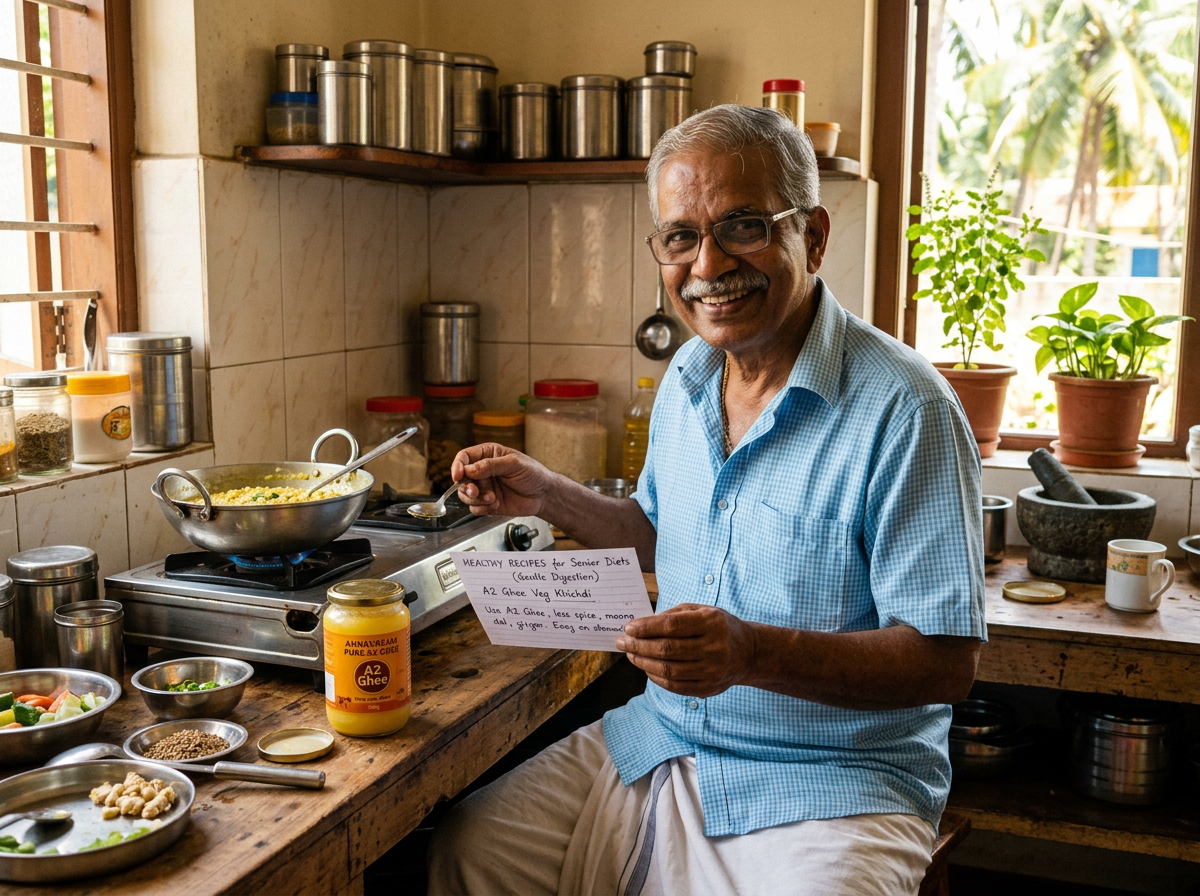
- On hot rice or khichdi: The most traditional and easiest method—just drizzle 1 tsp on top
- In warm milk before bed: 1 tsp ghee + warm milk + pinch of turmeric for sleep and bone health
- On rotis and parathas: Replace butter or margarine with ghee
- In morning porridge or upma: Adds flavour and improves vitamin absorption
- As a cooking fat: Use ghee for tempering (tadka) instead of refined oils
- With Ayurvedic medicines: Take herbal supplements with ½ tsp ghee for better bioavailability
Common Concerns: Cholesterol, Weight & Heart Health
“Won’t ghee raise my cholesterol?”
Moderate ghee consumption (2–3 tsp/day) has not been shown to raise LDL cholesterol in healthy individuals. In fact, A2 ghee contains short-chain fatty acids that are metabolised differently from long-chain saturated fats. CLA in ghee may actually improve the HDL-to-LDL ratio.
“Will ghee make me gain weight?”
At 2–3 teaspoons per day, ghee adds roughly 90–135 calories—a modest amount that provides significant nutritional value. For underweight seniors, this caloric boost is actually beneficial. For those watching weight, simply replace other fats (refined oil, butter) with ghee rather than adding it on top.
“I have diabetes. Is ghee safe?”
Ghee has zero sugar and a very low glycaemic index. Small amounts of ghee with meals may actually slow glucose absorption. However, diabetic seniors should consult their physician and monitor blood sugar levels when making dietary changes.
Why A2 Ghee Specifically?
For elderly adults, the distinction between A1 and A2 ghee is especially important:
- Easier digestion: A2 protein doesn’t produce BCM-7 (a problematic peptide linked to digestive discomfort), making it gentler on ageing digestive systems
- Higher nutrient density: Native breeds like Kangayam, Umbalachery, Pulikulam, and Bargur are typically grass-fed, resulting in higher vitamin K2 and CLA content
- Bilona method advantage: The traditional curd-churning process preserves heat-sensitive nutrients that large-scale processing destroys
Explore the full range of benefits of A2 ghee for all age groups.
Give Your Elders the Gift of Pure A2 Ghee
Raghas Dairy A2 ghee — made from milk sourced from Tamil Nadu native desi cows in Madurai. Traditional Bilona method.
Free shipping on orders above ₹1,750
Frequently Asked Questions
Is ghee good for old age?
Yes. A2 ghee is excellent for elderly adults. It provides easily digestible healthy fats, fat-soluble vitamins (A, D, E, K2), and butyric acid that supports digestion, bone strength, everyday nourishment, and immunity—all areas that decline with age.
Can elderly people eat ghee every day?
Yes. Most seniors can safely consume 1–3 teaspoons of A2 ghee daily. It’s lactose-free and casein-free, so even dairy-sensitive elders can usually tolerate it. Those with specific health conditions should consult their doctor for personalised advice.
Does ghee help with memory in old age?
Ghee provides healthy fats and cholesterol that the brain needs to maintain nerve function. Ayurveda classifies ghee as a medhya (brain tonic). While it won’t reverse dementia, regular ghee consumption supports cognitive health as part of a balanced diet.
Is ghee safe for seniors with high cholesterol?
In moderation (1–2 tsp/day), A2 ghee has not been shown to worsen cholesterol profiles. The CLA and short-chain fatty acids in ghee are metabolised differently from harmful trans fats. However, seniors on cholesterol medication should consult their doctor.
Which is the best ghee for elderly people?
Look for A2 ghee made from native Indian cow breeds (like Kangayam, Umbalachery, Pulikulam, or Bargur) using the traditional Bilona method. This ensures maximum nutrient content and easy digestibility. Avoid ghee made from crossbred cow milk or using industrial cream-separation methods.