A2 Ghee for Diabetes: Is It Safe?
People with diabetes or prediabetes are often given a long list of foods to avoid. Fat-rich traditional foods like ghee frequently appear on that list, based on the broad advice to reduce caloric density and saturated fat. But this blanket guidance does not accurately reflect how A2 desi cow ghee actually behaves metabolically. Given that India has the second-largest diabetic population in the world and that traditional Indian cooking centred on ghee for millennia before the current diabetes epidemic, it is worth examining the relationship between ghee and blood sugar carefully.
Note: This article is educational in nature and does not constitute medical advice. People managing diabetes should consult their physician or registered dietitian before making dietary changes.
Ghee and the Glycaemic Index
The glycaemic index (GI) measures how quickly a food raises blood glucose. Ghee, being pure fat with zero carbohydrates and zero protein (after proper clarification), has a glycaemic index of 0 — it does not raise blood glucose directly at all. This makes it categorically different from most foods that diabetics need to monitor.
More relevant is how ghee affects the glycaemic response to carbohydrates consumed in the same meal. Fat slows gastric emptying — the rate at which food leaves the stomach and enters the small intestine. This slower transit means glucose from carbohydrates is released into the bloodstream more gradually, producing a flatter, more stable blood glucose curve. Studies measuring the glycaemic response to rice consumed with ghee vs without ghee consistently show a lower post-meal glucose peak when ghee is included.
This is not a trivial benefit. In Type 2 diabetes management, post-meal glucose spikes (postprandial hyperglycaemia) are a major driver of HbA1c levels and long-term complications. Any dietary strategy that blunts post-meal glucose peaks without requiring medication changes is clinically meaningful.
Short-Chain Fatty Acids and Insulin Sensitivity
Butyric acid — the short-chain fatty acid for which ghee is the richest dietary source — has direct implications for insulin sensitivity. Research in both animal models and human studies has found that butyrate supplementation improves insulin sensitivity and reduces fasting blood glucose. A 2012 study published in Diabetes (Zhou et al.) found that butyrate protected mice against diet-induced insulin resistance. Human data, while more limited, points in the same direction.
The mechanism appears to involve butyrate’s role as a histone deacetylase (HDAC) inhibitor — it influences gene expression in ways that improve mitochondrial function and increase fat oxidation in muscle cells. Separately, butyrate’s well-documented role in maintaining gut barrier integrity is relevant because intestinal permeability (leaky gut) is increasingly understood as a contributor to systemic inflammation and insulin resistance.
Ghee is the most convenient whole-food source of dietary butyrate. The gut also produces butyrate endogenously from dietary fibre fermentation, so a diet combining fibre-rich foods (vegetables, legumes, whole grains) with ghee addresses gut health from both sides.
Replacing Refined Oils: The Diabetic Case for Ghee
Many people who avoid ghee for diabetes management continue to cook with refined vegetable oils — sunflower, soybean, or blended vegetable oil. This substitution is not a metabolic improvement. Refined seed oils are high in omega-6 linoleic acid, and chronic excess omega-6 relative to omega-3 promotes systemic inflammation, which is a driver of both insulin resistance and cardiovascular disease — the most common complication of Type 2 diabetes.
Furthermore, these oils degrade at high cooking temperatures, producing oxidative by-products that increase oxidative stress — a key mechanism in diabetic tissue damage. Ghee’s high smoke point (252°C) and predominantly saturated fat composition make it chemically stable at Indian cooking temperatures where refined oils are already oxidising.
The practical recommendation for diabetics is not to add ghee on top of existing fat intake, but to replace refined vegetable oil with ghee in daily cooking. The total fat intake remains similar, but the fat quality improves substantially.
Practical Guidelines for Diabetics
- Portion size: 1 teaspoon per meal (approximately 5 ml) as a cooking medium or meal addition is a practical and conservative starting point. This is enough to influence gastric emptying and provide butyrate without meaningfully increasing caloric load.
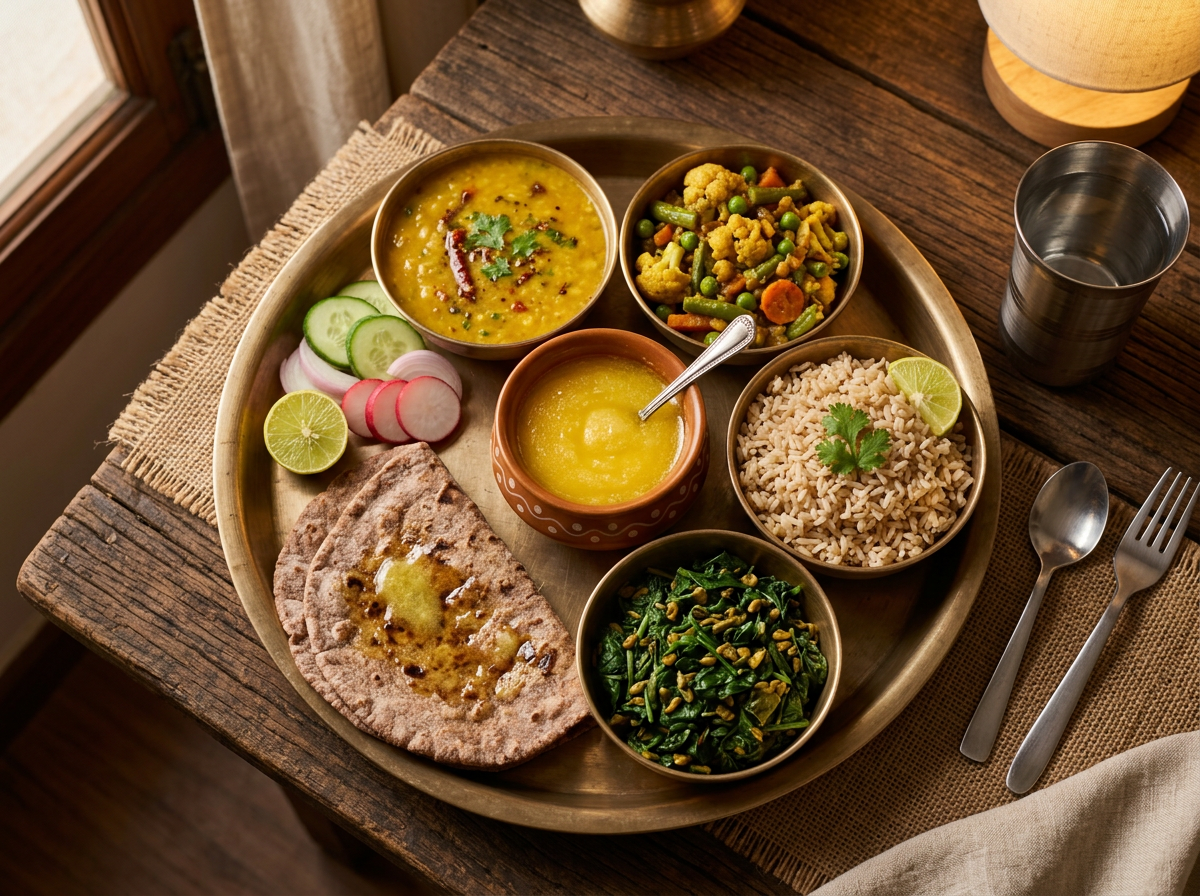
- With which meals: Adding a small amount of ghee to rice or roti is particularly beneficial given these are high-glycaemic carbohydrates for which blunting the post-meal spike is most valuable.
- Morning use: Some Ayurvedic practitioners and functional medicine physicians recommend a teaspoon of warm ghee on an empty stomach to support gut lining integrity and bile flow, particularly for those with compromised digestion — common in long-standing diabetics.
- Monitor your response: Blood glucose management is highly individual. If you introduce ghee, monitor fasting and post-meal glucose levels for 2–4 weeks to understand your specific response.
- Overall dietary pattern matters: Ghee is beneficial in the context of a diet rich in non-starchy vegetables, legumes, and adequate protein. It does not offset high refined carbohydrate intake.
A Note on the Evidence
Large-scale dietary intervention trials specifically examining A2 ghee in diabetic populations do not yet exist — this is an area where traditional knowledge and emerging mechanistic research are ahead of large RCT data. The PREDIMED study and similar Mediterranean diet trials have confirmed that dietary fat quality matters enormously for metabolic health, and the principles apply to ghee consumption. But individual medical supervision remains essential for anyone actively managing blood sugar with medication.
For a quality-verified source of A2 bilona ghee made from native Tamil Nadu breeds, explore Raghas Dairy’s subscription options — a convenient way to ensure consistent access to genuine bilona-method ghee.