Desi Cow Ghee Benefits: Practical Food Notes
Desi cow ghee is valued in many Indian kitchens for aroma, taste and traditional cooking use. This guide keeps the claims practical and food-focused.
Raghas Dairy keeps this page focused on customer buying clarity: source, method, taste, price, storage, delivery and support. For current product pricing and availability, use the live product selector on the Raghas A2 Desi Cow Ghee product page.
Desi Cow Ghee: Traditional Uses, Cooking Benefits and Buyer Checks
Desi cow ghee is best understood as a traditional cooking fat with a clear source, a clean aroma, and a place in everyday Indian food. For Raghas Dairy, the source is simple: milk from Tamil Nadu native desi cows only, from a mixed native herd, prepared into ghee with traditional care in Madurai.
This guide keeps the discussion practical. It does not treat ghee as medicine. It explains how families use desi cow ghee in food, how to judge quality, and when a small daily quantity makes sense in a normal kitchen.
What Makes Desi Cow Ghee Different?
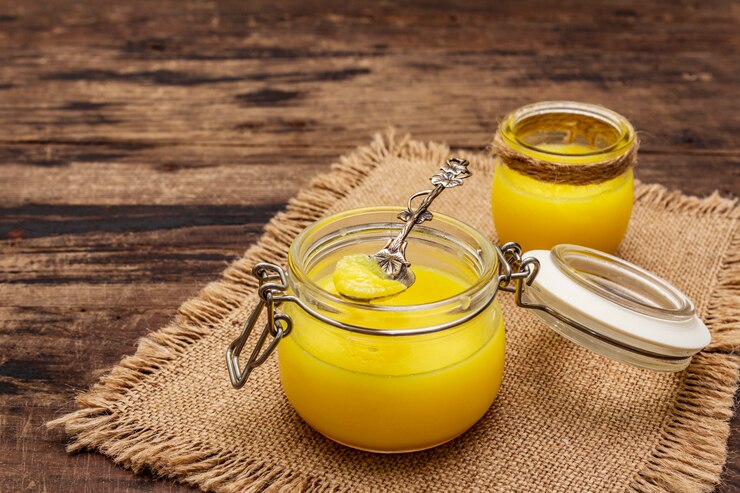
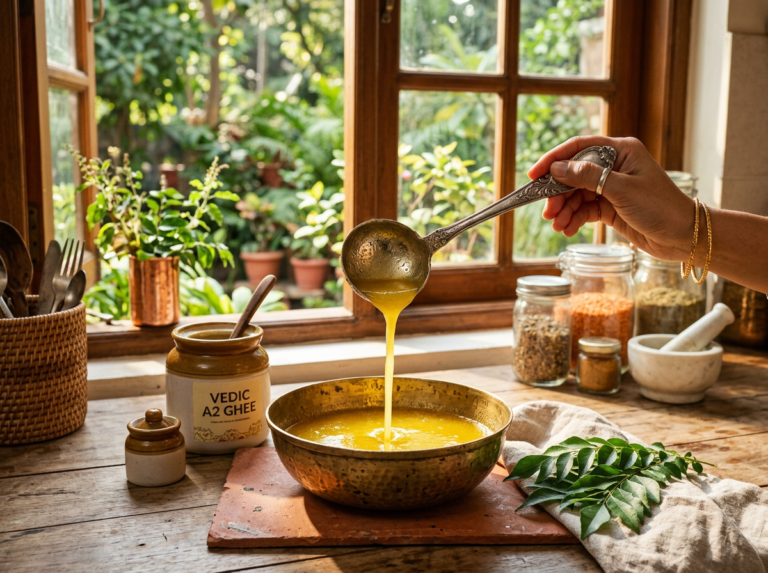
Desi cow ghee begins with milk from native Indian cows. The final taste depends on the milk source, the butter or curd route used, the heat control, and how carefully the ghee is filtered and packed. A good jar should smell clean, golden, and gently nutty. It should not smell burnt, stale, or artificially perfumed.
Raghas Dairy uses Tamil Nadu native desi cow milk from a mixed native herd. That means the farm does not market the ghee as one fixed breed. The focus is native desi cows, traditional food culture, and a ghee profile that works naturally with South Indian cooking.
Everyday Cooking Benefits
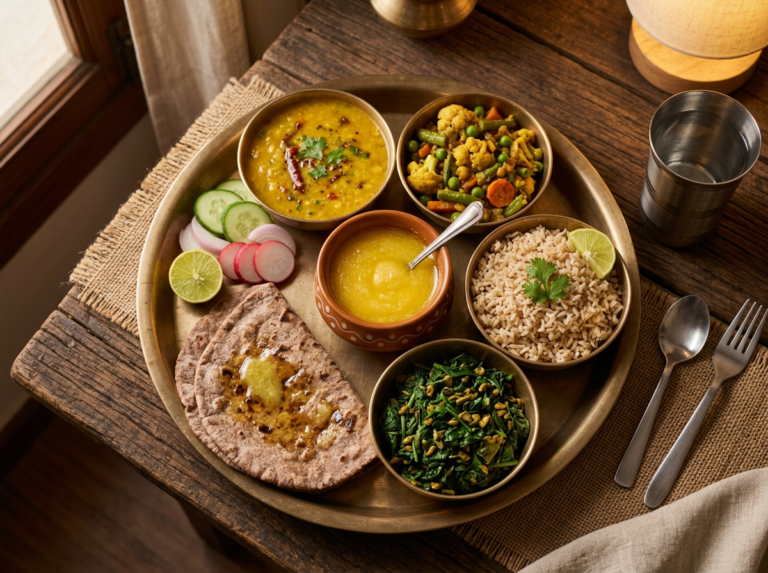
- Aroma: A spoon of good ghee can lift hot rice, dal, rasam rice, pongal, dosa podi, upma, and chapati.
- High-heat cooking: Ghee is commonly used for tempering, roasting, and finishing because it handles Indian cooking heat well.
- Small quantity, high impact: You usually need only a little to improve flavour and mouthfeel.
- Long shelf stability: Ghee stores better than butter when handled with a dry spoon and kept away from moisture.
- Traditional fit: It belongs naturally in everyday Indian meals, festive sweets, and prasadam-style cooking.
How Families Commonly Use It
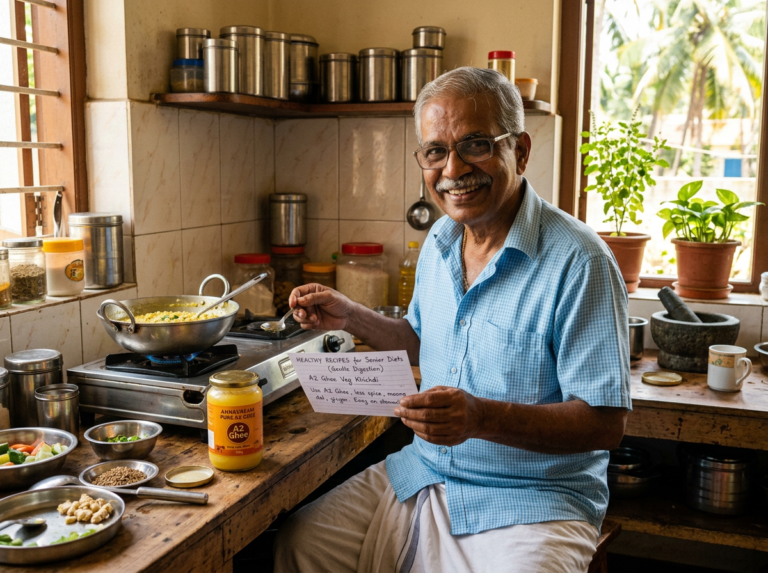
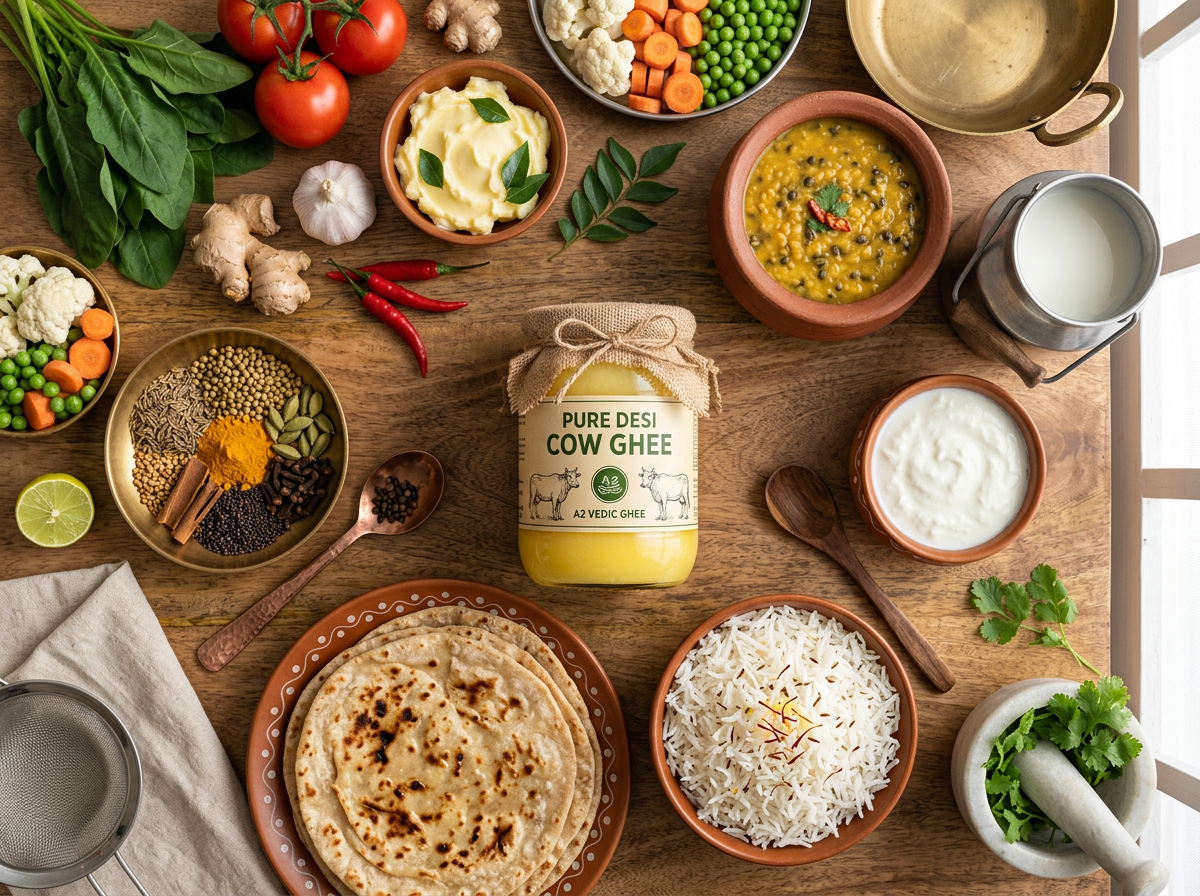
For daily meals, many families use ghee as a finishing fat rather than as the only cooking fat. A spoon over hot rice, dal, idli podi, or sambar rice is enough for aroma. For tiffin, it works well on dosa, adai, wheat dosa, and chapati. For sweets, ghee gives texture and fragrance to ladoo, mysore pak, halwa, payasam, and kesari.
The best quantity depends on the person, age, activity level, and overall diet. If you have a diagnosed medical condition or a strict diet plan, follow your doctor or dietitian’s advice.
Buyer Checks Before You Choose a Jar
- Source clarity: The brand should clearly explain the cow source and not make vague claims.
- Process clarity: Look for details on how the ghee is made, not just decorative words.
- Freshness: Check packing date, seal condition, and storage instructions.
- Aroma and texture: Natural batch variation is normal, but the smell should be clean and pleasant.
- Support: A good brand should be reachable for order, storage, or product questions.
Why Source Honesty Matters
Some ghee pages over-focus on single-breed claims. Raghas Dairy keeps the source honest: Tamil Nadu native desi cows only, from a mixed native herd. This is not a weakness. It reflects how a real native-cow farm can work, while keeping the promise clear for customers.
Simple Takeaway
Desi cow ghee is worth choosing when the source is clear, the process is traditional, the taste suits your food, and the brand is transparent. Use it for aroma, cooking character, and the comfort of a traditional Indian kitchen staple.