A2 Ghee vs A1 Ghee: What Buyers Should Know
A2 Ghee vs A1 Ghee: The Science Behind the Difference
The difference between A2 ghee and A1 ghee comes down to one amino acid in one protein — but that tiny change affects how your body digests it. A2 ghee, from native Indian desi cows, does not release the problematic BCM-7 peptide during digestion. A1 ghee, from hybrid or European breeds, does. Here’s the complete science.
This article explains the protein-level differences, reviews published research on BCM-7, identifies which cow breeds produce which type, and helps you understand why this distinction matters for the ghee you eat daily.
The Protein Difference: One Amino Acid, Big Consequences
Cow’s milk contains beta-casein, a major protein that exists in two genetic forms:
- A2 beta-casein: Has the amino acid proline at position 67
- A1 beta-casein: Has histidine at position 67
This single substitution occurred as a natural mutation in European cattle herds thousands of years ago. Native Indian breeds retained the original A2 form.
What Happens During Digestion
When your digestive enzymes break down A1 beta-casein, the histidine at position 67 allows the protein chain to cleave at that exact point. This releases a 7-amino-acid peptide called beta-casomorphin-7 (BCM-7).
BCM-7 is an opioid peptide — it binds to mu-opioid receptors in the gut wall. This triggers:
- Reduced gut motility (slower digestion)
- Increased mucus secretion in the intestines
- Activation of inflammatory pathways
- Symptoms: bloating, gas, abdominal pain, altered stool
A2 beta-casein has proline at position 67. Proline creates a strong bond that resists enzymatic cleavage at that point. Result: no BCM-7 is released. The protein is digested cleanly.
What Research Says: Key Studies
Jianqin et al., 2016 (Nutrition Journal)
A double-blind, randomised crossover study in 45 Chinese adults. Participants consumed A1 milk and A2 milk in separate periods. Results: A1 milk caused significantly more bloating, abdominal pain, and stool inconsistency. A2 milk showed digestive comfort comparable to the control group.
Ho et al., 2014 (European Journal of Clinical Nutrition)
Studied 41 participants and found that A1 milk consumption was associated with softer stool and increased inflammatory markers compared to A2 milk. Participants also reported more digestive discomfort with A1 milk.
Barnett et al., 2014 (International Journal of Food Sciences and Nutrition)
Showed that A1 beta-casein increased gastrointestinal transit time and altered stool consistency in rodent models, while A2 did not — supporting the BCM-7 mechanism.
EFSA Review (2009)
The European Food Safety Authority reviewed BCM-7 research and concluded that while BCM-7 is indeed released from A1 casein, they could not establish a definitive causal link to chronic diseases based on evidence available at the time. However, they acknowledged the digestive effects.
Our take at Raghas Dairy: The evidence for digestive differences is strong and consistent. The debate is around long-term chronic disease links, not digestive comfort. For everyday well-being, A2 is clearly the better choice.
A2 vs A1 Ghee: Direct Comparison
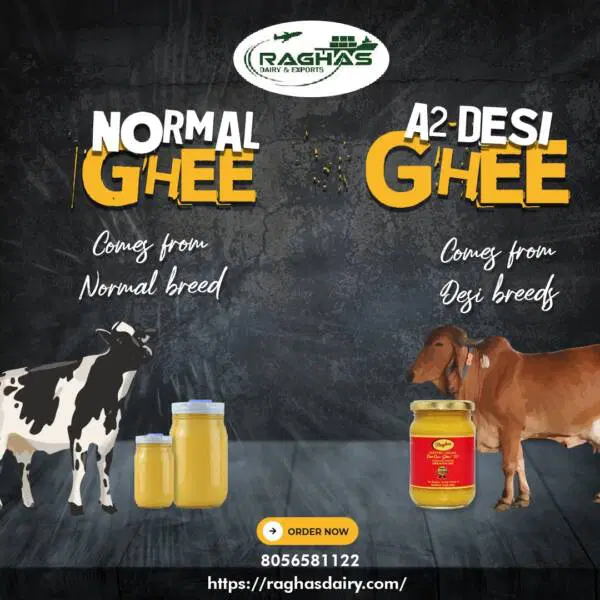
- Source cows: A2 → Native Indian breeds (Kangayam, Umbalachery, Pulikulam, Bargur) | A1 → Holstein Friesian, Jersey, crossbreeds
- Beta-casein type: A2 → A2 only | A1 → A1 or mixed
- BCM-7 release: A2 → No | A1 → Yes
- Digestibility: A2 → Easier, gentler | A1 → May cause discomfort
- Typical method: A2 → Bilona (traditional) | A1 → Cream separation (industrial)
- Fat composition: A2 → Higher CLA, more omega-3, richer vitamins | A1 → Standard
- Colour: A2 → Deep golden (grass-fed) | A1 → Pale yellow to white
- Aroma: A2 Bilona → Rich, nutty | A1 industrial → Mild, flat
- Yield: A2 Bilona → ~1L from 25-30L milk | A1 industrial → higher yield per litre
- Price: A2 → Premium | A1 → Lower
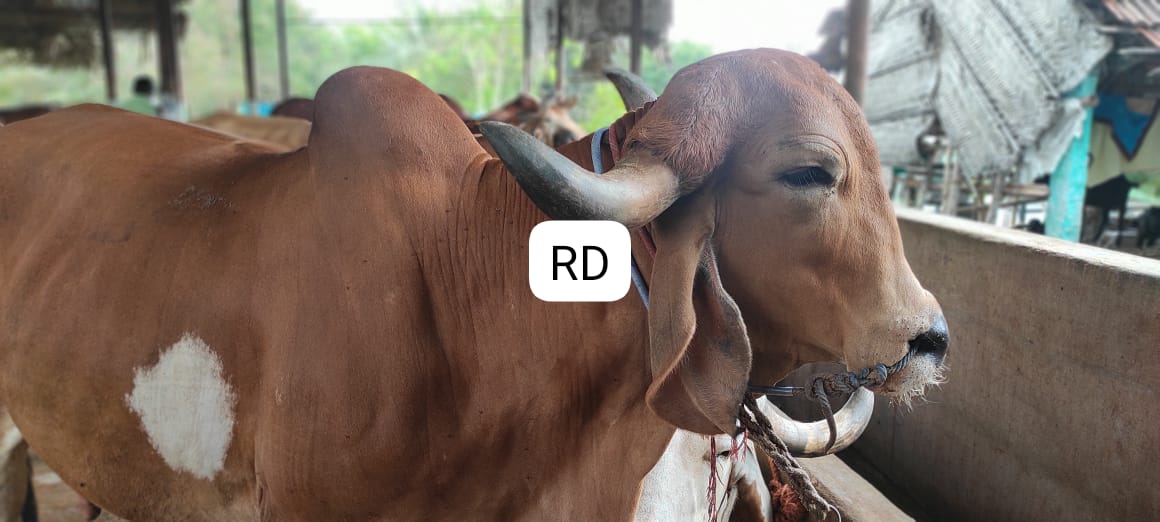
Which Cow Breeds Produce A2 vs A1 Milk?
A2 Breeds (Native Indian / Desi)
- Tamil Nadu: Kangayam, Umbalachery, Pulikulam, Bargur
- Other Indian: Tharparkar, Red Sindhi, Hallikar, Amrit Mahal, Ongole, Rathi, Kankrej, Hariana
- Other regions: African and Asian native breeds, some French breeds (Guernsey is partially A2)
A1 Breeds (European / Hybrid)
- Holstein Friesian (the dominant dairy breed globally)
- Jersey (partially A1/A2 mixed)
- Ayrshire
- HF crossbreeds (very common in Indian commercial dairies)
At Raghas Dairy, we source from Tamil Nadu native desi cows. This keeps the source rooted in native desi cow milk.
Does the A1/A2 Difference Matter in Ghee Specifically?
Ghee is clarified butter — most milk solids (including proteins) are removed during production. So does the A1/A2 distinction still matter?
Yes, for three reasons:
- Trace proteins persist. Even well-clarified ghee retains trace amounts of beta-casein. For people with high sensitivity, this trace amount can matter.
- Fat composition differs by breed. Native A2 breeds produce milk with fundamentally different fat profiles — more CLA, better omega-3 to omega-6 ratios, higher vitamin content. This carries over into the ghee regardless of protein content.
- A2 is a quality signal. Brands using native A2 breeds typically follow traditional methods (Bilona), care about sourcing, and maintain quality standards. A2 is effectively a marker for the entire approach to ghee-making.
For full details on what A2 ghee means, see: What Does A2 Ghee Mean?
Health Implications: Why Choose A2 Over A1
Based on available research and our experience at Raghas Dairy, here’s why we believe A2 ghee is the better choice:
- Digestive comfort: No BCM-7 means no opioid-triggered gut slowdown or inflammation
- Better nutrient profile: Native breed, grass-fed ghee has measurably more vitamins and beneficial fatty acids
- Traditional processing: Bilona method preserves heat-sensitive nutrients that large-scale methods destroy
- Fewer unknowns: A2 is the original protein — it’s what humans have consumed for thousands of years
Read more about the complete health picture: Is A2 Ghee Good for Health?
Frequently Asked Questions
What is the main difference between A2 and A1 ghee?
The type of beta-casein protein in the source milk. A2 ghee comes from cows with A2 protein (proline at position 67), which does not release BCM-7 during digestion. A1 ghee comes from cows with A1 protein (histidine), which releases BCM-7.
Which cows produce A1 milk and which produce A2 milk?
Native Indian desi breeds (Kangayam, Umbalachery, Pulikulam, Bargur) produce A2 milk. European breeds like Holstein Friesian and Jersey primarily produce A1 or mixed milk.
Is BCM-7 harmful?
Research links BCM-7 to digestive discomfort, gut inflammation, and slower transit. While severe long-term harm is still debated, the digestive effects are well-documented.
Can I taste the difference between A1 and A2 ghee?
Yes — A2 Bilona ghee typically has a richer, nuttier aroma and deeper golden colour compared to industrial A1 ghee. The difference comes from both the breed (grass-fed native cows) and the method (Bilona vs industrial).
Key Takeaways
- A2 and A1 differ by one amino acid at position 67 of beta-casein
- A1 releases BCM-7 (an opioid peptide) during digestion; A2 does not
- Multiple studies confirm A1 milk causes more digestive discomfort than A2
- Native Indian breeds are 100% A2; European breeds are mostly A1
- Beyond protein, A2 ghee signals better breeds, better methods, better nutrition
Choose A2 Ghee from Native Tamil Nadu Breeds
Raghas Dairy’s A2 desi cow ghee comes from Tamil Nadu native desi cows — traditional Bilona method, made in Madurai.
Free shipping on orders above ₹1,750.
For the complete guide: A2 Ghee: The Ultimate Guide
Written by the Raghas Dairy Team
Based in Madurai, Tamil Nadu. Producing traditional Bilona A2 desi cow ghee from Tamil Nadu native desi cows.
raghasdairy.com
Frequently Asked Questions
What makes A2 desi ghee different from regular ghee?
A2 desi ghee is made from milk of indigenous cows that produce A2 beta-casein protein, which is easier to digest and more beneficial for health compared to A1 protein found in regular ghee.
How should I store desi ghee?
Store desi ghee in a cool, dry place away from direct sunlight. It can be kept at room temperature for months without refrigeration due to its natural preservation properties.
What are the traditional food value of consuming desi ghee?
Desi ghee is rich in fat-soluble vitamins (A, D, E, K), helps improve digestion, boosts immunity, and provides healthy fats that support everyday nourishment and overall health.