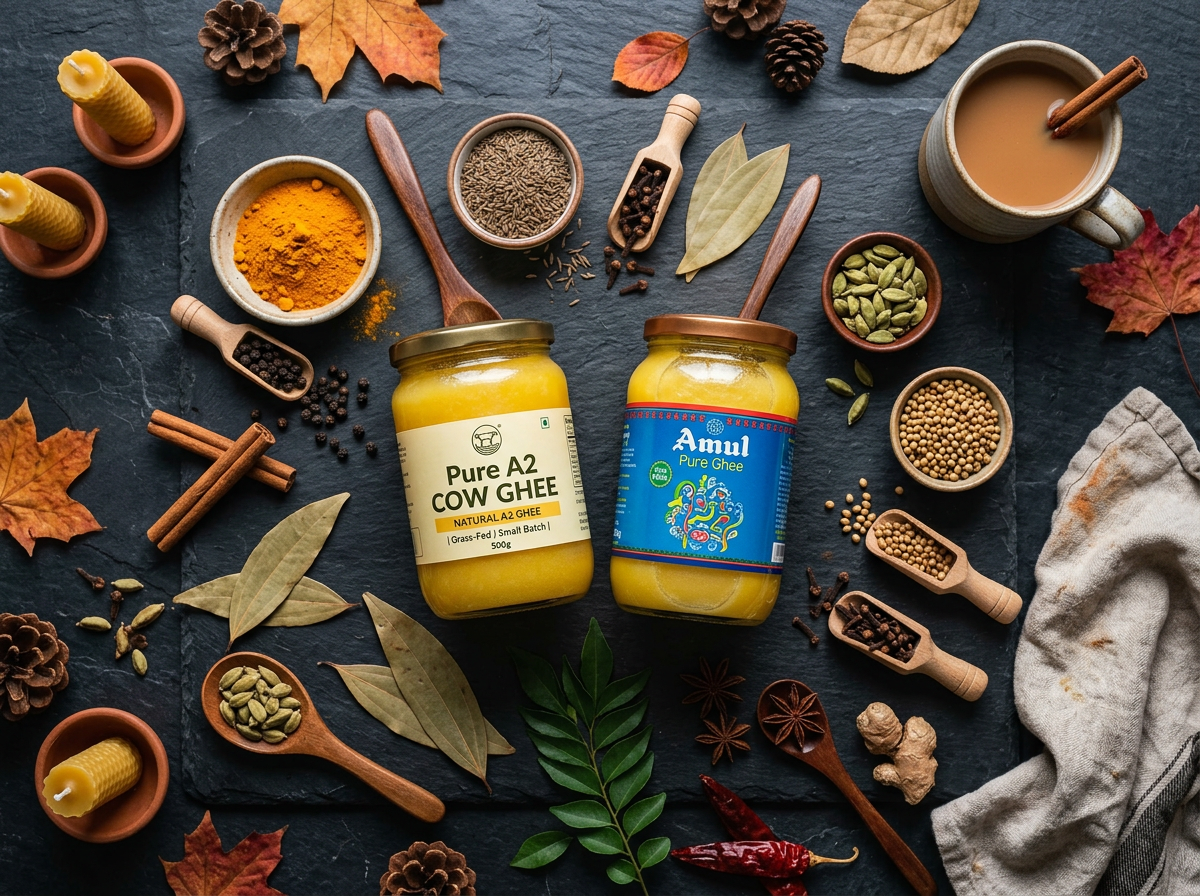
A2 Ghee vs Amul Ghee: An Honest Buyer Comparison
A2 ghee and Amul-style regular ghee serve different buying needs. One is usually chosen for desi cow source and traditional positioning. The other is chosen for consistency, availability and value.
This comparison is not about attacking a large brand. It is about helping you decide what kind of ghee fits your kitchen.
Quick answer
- Choose A2 desi cow ghee if source clarity, aroma and traditional method matter most.
- Choose regular branded ghee if wide availability and lower everyday price matter most.
- Compare source, method, taste, pack size and support before deciding.
The main difference
The main difference is positioning. A2 desi cow ghee focuses on milk source and often on traditional methods such as curd-first churning. Large regular ghee brands focus on scale, consistency and availability.
| Factor | A2 desi cow ghee | Amul-style regular ghee |
|---|---|---|
| Source story | Usually desi/native cow focused | Broad dairy sourcing |
| Method | May be bilona/curd-first if clearly stated | Industrial-scale processing |
| Taste | Often stronger, nuttier, batch-sensitive | Usually consistent and familiar |
| Price | Usually higher | Usually lower |
| Best for | Customers who value source and traditional aroma | Customers who value availability and predictable pricing |
Which tastes better?
Taste is personal. A2 desi cow ghee often has a deeper aroma, especially when made through a curd-first route. Regular branded ghee is usually milder and more consistent.
If you are unsure, test both in the same simple dish: hot rice, dal, dosa or idli podi. The difference is easier to notice there than in a heavily spiced curry.
Which is better for health?
Be careful with absolute health claims. Ghee is a cooking fat. A2 source and traditional preparation may matter to many families, but portion size and overall diet still matter.
If you have diabetes, heart disease, pregnancy-related dietary questions or a medical condition, follow your doctor’s advice instead of treating any ghee as a cure.
Why A2 ghee costs more
A2 desi cow ghee is usually more expensive because it is tied to source, smaller batches and sometimes a slower bilona-style process. Read why A2 ghee is expensive for a full cost breakdown.
When Raghas Dairy makes sense
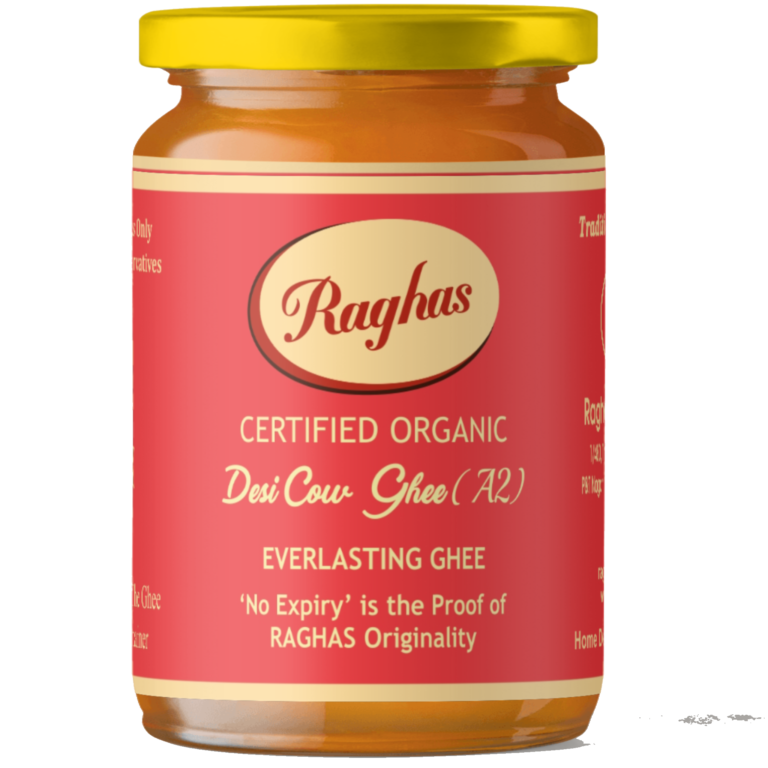
Raghas Dairy makes sense if you want Tamil Nadu native desi cow milk sourcing, traditional flavour and a ghee that fits South Indian food. The correct source positioning is mixed Tamil Nadu native desi cow herd, not one fixed breed claim.
If you want a practical first step, compare a small jar of Raghas Pure A2 Desi Cow Ghee with the ghee you already use at home.
Decision guide
- For lowest price: regular branded ghee may suit you.
- For strong aroma: try A2 desi cow ghee.
- For daily South Indian cooking: choose the flavour your family actually enjoys.
- For gifting or special use: consider a premium jar such as Full Moon Ghee.
- For transparent buying: choose the page that explains source, method and support clearly.
Frequently asked questions
Is A2 ghee always better than Amul ghee?
No. It depends on what you value: source/method or price/availability.
Can I use A2 ghee for the same cooking?
Yes. Use it in rice, dal, dosa, pongal, sweets and tadka as you would use ghee normally.
Why does A2 ghee smell stronger?
Source, curd setting and slow clarification can create a deeper aroma.
Should I replace all ghee immediately?
No need. Try a small jar first and decide based on taste and usage.
Why this comparison should stay respectful
Large dairy brands exist because many households need affordable, consistent products. Small-batch A2 ghee brands exist because some households want a more specific source story and traditional aroma. These are different jobs, not a reason to make careless claims.
The right comparison is based on use case. A family that cooks with ghee daily may keep a regular ghee for some dishes and a premium A2 jar for rice, dal, dosa, sweets or festive food.
How to run a fair taste test
Use the same dish, the same quantity and the same serving temperature. Try one spoon of each ghee on hot rice or dal. Smell the food first, then taste. A2 desi cow ghee may feel richer; regular ghee may feel more neutral. Choose what your family will actually use.
A premium product fails if it sits unused in the cupboard. The best ghee is the one that earns a place in your cooking rhythm.
Useful references
Ready to choose your ghee?
Start with Raghas Pure A2 Desi Cow Ghee for everyday cooking, or explore Full Moon Ghee for a richer occasional jar.
Raghas vs Amul Ghee: How To Decide Without Confusion
Amul is a large, familiar dairy brand. Raghas is a smaller Madurai food brand focused on A2 desi cow ghee and farm-made products. The right choice depends on whether you want mass-market convenience or a more specific A2 desi cow ghee product.
Choose Raghas if you want Tamil Nadu native desi cow positioning, curd-first bilona-style process notes and direct brand support. Choose a large regular ghee brand if your priority is supermarket availability and standard everyday familiarity.
Continue Your A2 Ghee Buying Research
If you are choosing A2 desi cow ghee for your home, compare source clarity, bilona method, price per litre, storage guidance and delivery support before ordering.