Desi Cow Ghee vs Gir Cow Ghee: Complete Comparison
Desi Cow Ghee vs Gir Cow Ghee: Complete Comparison
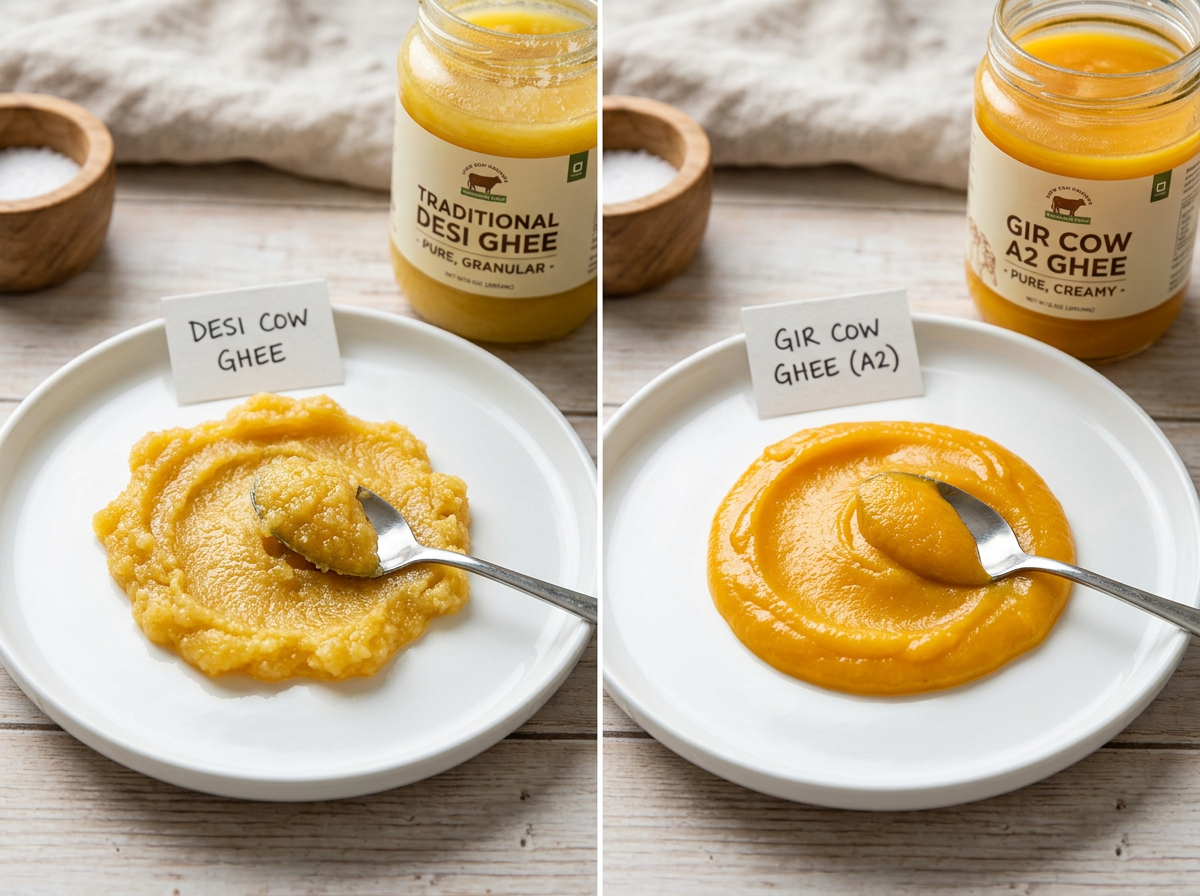
Desi cow ghee vs Gir cow ghee — is there actually a difference? The short answer: all desi (native Indian) cow breeds produce A2 milk, including Gir. Gir cow ghee isn’t nutritionally superior to ghee from other native breeds like Kangayam, Umbalachery, Pulikulam, Sahiwal, or Red Sindhi. The Gir premium is largely marketing, not science.
In this article, we bust common myths, compare Tamil Nadu native breeds with Gir, explain what actually determines ghee quality, and help you make an informed choice.
All Desi Breeds Produce A2 Milk
This is the most important fact in this entire article: every recognised native Indian cow breed produces A2 beta-casein milk.
India has over 40 recognised indigenous cattle breeds, and genetic studies confirm they all carry the A2 allele. This includes:
- Western India: Gir, Kankrej, Dangi
- Tamil Nadu: Kangayam, Umbalachery, Pulikulam, Bargur
- North India: Sahiwal, Tharparkar, Rathi, Hariana
- South India: Ongole, Hallikar, Amrit Mahal, Deoni
- East India: Red Sindhi, Punganur, Vechur
The A2 protein isn’t exclusive to Gir cows — it’s a trait shared by all Indian native cattle. Learn more about what A2 actually means.
Happy cows, pure milk, authentic ghee
Why Gir Cow Ghee Became So Popular
Gir cow ghee dominates the market, but not because of superior nutrition. Here’s the real story:
- First-mover advantage — Gujarat-based producers were among the first to market A2 ghee, and they naturally used their local breed: Gir
- Celebrity endorsements — Gir cows received early attention from Ayurvedic practitioners and influencers
- Higher milk yield — Gir cows produce relatively more milk than some other native breeds, making them more scalable at scale
- Brand association — “Gir cow ghee” became almost synonymous with “A2 ghee” in consumer minds
- Export market — Gir is the most internationally recognised Indian breed (Brazil imported Gir for cattle breeding)
None of these reasons relate to nutritional superiority. Gir ghee is popular because Gir was marketed first — not because it’s better.
Tamil Nadu Native Breeds: Equally Nutritious
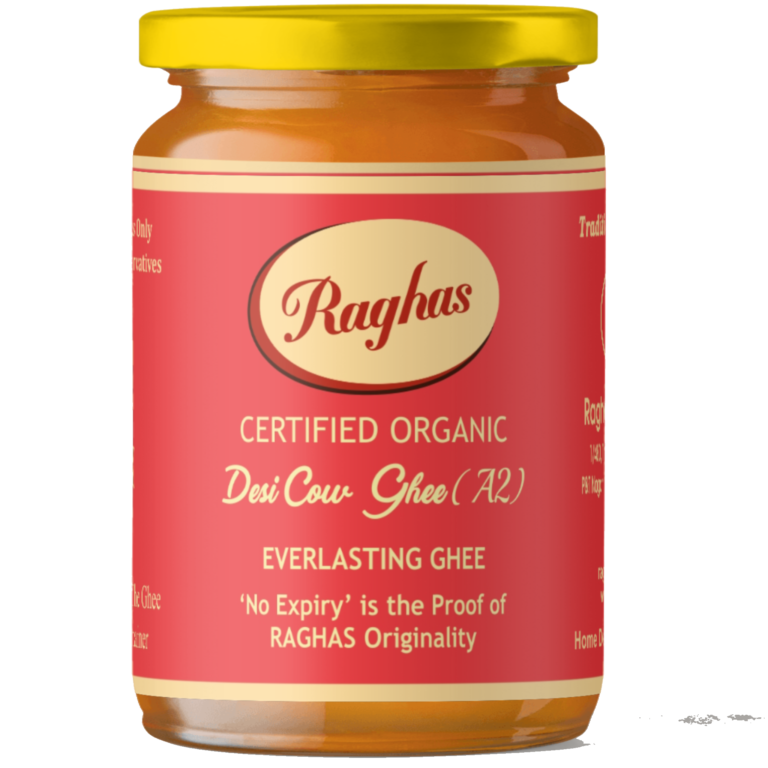
At Raghas Dairy, we raise Tamil Nadu native desi cow heritage. Each has unique characteristics, but all produce excellent A2 milk. Read our detailed guide on Tamil Nadu native cow breeds.
Kangayam
The pride of western Tamil Nadu. Kangayam cows are hardy, drought-resistant, and produce rich, creamy milk. Their milk has a naturally high fat content, making it ideal for ghee production. Traditionally used as both dairy and draught animals.
Umbalachery
From the Thanjavur delta region. Known for their resilience and compact build. Umbalachery cows produce milk with excellent fat composition — rich in short-chain fatty acids including butyric acid.
Pulikulam
Named after Pulikulam village in Sivaganga district. A smaller breed known for agility and hardiness. Their milk, though moderate in quantity, is concentrated in nutrients and ideal for traditional ghee making.
Bargur
From the Bargur hills of Erode district. Semi-wild cattle known for their independence and natural grazing habits. Bargur cows produce some of the richest milk among Tamil Nadu breeds, with high fat content and a distinctive flavour.
Together, milk from all Tamil Nadu native desi cow source gives our ghee a unique, complex flavour profile and nutritional density that single-breed ghee can’t match.
Farm-fresh A2 milk from native breeds
Nutritional Comparison
Let’s compare what matters — the actual nutrition:
| Nutrient | Gir Cow Ghee | Tamil Nadu Native Breed Ghee |
|---|---|---|
| A2 beta-casein | ✓ Yes | ✓ Yes |
| Butyric acid | 3-4% | 3-4% |
| CLA | Present | Present |
| Vitamins A, D, K2 | Present | Present |
| Calories per tbsp | ~120 | ~120 |
| Fat composition | ~62% saturated, ~29% MUFA | ~62% saturated, ~29% MUFA |
| Omega-3 to Omega-6 | Similar (pasture-dependent) | Similar (pasture-dependent) |
The nutritional profiles are virtually identical. Variations depend far more on the cow’s diet, lactation stage, and ghee production method than on the specific native breed.
What Actually Determines Ghee Quality
If breed alone doesn’t determine quality, what does? These factors matter far more:
- Diet/Feed — Cows on natural pasture and forage produce milk richer in CLA, omega-3, and fat-soluble vitamins than grain-fed cows (regardless of breed)
- Production method — Bilona (curd-churned) preserves more butyric acid and nutrients than industrial cream-separation
- Freshness — Small-batch, freshly made ghee retains more volatile compounds and aroma
- Heat control — Slow, gentle heating preserves nutrients. High-temperature large-scale processing destroys them
- Purity — No mixing with buffalo milk, vegetable oil, or additives
- Native breed (any native breed) — A2 native cow source are the baseline. Beyond that, any native breed is excellent
A Kangayam cow grazing freely on Tamil Nadu pastures will produce better ghee than a confined Gir cow fed processed grain. The cow’s lifestyle matters more than its breed name.
Marketing Hype vs Reality
Let’s address common marketing claims:
“Gir cow ghee is the purest ghee”
Reality: Purity depends on the producer, not the breed. Any native breed’s ghee, properly made, is equally pure.
“Only Gir cow ghee is A2”
Reality: False. All 40+ native Indian breeds produce A2 milk. This is the biggest myth in the ghee industry.
“Gir cow ghee has more medicinal properties”
Reality: No scientific study shows Gir ghee has superior medicinal properties compared to other native breed ghee. Ayurvedic texts refer to “desi cow ghee” — not specifically Gir.
“Gir cow ghee has a distinctive golden colour”
Reality: The golden colour comes from beta-carotene in the cow’s diet (grass and forage), not the breed. Any pasture-raised native cow’s ghee will be golden.
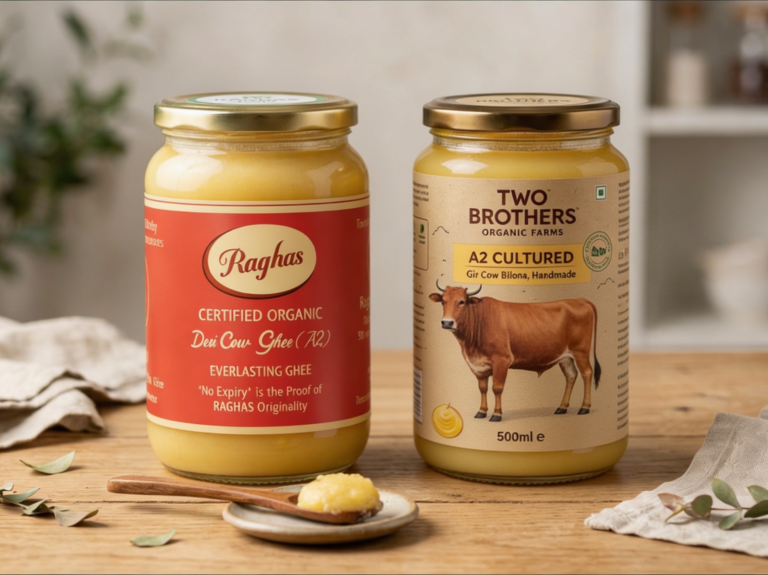
Check out our comparison of best A2 ghee brands in India for an objective overview.
How to Choose the Right Desi Cow Ghee
Here’s what to prioritise (in order):
- Native breed — any native breed (confirms A2 milk)
- Bilona method (preserves maximum nutrition)
- Pasture-raised cows (natural diet = better fatty acid profile)
- Small-batch production (freshness and quality control)
- Transparent producer (you can learn about their cows and process)
- Reasonable price (genuine A2 Bilona ghee costs ₹1,500-3,000/litre; suspiciously cheap = likely not genuine)
Don’t pay a premium just for the word “Gir” on the label. A well-made ghee from Kangayam, Sahiwal, or any other native breed is equally valuable.
Frequently Asked Questions
Is Gir cow ghee better than other desi cow ghee?
No. All native Indian breeds produce A2 milk with similar nutritional profiles. Ghee quality depends on diet, production method, and freshness — not the specific breed name.
Do all desi cow breeds produce A2 milk?
Yes. Every recognised native Indian cattle breed — over 40 breeds — produces A2 beta-casein milk. This is a genetic trait common to all indigenous Indian cattle.
Why is Gir cow ghee so popular?
Marketing first-mover advantage. Gujarat-based producers marketed A2 ghee early using their local Gir breed. This created a consumer association of Gir = A2 ghee. The popularity is marketing-driven, not nutrition-driven.
Key Takeaways
- All native Indian breeds produce A2 milk — Gir is not unique in this regard
- Gir cow ghee is popular due to marketing, not superior nutrition
- Diet, method, and freshness matter far more than specific breed name
- Tamil Nadu breeds (Kangayam, Umbalachery, Pulikulam, Bargur) produce equally nutritious A2 ghee
- Don’t pay a premium for “Gir” alone — look at method, feed, and transparency
- The best ghee comes from any native breed, pasture-raised, Bilona method
A2 Ghee from Tamil Nadu’s Finest Native Breeds
Raghas Dairy uses milk sourced from a mixed Tamil Nadu native desi cow herd. Traditional Bilona method. No marketing hype, just honest ghee.
Free shipping on orders above ₹1,750.
Written by the Raghas Dairy Team from Madurai, Tamil Nadu. We make A2 ghee from milk sourced from Tamil Nadu native desi cows using the traditional Bilona method — hand-churned from curd, slow-cooked over wood fire.
Frequently Asked Questions
What makes A2 desi ghee different from regular ghee?
A2 desi ghee is made from milk of indigenous cows that produce A2 beta-casein protein, which is easier to digest and more beneficial for health compared to A1 protein found in regular ghee.
How should I store desi ghee?
Store desi ghee in a cool, dry place away from direct sunlight. It can be kept at room temperature for months without refrigeration due to its natural preservation properties.
What are the traditional food value of consuming desi ghee?
Desi ghee is rich in fat-soluble vitamins (A, D, E, K), helps improve digestion, boosts immunity, and provides healthy fats that support everyday nourishment and overall health.
Buyer Note: Desi Cow Ghee Is Not Only About One Breed
Many buyers compare desi cow ghee vs Gir cow ghee because Gir cow products are widely marketed. That does not mean every good A2 desi cow ghee must come from one named breed. The important question is whether the brand explains its source honestly.
Raghas Dairy uses milk from Tamil Nadu native desi cows as a mixed native herd. It should be understood as Tamil Nadu native desi cow ghee, not as one fixed breed product. That is a strength when presented clearly: the product is rooted in Tamil Nadu native dairy tradition and made for daily Indian cooking.
Continue Your A2 Ghee Buying Research
If you are choosing A2 desi cow ghee for your home, compare source clarity, bilona method, price per litre, storage guidance and delivery support before ordering.