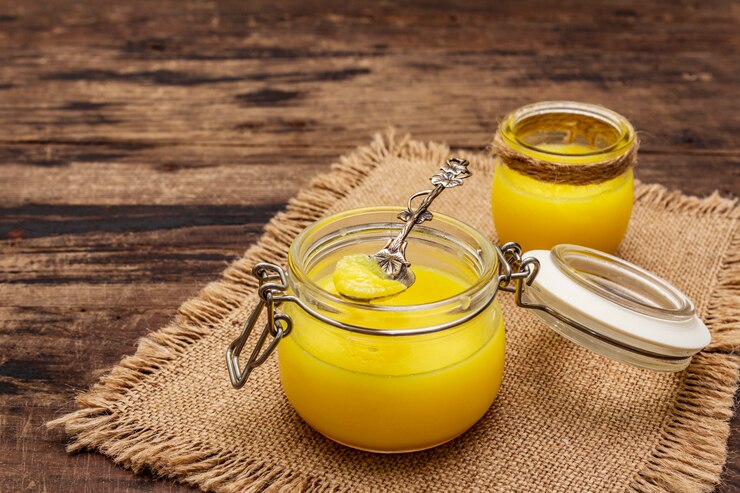
Ghee and Fatty Liver: Food Notes to Discuss With Your Doctor
Food note: This article is general food information, not medical advice. For babies, pregnancy, liver, heart, or diagnosed health conditions, please follow your doctor or dietitian’s guidance.
A2 Ghee for Fatty Liver: Can Ghee Actually Help?
A2 ghee for fatty liver may sound counterintuitive — why add fat when your liver already has too much? But research shows that the type of fat matters far more than the amount. A2 desi cow ghee, rich in butyric acid and short-chain fatty acids, can actually support liver health when consumed in moderate quantities.
In this guide, we cover what causes fatty liver, how A2 ghee’s unique composition helps, what Ayurveda says, safe dosage, and practical tips to include it in your diet.
- What Is Fatty Liver Disease?
- Common Causes of Fatty Liver
- How A2 Ghee Supports Liver Health
- The Butyric Acid Connection
- Ayurvedic Perspective on Ghee and Liver
- Safe Amounts: How Much A2 Ghee Per Day
- What Research Says
- Practical Tips to Include A2 Ghee
- When to Avoid or Limit Ghee
- Frequently Asked Questions
- Key Takeaways
What Is Fatty Liver Disease?
Non-Alcoholic Fatty Liver Disease (NAFLD) occurs when excess fat accumulates in liver cells — typically more than 5% of the liver’s weight. It affects an estimated 30-40% of Indian adults, making it one of the most common liver conditions in the country.
Left unchecked, fatty liver can progress from simple steatosis to inflammation (NASH), fibrosis, and eventually cirrhosis. The good news: early-stage fatty liver is fully reversible with dietary and lifestyle changes.
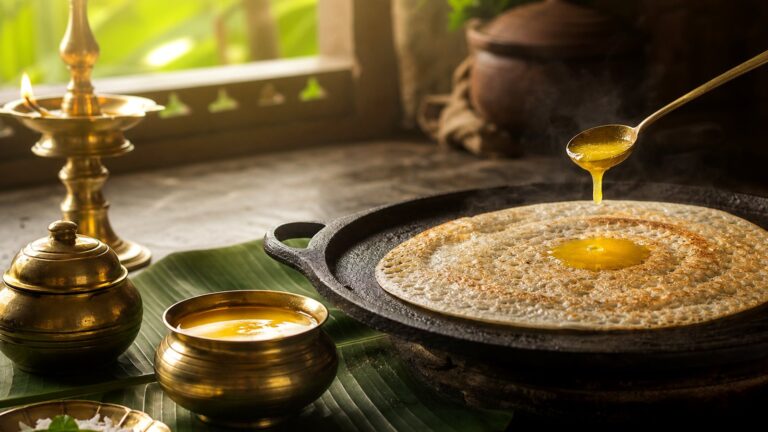
Ghee for liver wellness — Ayurvedic wisdom
Common Causes of Fatty Liver
Contrary to popular belief, dietary fat alone doesn’t cause fatty liver. The primary culprits are:
- Excess sugar and refined carbohydrates — fructose is particularly harmful to the liver
- Sedentary lifestyle — lack of exercise impairs fat metabolism
- Insulin resistance and obesity — the liver converts excess glucose to fat
- Refined vegetable oils — high omega-6 oils promote liver inflammation
- Processed foods — trans fats and additives stress the liver
- Excess alcohol — damages liver cells directly
Notice something important? It’s excess sugar, refined carbs, and processed fats that drive fatty liver — not traditional fats like ghee consumed in moderation.
How A2 Ghee Supports Liver Health
A2 ghee offers several properties that may benefit liver health:
- Butyric acid (3-4%) — reduces inflammation in liver tissue and supports detoxification enzymes
- Conjugated linoleic acid (CLA) — studies suggest CLA may reduce liver fat accumulation
- Fat-soluble vitamins A, D, E, K2 — essential for liver repair and immune function
- Medium-chain fatty acids — metabolised directly by the liver for energy rather than stored as fat
- No trans fats — unlike refined oils, pure A2 ghee contains zero trans fats
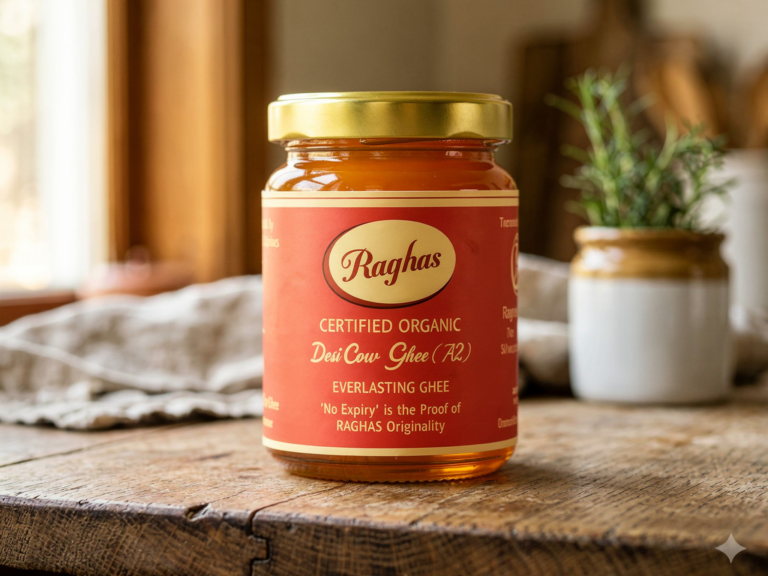
At Raghas Dairy, our A2 ghee is made from milk sourced from Tamil Nadu native desi cows. This slow-churned process preserves the full spectrum of beneficial fatty acids.
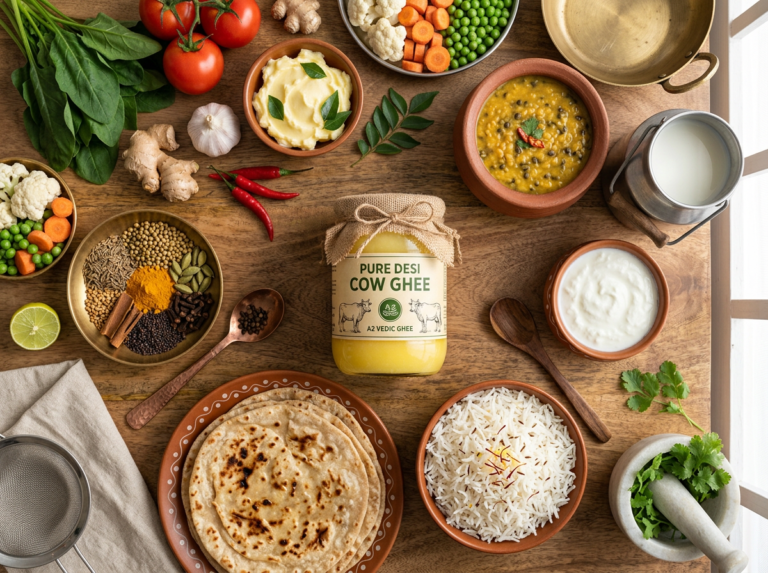
A2 ghee’s role in supporting fatty liver recovery
The Butyric Acid Connection
Butyric acid is the star compound in ghee for liver health. Here’s why it matters:
What butyric acid does for your liver:
- Reduces inflammation — Butyric acid inhibits NF-κB, a protein complex that triggers liver inflammation
- Supports gut barrier — A healthy gut lining prevents toxins from reaching the liver via the portal vein (the gut-liver axis)
- Activates detox pathways — Stimulates Phase II detoxification enzymes in liver cells
- Improves insulin sensitivity — Helps the liver respond better to insulin, reducing fat storage
Ghee is one of the richest dietary sources of butyric acid — containing 3-4% by weight. Your gut bacteria also produce butyrate from fibre, but dietary butyric acid from ghee provides a direct, additional source. Learn more about A2 ghee’s nutritional profile.
Ayurvedic Perspective on Ghee and Liver
In Ayurveda, ghee (ghrita) is considered one of the most liver-friendly fats. The liver is governed by Pitta dosha, and ghee is believed to pacify excess Pitta — reducing heat, inflammation, and toxin buildup.
Traditional Ayurvedic practices for liver support:
- Ghee + turmeric milk — Mix ½ teaspoon ghee with warm turmeric milk before bed. Turmeric’s curcumin and ghee’s butyric acid work synergistically for liver detox.
- Ghee with bitter herbs — Ayurvedic practitioners use medicated ghee (tikta ghrita) infused with bitter herbs like neem and kutki for liver cleansing.
- Morning ghee ritual — 1 teaspoon of warm ghee on an empty stomach is believed to “kindle” digestive fire (Agni) and support liver function.
While these are traditional practices, modern science increasingly validates the anti-inflammatory properties of ghee’s fatty acid profile.
Safe Amounts: How Much A2 Ghee Per Day
If you have fatty liver, moderation is everything. Here’s a practical dosage guide:
| Condition | Recommended A2 Ghee | Notes |
|---|---|---|
| Mild fatty liver (Grade 1) | 1-2 teaspoons/day | Can use for cooking + as topping |
| Moderate fatty liver (Grade 2) | 1 teaspoon/day | Use as cooking fat replacement |
| Severe fatty liver (Grade 3) | Consult your doctor | Total fat intake needs medical supervision |
| Post-recovery / Prevention | 2 teaspoons/day | Regular use as part of balanced diet |
Important: These amounts should fit within your total daily fat budget — not be added on top. Replace refined oils with A2 ghee rather than adding extra fat. Read our detailed guide on how much ghee per day.
What Research Says
While large-scale clinical trials specifically on A2 ghee and fatty liver are limited, related research is promising:
- A 2017 study in Nutrition & Metabolism found that butyrate supplementation reduced liver inflammation and fat accumulation in animal models of NAFLD.
- Research published in the Journal of Lipid Research showed that CLA (found in ghee) reduced hepatic steatosis (liver fat) by improving fatty acid oxidation.
- A 2019 Indian study in the Journal of Ayurveda and Integrative Medicine found that medicated ghee preparations improved liver enzyme levels in patients with liver disorders.
- Multiple studies confirm that replacing refined vegetable oils with traditional fats like ghee reduces inflammatory markers linked to NAFLD.
Bottom line: The compounds in A2 ghee — butyric acid, CLA, and fat-soluble vitamins — have individually shown liver-protective properties. Using A2 ghee as your primary cooking fat (in moderation) is a sensible dietary choice.
Practical Tips to Include A2 Ghee
Here’s how to incorporate A2 ghee into a liver-friendly diet:
- Replace, don’t add — Swap refined oils with A2 ghee for tadka, sautéing, and rice
- Morning ritual — Add ½ teaspoon to warm water or turmeric milk on empty stomach
- Cook vegetables in ghee — Fat-soluble vitamins in spinach, carrots, and pumpkin absorb better with ghee
- Drizzle on dal or khichdi — A teaspoon of ghee improves nutrient absorption
- Avoid deep frying — Even with ghee, deep frying adds excess calories
Pair ghee with liver-friendly foods: bitter gourd, turmeric, garlic, leafy greens, amla, and green tea. These foods support detoxification while ghee aids nutrient absorption.
When to Avoid or Limit Ghee
A2 ghee is not suitable for everyone with fatty liver. Limit or avoid if:
- Your doctor has prescribed a strict low-fat diet
- You have advanced liver disease (cirrhosis or liver failure)
- Your total cholesterol or triglycerides are very high — check our guide on A2 ghee and cholesterol
- You’re consuming ghee on top of other fats rather than as a replacement
Always consult your hepatologist or gastroenterologist before making dietary changes if you have a diagnosed liver condition.
Frequently Asked Questions
Is A2 ghee good for fatty liver?
Yes, in moderate amounts (1-2 teaspoons/day). A2 ghee’s butyric acid reduces liver inflammation, and its medium-chain fatty acids are metabolised efficiently. The key is replacing other fats with ghee, not adding it on top.
How much A2 ghee is safe for someone with fatty liver?
Start with 1 teaspoon (5 ml) per day. If your liver enzymes remain stable, you can increase to 2 teaspoons. Always work within your total fat allowance and get regular liver function tests.
Does ghee increase liver fat?
In moderate amounts, no. Fatty liver is primarily driven by excess sugar, refined carbs, and overall caloric surplus — not moderate amounts of traditional fats like ghee.
Can I replace cooking oil with A2 ghee if I have fatty liver?
Yes, and it’s recommended. A2 ghee has a better fatty acid profile than most refined vegetable oils. Use 1-2 teaspoons for cooking per meal instead of refined sunflower or soybean oil.
Key Takeaways
- A2 ghee in moderate amounts (1-2 tsp/day) can support liver health thanks to butyric acid and CLA
- Fatty liver is caused by excess sugar and refined carbs — not moderate traditional fats
- Replace refined oils with A2 ghee rather than adding extra fat
- Ayurveda has used ghee for liver support for centuries — modern research increasingly validates this
- Always consult your doctor if you have diagnosed liver disease
- Choose traditionally made A2 ghee from native breeds for the best fatty acid profile
Try Raghas A2 Desi Cow Ghee
Our ghee is Made from milk sourced from Tamil Nadu native desi cows in Madurai. Rich in butyric acid, CLA, and fat-soluble vitamins.
Free shipping on orders above ₹1,750.
Written by the Raghas Dairy Team from Madurai, Tamil Nadu. We make A2 ghee from milk sourced from Tamil Nadu native desi cows using the traditional Bilona method — hand-churned from curd, slow-cooked over wood fire.
Frequently Asked Questions
What makes A2 desi ghee different from regular ghee?
A2 desi ghee is made from milk of indigenous cows that produce A2 beta-casein protein, which is easier to digest and more beneficial for health compared to A1 protein found in regular ghee.
How should I store desi ghee?
Store desi ghee in a cool, dry place away from direct sunlight. It can be kept at room temperature for months without refrigeration due to its natural preservation properties.
What are the traditional food value of consuming desi ghee?
Desi ghee is rich in fat-soluble vitamins (A, D, E, K), helps improve digestion, boosts immunity, and provides healthy fats that support everyday nourishment and overall health.
Important Health Note for Fatty Liver Readers
If you have fatty liver, diabetes, cholesterol concerns or any medical condition, discuss ghee intake with your doctor or dietitian. A2 ghee is still a fat. The right quantity depends on your total diet, activity, body weight, lab results and medical advice.
For general cooking, many families use ghee in small measured quantities for flavour. Do not treat any ghee brand as a cure. Use this guide to ask better food questions and get professional advice for your own health condition.
Continue Your A2 Ghee Buying Research
If you are choosing A2 desi cow ghee for your home, compare source clarity, bilona method, price per litre, storage guidance and delivery support before ordering.