A2 Ghee for Rice, Roti, Paratha and Everyday Indian Cooking
A2 ghee earns its place in an Indian kitchen when it improves simple food: hot rice, dal, roti, paratha, dosa, pongal and tiffin. This guide focuses on practical use, not hype. A small spoon used well can do more for aroma than a large amount used without thought.
Best Everyday Uses For A2 Ghee
| Food | Best moment to add ghee | Why it works |
|---|---|---|
| Hot rice | After cooking, just before eating | Heat releases aroma without burning the ghee |
| Roti or chapati | Light brush after roasting | Keeps the surface soft and fragrant |
| Paratha | During final roast or after cooking | Adds aroma and improves mouthfeel |
| Dosa | At the edge near the end | Gives crispness and aroma without soaking the dosa |
| Dal or khichdi | As a finish or light tadka | Rounds the flavour of simple lentils |
Rice: The Highest-Impact Use
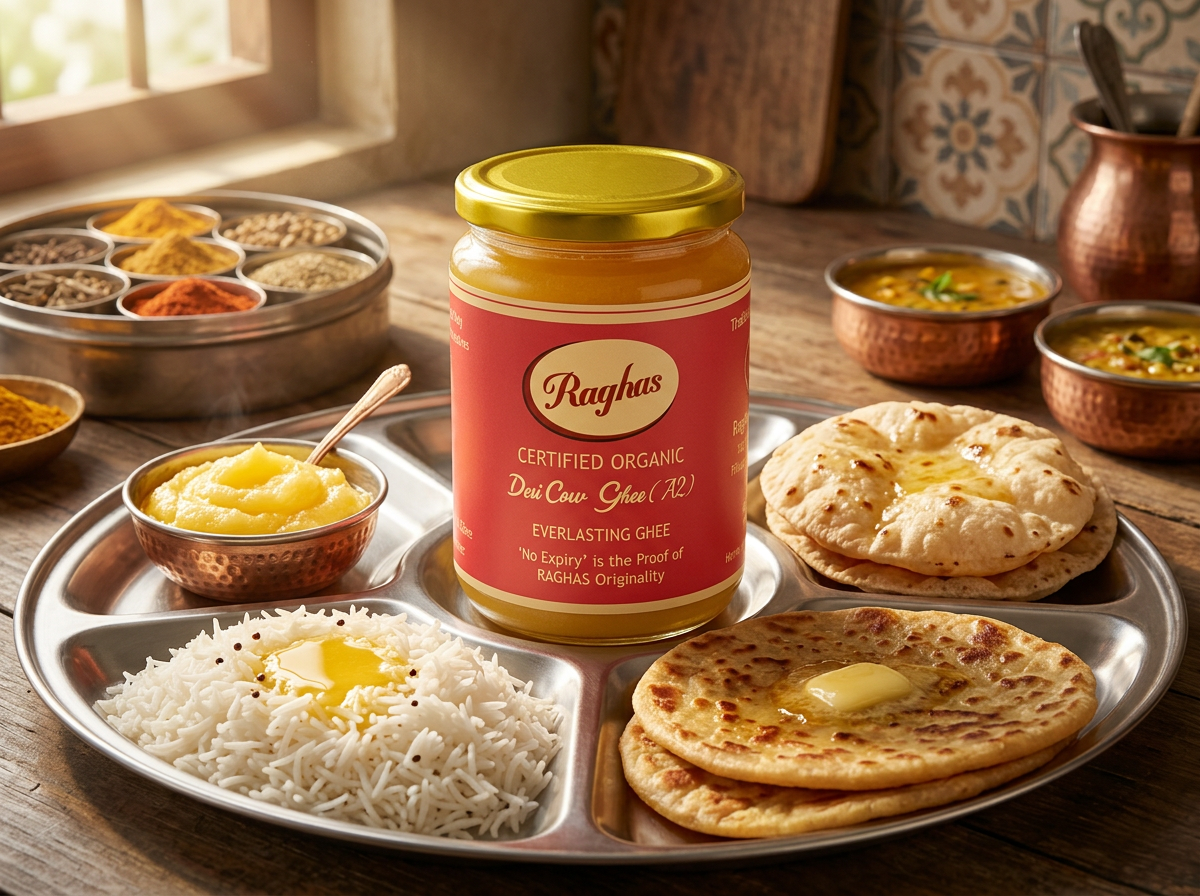
For many South Indian homes, the most satisfying use is also the simplest: hot rice, a small spoon of ghee, podi or dal, and a few seconds of mixing. Because the rice is hot, the aroma opens quickly. This is where ghee quality becomes obvious. Weak ghee disappears; good ghee announces itself without needing too much.
Try it with paruppu podi, rasam rice, sambar rice, dal rice or ven pongal. Add after cooking, not while the rice is boiling.
Roti and Paratha: Use Less, Time It Better
For roti, a thin brush after cooking usually works better than heavy application before cooking. For paratha, the cooking style matters. If you are making layered paratha, ghee can be used inside and outside, but daily meals usually need only a controlled finish. The goal is softness and aroma, not heaviness.
Dosa, Idli Podi and Tiffin Boxes
A2 ghee works well with idli podi because the fat carries spice aroma. For dosa, add near the end so the edges crisp without burning. For school lunch or office tiffin, use ghee in foods that hold up well: podi idli, ghee rice, chapati, mild paratha rolls, or dal rice. Avoid packing too much ghee into foods that will sit for many hours in heat.
When Not To Use Your Best Ghee
Do not waste a good aromatic ghee where the flavour will be lost behind heavy masala, deep frying, or long high-heat cooking. Save it for finishing, roasting and dishes where the aroma can actually be noticed. This is how families get better value from a premium jar.
Raghas Dairy Cooking Fit
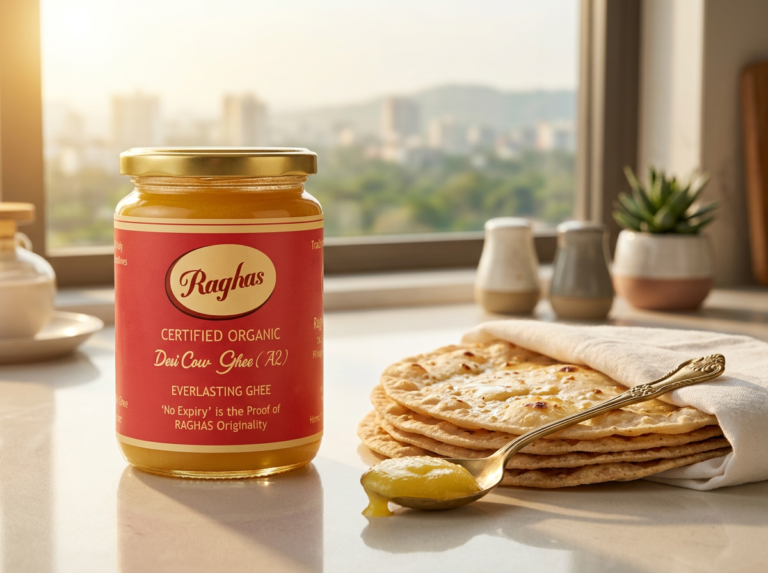
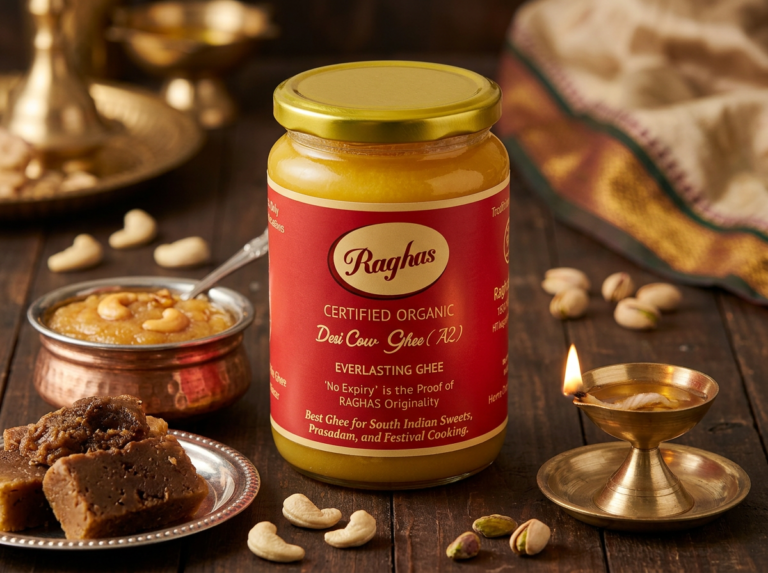
Raghas A2 ghee is made for the kind of food that happens every day in Indian homes. Because the brand is based in Madurai, the natural reference point is South Indian food: rice, podi, dosa, pongal, sweets and prasadam. But the same ghee also fits roti, paratha, dal and khichdi for families across India.
Dish-by-Dish Timing Guide
Rice and dal
Add after cooking, while the food is still hot. This is the easiest way to notice aroma. A small spoon can be enough for a bowl if the ghee is fragrant.
Roti
Brush lightly after the roti comes off the tawa. This keeps the roti soft and avoids overheating the ghee unnecessarily.
Paratha
For layered paratha, use measured ghee during folding and a little during the final roast. For everyday paratha, a finishing layer may be enough.
Dosa
Add near the edges when the dosa has already set. This gives crispness without making the centre oily.
Weekly Meal Planning With A2 Ghee
A practical home may use ghee differently across the week. Monday rice and dal may need a simple finish. Wednesday chapati may need a light brush. Weekend dosa or pongal can use a little more. Sunday sweets may need a recipe quantity. Thinking this way prevents both overuse and underuse.
How To Teach The Family To Use It Well
If multiple people use the jar, keep a dedicated spoon. Tell children and household members that ghee is not poured casually; it is added thoughtfully. This protects both cost and freshness. Premium food becomes better value when the whole home uses it with care.
Why Everyday Food Is The Real Test
Marketing can make any jar look premium. Everyday food reveals the truth. If ghee improves hot rice, dal, dosa and roti without needing excessive quantity, it earns a place in the kitchen. That is the standard this page uses.
Everyday Menu Ideas
- Monday: dal rice with a small spoon of ghee after serving.
- Tuesday: chapati brushed lightly after roasting.
- Wednesday: podi idli with ghee mixed into the podi.
- Thursday: khichdi or pongal finished with ghee and pepper.
- Friday: dosa edges finished with ghee near the end.
- Weekend: paratha, sweet or payasam where aroma matters.
Portion Discipline Without Losing Joy
Good ghee is enjoyable, but it should still be used with intention. Keep a small spoon near the jar rather than a large ladle. Add after cooking when possible. Teach children that ghee is a flavourful finishing ingredient, not something to pour randomly.
North And South Indian Use Cases
For South Indian meals, ghee shines in rice, podi, pongal, dosa and sweets. For North Indian meals, it fits roti, paratha, dal, khichdi and halwa. This makes Raghas useful beyond Madurai while still staying true to its South Indian food roots.
Internal Buying Flow
If this page helped you decide how you will use ghee, the next step is quantity. Use the usage calculator for monthly planning and the price-value guide for pack choice. Then buy from the product page when the use case is clear.
How Raghas Dairy Fits This Decision
Raghas Dairy should be judged on the promises it can stand behind: Madurai roots, Tamil Nadu native desi cow milk from a mixed native herd, traditional ghee-making, clear ordering and a product made for Indian kitchens. That is a stronger story than exaggerated claims or borrowed buzzwords.
When reading any A2 ghee page, ask whether the content helps you cook, buy, store or compare better. If it only repeats “pure,” “premium” or “best” without explaining anything, it is not doing enough for you as a customer.
Buyer Checklist Before You Leave This Page
- Do I know why I am buying: daily food, sweets, gifting, or trial?
- Do I know the pack size I am likely to finish well?
- Have I selected the correct delivery location?
- Have I checked the product page for current price and stock?
- Do I understand the source language clearly?
Kitchen Technique Matters
The same ghee can taste different depending on timing. Add too early and aroma may fade. Add too much and the food feels heavy. Add the right amount at the right moment and simple food becomes memorable. This is why the guide focuses on technique, not just ingredient choice.
Buying For Everyday Cooking vs Special Cooking
Everyday cooking needs consistency. Special cooking needs aroma impact. If your home mostly uses ghee for rice and roti, choose a pack you can finish steadily. If you use it mainly for sweets or guests, plan around those events. This difference helps you avoid both underbuying and overbuying.
Where To Go Next
After reading this page, you should know where ghee fits in your meals. If the answer is rice, roti, paratha and dosa several times a week, use the usage calculator. If the answer is mostly sweets, read the sweets guide. If you are ready to buy, go to the product page and choose the correct pack and delivery zone.
Frequently Asked Questions
Can A2 ghee be used daily?
Many families use ghee in daily cooking, but quantity is a personal food choice. This guide helps with kitchen use, not health dosage.
Is A2 ghee better for rice or roti?
It works well for both. Rice shows aroma quickly, while roti and paratha benefit from a light finish after cooking.
Should I cook on high flame with ghee?
Use practical heat control. For best aroma, many dishes benefit from adding ghee near the end rather than overheating it early.
Which Raghas page should I use for buying?
Use the product page for current pack sizes and delivery-zone pricing.
Shop Raghas A2 Desi Cow Ghee or compare all products on the Raghas Dairy shop page.
Sources and Useful Checks
- Food Safety and Standards Authority of India for food safety and packaged-food guidance.
- FoSCoS / FSSAI licensing portal for food business licence checks.
- ICAR-NBAGR registered breeds for official Indian livestock breed references.