A2 Ghee vs Olive Oil: Which Is Better for Cooking?
A2 Ghee vs Olive Oil: Which Is Better for Cooking & Health?
A2 ghee is better than olive oil for high-heat Indian cooking thanks to its higher smoke point (250°C vs 190°C), richer fat-soluble vitamin profile, and natural compatibility with Indian recipes. Olive oil wins for cold dishes, salads, and Mediterranean-style cooking.
Both are excellent fats — but they serve different purposes. If you’ve been debating whether to stock your kitchen with A2 ghee or olive oil, this guide breaks down every angle: nutrition, smoke points, cooking uses, traditional food value, and cost.
Quick Comparison: A2 Ghee vs Olive Oil
- Smoke Point: A2 Ghee ~250°C (482°F) | Extra Virgin Olive Oil ~190°C (374°F)
- Calories (1 tbsp): Ghee ~120 kcal | Olive Oil ~119 kcal
- Saturated Fat: Ghee ~9g | Olive Oil ~2g
- Key Vitamins: Ghee — A, D, E, K2 | Olive Oil — E, K1
- Gut Health Compound: Ghee — Butyric acid | Olive Oil — Polyphenols
- Best For: Ghee — Indian cooking, tadka, frying | Olive Oil — Salads, pasta, low-heat cooking
- Lactose: Ghee — Virtually none | Olive Oil — None
- Shelf Life: Ghee — 12–18 months | Olive Oil — 6–12 months
Smoke Point: Why It Matters for Your Kitchen
The smoke point is the temperature at which a cooking fat starts to break down, release toxic compounds, and turn bitter. This is the single most important factor for Indian cooking.
A2 ghee smokes at approximately 250°C (482°F). Extra virgin olive oil smokes at around 190°C — a full 60 degrees lower. Regular (refined) olive oil does better at ~210°C, but still falls short of ghee.
Why does this matter practically?
- Tadka (tempering): Requires 200°C+ to bloom spices properly. Ghee handles this easily; EVOO would smoke and turn acrid.
- Deep frying: Pakoras, vadas, and puris need 170–190°C sustained heat. Ghee remains stable; olive oil is at its limit.
- Roasting: Oven temperatures of 200–230°C are common. Ghee stays safe; EVOO risks breaking down.
- Sautéing: Both work well at medium heat (150–170°C).
At Raghas Dairy, we make our A2 ghee using the traditional Bilona method, which produces a cleaner, more stable fat with a naturally high smoke point — ideal for everyday Indian cooking.
Nutritional Comparison (Per Tablespoon)
Calorie-wise, ghee and olive oil are nearly identical. The real differences lie in their fat composition and micronutrients.
Fat Profile
- A2 Ghee: ~60% saturated fat, ~30% monounsaturated, ~5% polyunsaturated. Contains short-chain fatty acids (butyric acid) and CLA (conjugated linoleic acid).
- Olive Oil: ~14% saturated fat, ~73% monounsaturated (oleic acid), ~11% polyunsaturated. Rich in polyphenols (EVOO only).
Vitamins & Bioactive Compounds
- A2 Ghee: Vitamins A, D, E, K2 (fat-soluble). Butyric acid supports gut lining health. CLA may support metabolism.
- Olive Oil: Vitamin E, Vitamin K1. Oleocanthal (anti-inflammatory, EVOO only). Hydroxytyrosol (antioxidant).
The key insight: A2 ghee delivers a broader range of fat-soluble vitamins, especially Vitamin K2 — which is rare in most diets and supports bone and heart health. Olive oil’s strength is its polyphenol content, but only in cold-pressed extra virgin form.
For a deeper dive into ghee’s nutritional profile, see our A2 ghee nutrition facts guide.
Best Cooking Uses: When to Use Each
Use A2 Ghee For:
- Tadka and tempering spices
- Deep frying (pakoras, puris, vadas)
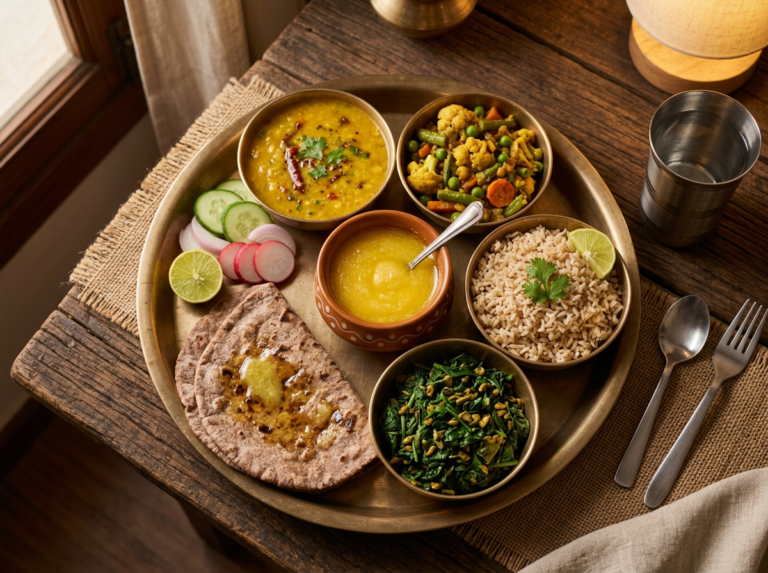
- Making dal, khichdi, and rice dishes
- Spreading on hot rotis and parathas
- Preparing sweets (halwa, ladoo, Mysore pak)
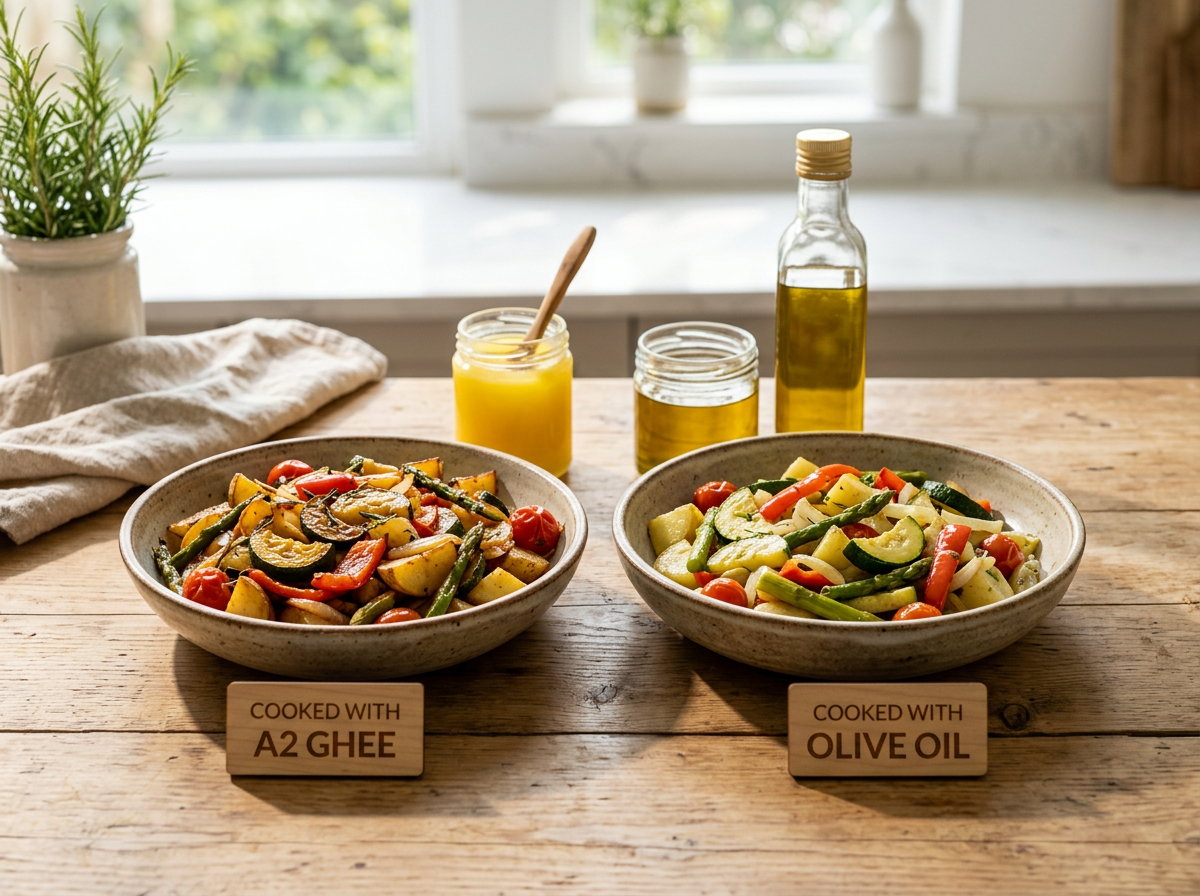
- Roasting vegetables at high heat
- Bulletproof coffee or golden milk
Use Olive Oil For:
- Salad dressings and vinaigrettes
- Pasta finishes and bruschetta
- Light sautéing at medium heat
- Hummus, dips, and cold sauces
- Bread dipping
- Grilling with marinades
Here’s a practical rule: if the recipe involves heat above 180°C or Indian spices, use A2 ghee. If it’s cold, raw, or Mediterranean, use olive oil.
Explore more recipes and tips in our guide to cooking with A2 ghee.
traditional food value Compared
A2 Ghee traditional food value
- Gut health: Butyric acid feeds beneficial gut bacteria and supports intestinal lining integrity.
- Anti-inflammatory: CLA and short-chain fatty acids have demonstrated anti-inflammatory properties in studies.
- Bone health: Vitamin K2 directs calcium to bones (not arteries), supporting bone density.
- Ayurvedic tradition: Used for thousands of years in Indian medicine for digestion, immunity, and vitality.
- Lactose-friendly: Milk solids are removed during clarification. Most lactose-intolerant people tolerate ghee well.
Olive Oil traditional food value
- Heart health: Oleic acid (monounsaturated) is associated with lower LDL cholesterol and better cardiovascular outcomes.
- Anti-inflammatory: Oleocanthal in EVOO has effects similar to ibuprofen.
- Brain health: Polyphenols in EVOO may protect against cognitive decline.
- Antioxidant-rich: Hydroxytyrosol is one of the most potent natural antioxidants.
Important note on saturated fat: Modern research (including a 2020 meta-analysis in the Journal of the American College of Cardiology) has moved away from blanket saturated fat demonization. The source and context matter. Ghee consumed as part of a traditional Indian diet — with vegetables, dal, and whole grains — behaves differently than processed saturated fats.
Learn more about the health profile of desi cow ghee in our complete A2 ghee benefits guide.
Indian vs Mediterranean: Different Diets, Different Fats
The ghee-vs-olive-oil debate is really a cultural and culinary one. Each fat evolved within its own food tradition.
Indian cooking relies on high-heat techniques — tadka, deep frying, roasting. Ghee has been the foundational fat for millennia. It carries spice flavours, withstands heat, and has a rich, nutty taste that defines Indian cuisine.
Mediterranean cooking favours lower-heat methods — drizzling, light sautéing, cold preparations. Olive oil’s fruity, peppery flavour complements these dishes perfectly.
Trying to use olive oil for Indian cooking often results in:
- Flavour clashes with cumin, mustard seeds, and turmeric
- Smoking and bitterness during tadka
- Loss of olive oil’s delicate polyphenols at high heat
Our recommendation: keep both in your kitchen. Use A2 ghee as your primary fat for Indian meals, and olive oil for Western-style dishes and salads. At Raghas Dairy, our A2 ghee vs coconut oil comparison explores another common debate.
Cost Comparison: A2 Ghee vs Olive Oil in India
Pricing varies by brand and quality, but here’s a realistic comparison for Indian consumers (as of 2026):
- A2 Bilona Ghee (genuine): ₹1,800–₹3,000 per litre
- Extra Virgin Olive Oil (imported): ₹800–₹1,500 per litre
- Regular Olive Oil: ₹500–₹800 per litre
A2 ghee costs more — and for good reason. Genuine Bilona ghee requires ~25–30 litres of A2 milk to produce 1 litre of ghee. The process is slow, traditional, and labour-intensive.
However, consider usage: a tablespoon of ghee goes further in flavour than a tablespoon of olive oil. You often need less ghee per dish. Over a month, the actual cost difference narrows.
Raghas Dairy offers free shipping on orders above ₹1,750. Shop our A2 Desi Cow Ghee →
The Verdict: Which Should You Choose?
Choose A2 ghee if:
- You cook Indian food regularly
- You need a high smoke point fat
- You want fat-soluble vitamins (A, D, E, K2)
- You value Ayurvedic and traditional nutrition
- You want a single, versatile cooking fat
Choose olive oil if:
- You primarily cook Mediterranean or Western food
- You need a fat for cold/raw preparations
- You want maximum polyphenol antioxidants
Best approach: Keep both. Use A2 ghee as your everyday cooking fat, and extra virgin olive oil for salads and cold dishes. They complement each other perfectly.
Key Takeaways
- A2 ghee has a significantly higher smoke point (250°C vs 190°C) — better for Indian cooking.
- Both fats are nutritious; ghee offers K2 and butyric acid, olive oil offers polyphenols.
- Ghee is the natural choice for Indian cuisine; olive oil for Mediterranean dishes.
- Modern quality checks supports both as part of a balanced diet.
- Choose genuine Bilona A2 ghee from native breeds for the best nutritional value.
Frequently Asked Questions
Can I replace olive oil with A2 ghee in cooking?
Yes. A2 ghee works as a 1:1 substitute for olive oil in sautéing, roasting, and baking. For salad dressings or cold dishes, olive oil is the better choice since ghee solidifies at room temperature.
Which is healthier — A2 ghee or extra virgin olive oil?
Both are healthy fats. A2 ghee is richer in fat-soluble vitamins (A, D, E, K2) and butyric acid for gut health. Extra virgin olive oil is high in polyphenols and monounsaturated fats. For Indian cooking at high heat, A2 ghee is safer and more nutritious.
Is A2 ghee better than olive oil for weight loss?
A2 ghee contains CLA (conjugated linoleic acid) which may support fat metabolism. Olive oil is slightly lower in calories per tablespoon. Both can fit into a weight-loss diet when used in moderation — the key is portion control, not the type of fat.
What is the smoke point of A2 ghee vs olive oil?
A2 ghee has a smoke point of approximately 250°C (482°F). Extra virgin olive oil smokes at around 190°C (374°F), and regular olive oil at about 210°C (410°F). Ghee is significantly better for high-heat Indian cooking like tadka and deep frying.
Can lactose-intolerant people use A2 ghee instead of olive oil?
Yes. Properly made A2 ghee (like Bilona ghee) has virtually no lactose or casein — the milk solids are removed during clarification. Most lactose-intolerant individuals tolerate ghee well.
About the Author: This article is written by the Raghas Dairy Team from Madurai, Tamil Nadu. We produce A2 Desi Cow Ghee from Tamil Nadu native desi cows using the traditional Bilona method. Every batch is made from milk sourced from Tamil Nadu native desi cows at our farm.
Shop Raghas A2 Desi Cow Ghee — Free Shipping Above ₹1,750 →
Frequently Asked Questions
What makes A2 desi ghee different from regular ghee?
A2 desi ghee is made from milk of indigenous cows that produce A2 beta-casein protein, which is easier to digest and more beneficial for health compared to A1 protein found in regular ghee.
How should I store desi ghee?
Store desi ghee in a cool, dry place away from direct sunlight. It can be kept at room temperature for months without refrigeration due to its natural preservation properties.
What are the traditional food value of consuming desi ghee?
Desi ghee is rich in fat-soluble vitamins (A, D, E, K), helps improve digestion, boosts immunity, and provides healthy fats that support everyday nourishment and overall health.
Cooking Use: A2 Ghee and Olive Oil Can Both Have a Place
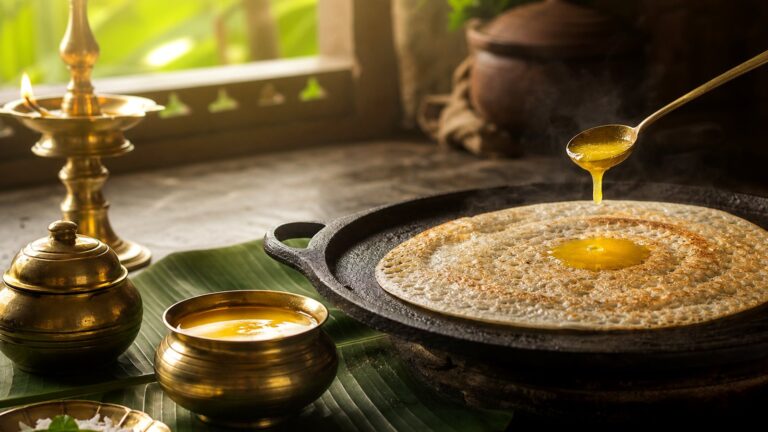
A2 ghee vs olive oil is not a one-winner question for every kitchen. A2 desi ghee fits Indian cooking styles such as rice, dal, dosa, millet pongal, sweets and tadka. Olive oil may suit salads or recipes where its flavour is preferred.
If your goal is traditional Indian cooking aroma, a small spoon of A2 desi cow ghee can do what olive oil cannot. If your diet is medically restricted, follow your doctor’s advice and use this article as a cooking comparison, not a prescription.
Continue Your A2 Ghee Buying Research
If you are choosing A2 desi cow ghee for your home, compare source clarity, bilona method, price per litre, storage guidance and delivery support before ordering.