Why Is A2 Ghee Expensive? Cost and Value Explained
A2 ghee can cost more because of milk source, small-batch processing, curd-first bilona work, slow clarification, packaging and delivery.
Raghas Dairy keeps this page focused on customer buying clarity: source, method, taste, price, storage, delivery and support. For current product pricing and availability, use the live product selector on the Raghas A2 Desi Cow Ghee product page.
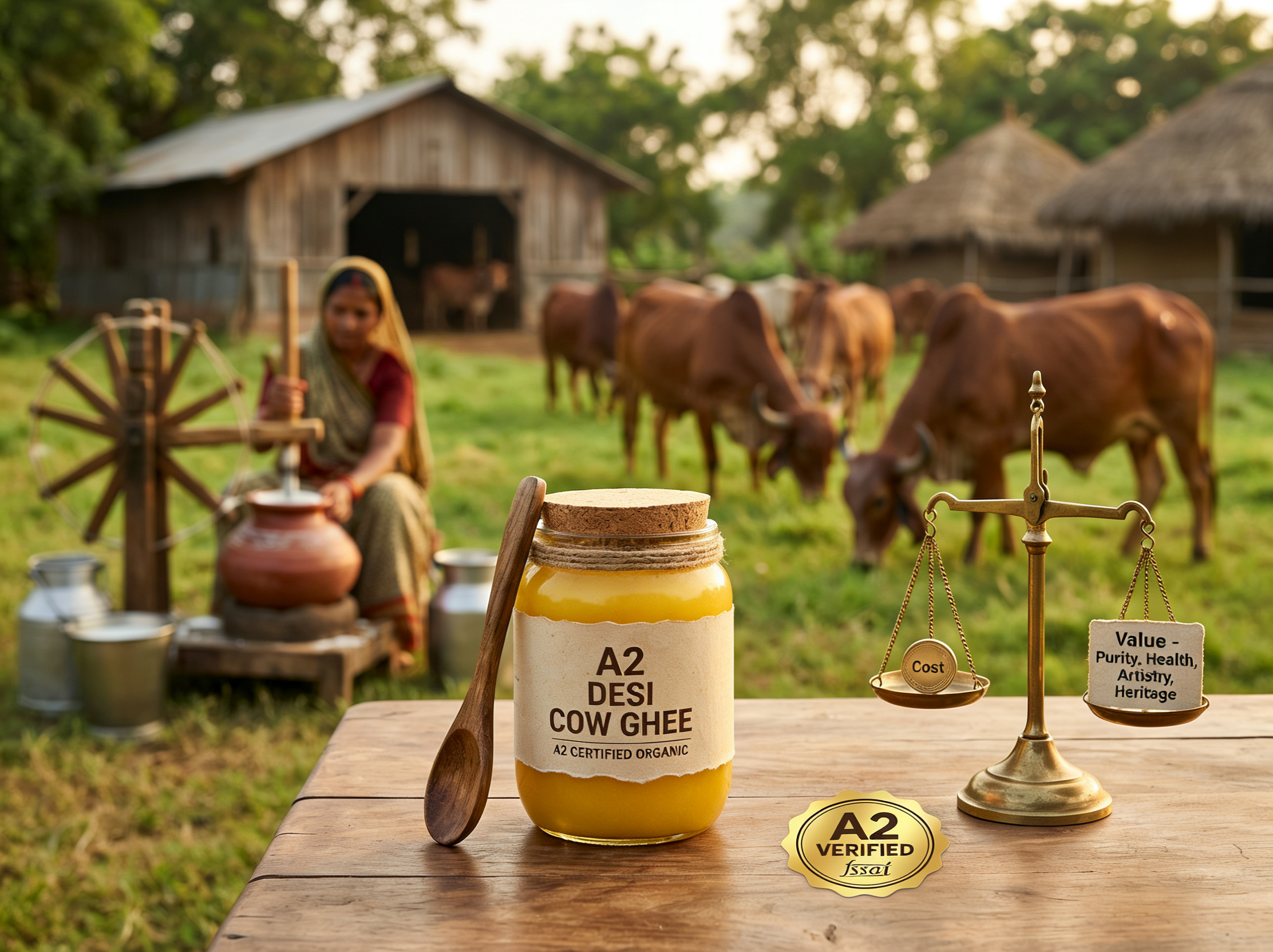
A2 ghee is expensive because the cost begins before the jar is filled. Native cow milk sourcing, smaller milk yields, curd-first processing, butter churning, slow clarification, packing and courier handling all add to the final price.
The question is not whether A2 ghee should always be costly. The real question is whether the price is explained clearly enough for the buyer to trust it.
Quick answer
- Native desi cow milk sourcing is usually costlier than generic dairy sourcing.
- Bilona-style ghee takes more labour than cream-direct ghee.
- Small-batch production increases handling and packing cost.
- A fair product page should explain method, source, pack size and support.
The cost chain behind A2 ghee
| Cost factor | Why it matters | What buyers should check |
|---|---|---|
| Milk source | Native/desi cow milk sourcing is not the same as generic bulk dairy sourcing. | Clear source wording |
| Method | Curd-first churning takes time and labour. | Bilona process explained |
| Batch size | Small batches reduce scale advantage. | Freshness and packing details |
| Packing | Glass, tin and protective courier packing add cost. | Jar size, seal and delivery support |
| Compliance | Food business licensing, labelling and hygiene systems are part of responsible selling. | FSSAI details |
Why cheap A2 ghee should be checked carefully
A lower price is not proof of a bad product. But if a jar claims native cow sourcing, bilona method, organic positioning, premium packing and pan-India delivery, the price should make sense. If the price is far lower than comparable products, read the method and source details carefully.
Look for practical proof: product page details, FSSAI information, pack sizes, real contact details and a simple explanation of the process.
Why expensive A2 ghee is not automatically better
A high price is also not proof of quality. Premium packaging and strong marketing can make an average jar look better than it is. The buyer’s job is to match price with clarity.
- Does the brand explain milk source?
- Does it explain the process without dramatic claims?
- Does it show clear pack sizes and prices?
- Does it tell you how to store the jar?
- Does it offer support if the delivery is damaged?
How Raghas Dairy explains value
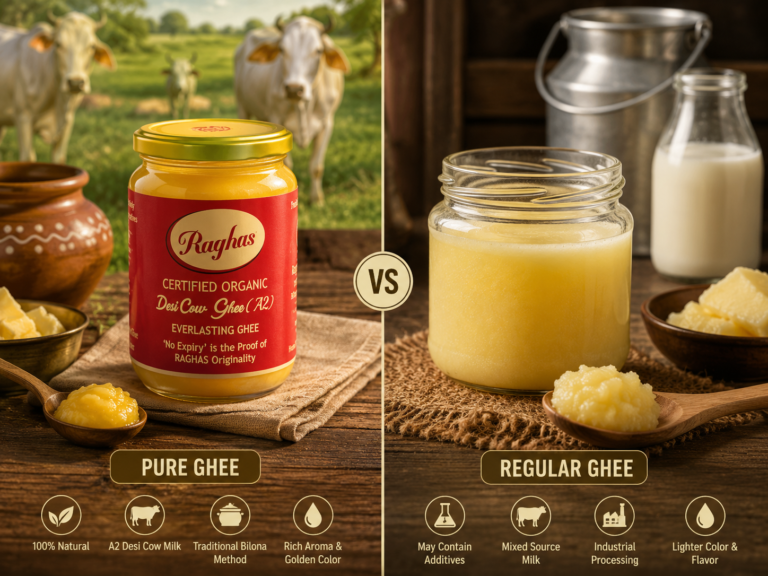
Raghas Dairy’s value comes from Tamil Nadu native desi cow milk sourcing, a traditional ghee-making route and a flavour profile meant for everyday South Indian cooking. It is not positioned as a generic commodity ghee.
The correct source wording is mixed Tamil Nadu native desi cow herd. This avoids narrow breed claims and keeps the brand story grounded.
How to choose the right pack size
If you are new to Raghas ghee, start with the smaller jar and test it in hot rice, dal, dosa or idli podi. If the flavour becomes part of everyday cooking, move to a larger jar or family pack.
Price per ml usually improves with larger packs, but only buy a larger pack if your household will use it comfortably and store it properly.
Frequently asked questions
Is A2 ghee worth the price?
It can be worth it if you value source clarity, traditional preparation and aroma. It is not worth it if the brand cannot explain what you are paying for.
Why does bilona ghee cost more?
Because curd setting, churning and slow clarification require more time and labour than faster methods.
Should I buy the cheapest A2 ghee online?
Compare source, method, FSSAI details, packing and support before comparing only price.
Which Raghas pack should I try first?
Start with a smaller jar for taste. Choose larger packs once it becomes part of regular cooking.
How to avoid overpaying for marketing
Premium ghee should still be accountable. If a product costs more, the page should explain what creates the cost. Source, slow method, small batches, better packing and responsive support are understandable reasons. Vague claims and fancy words are not enough.
Before buying, compare the price against the actual pack size. Some products look cheaper because the jar is smaller. Others look expensive but may have a better per-ml value in a family pack. Always compare like with like.
When a premium jar makes practical sense
A premium jar makes sense when ghee is a visible part of your cooking. If your family uses ghee only once a month, a small jar is enough. If you use it daily for rice, dal, dosa, sweets or children’s meals, a better jar can make the food experience more consistent.
The simplest decision is to start small. Once you know the aroma works for your home, move to a larger pack.
Useful references
Ready to choose your ghee?
Start with Raghas Pure A2 Desi Cow Ghee for everyday cooking, or explore Full Moon Ghee for a richer occasional jar.