Ghee in Indian Festivals: Pongal, Diwali & Beyond
Ghee in Indian Festivals: Pongal, Diwali & Beyond
Ghee in Indian festivals serves a triple role: it’s a sacred offering, a cooking essential, and a symbol of abundance. From the Ven Pongal prepared during Tamil Nadu’s harvest festival to the ladoos distributed on Diwali, pure ghee is at the centre of how India celebrates.
At Raghas Dairy, festival season is our busiest time. Families across India order our A2 Bilona ghee specifically for pooja and festival use — because purity matters most when the occasion is sacred. Here’s how ghee features in India’s biggest celebrations.
Table of Contents
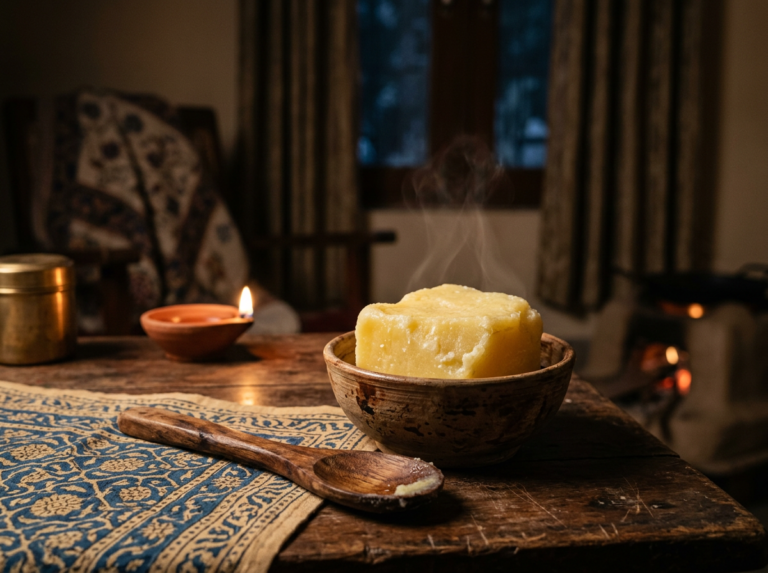
Sacred ghee for pooja rituals and festival lamps
Pongal: The Harvest Festival
Pongal is Tamil Nadu’s most important festival, celebrated in January over four days. Ghee — nei in Tamil — is indispensable.
Ven Pongal (Ghee Pongal)
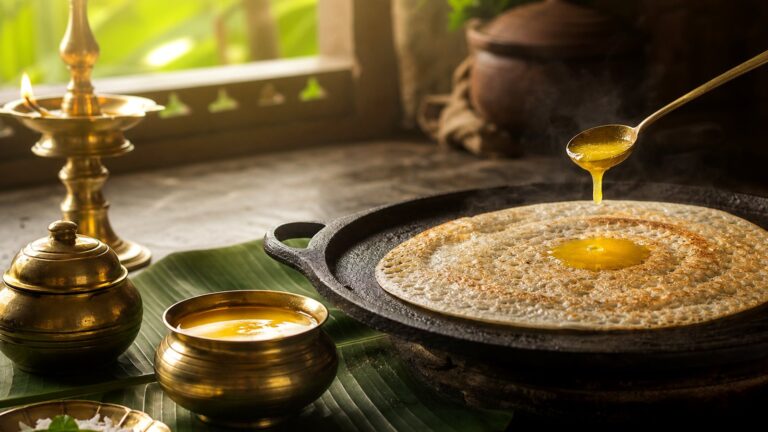
The festival’s signature dish: rice and moong dal cooked together, then generously tempered with ghee, black pepper, cumin, curry leaves, and cashews. The ghee isn’t a garnish — it’s the main flavour.
- Traditionally cooked in a new clay pot, allowed to overflow as a symbol of abundance.
- Offered to Surya (Sun God) before the family eats.
- A good Ven Pongal uses 2–3 tablespoons of ghee per serving — don’t skimp.
Sakkarai Pongal (Sweet Pongal)
The sweet version — rice cooked with jaggery, ghee, cardamom, and cashews. Temple Sakkarai Pongal, like the one served at Madurai’s Meenakshi Temple, is legendary.
Mattu Pongal
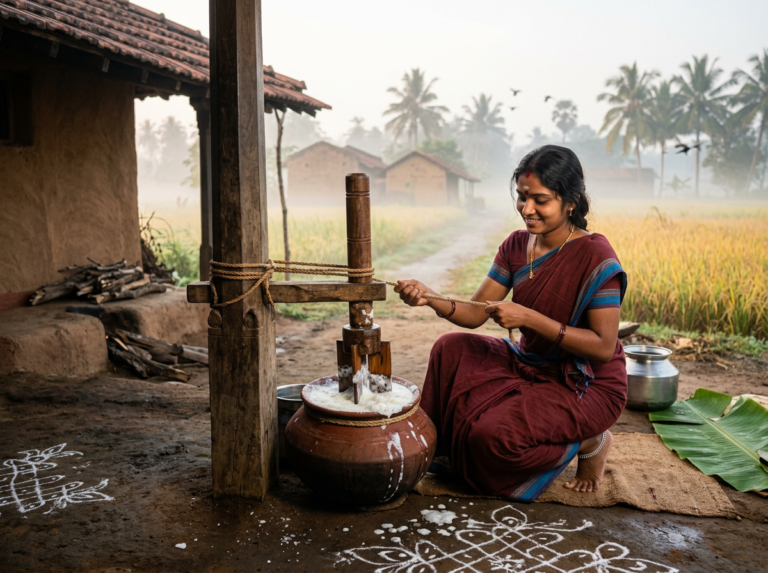
Day three honours cattle — native breeds like Kangayam, Pulikulam, Umbalachery, and Bargur are decorated with garlands and paint. It’s a day to acknowledge that the ghee comes from these very animals.
Diwali: The Festival of Lights
Diwali brings two major ghee uses: sweets and lamps.
Diwali Sweets
The most beloved Diwali sweets are made with ghee:
- Ladoo — Besan ladoo, motichoor ladoo, boondi ladoo — all require ghee for that melt-in-mouth texture.
- Mysore Pak — This South Indian classic uses equal parts ghee and besan flour. It’s essentially a ghee sweet.
- Halwa — Gajar halwa, moong dal halwa, sooji halwa — ghee is non-negotiable.
- Peda — Milk-based sweets enriched with ghee.
- Badusha — A Tamil favourite during Diwali, fried and soaked in sugar syrup, made with ghee-enriched dough.
Diwali Lamps (Deepam)
Many families light ghee lamps instead of oil lamps during Diwali. Ghee lamps are considered more auspicious — the flame is believed to dispel negativity. A single ghee lamp at the home entrance is a Diwali tradition in many South Indian homes.
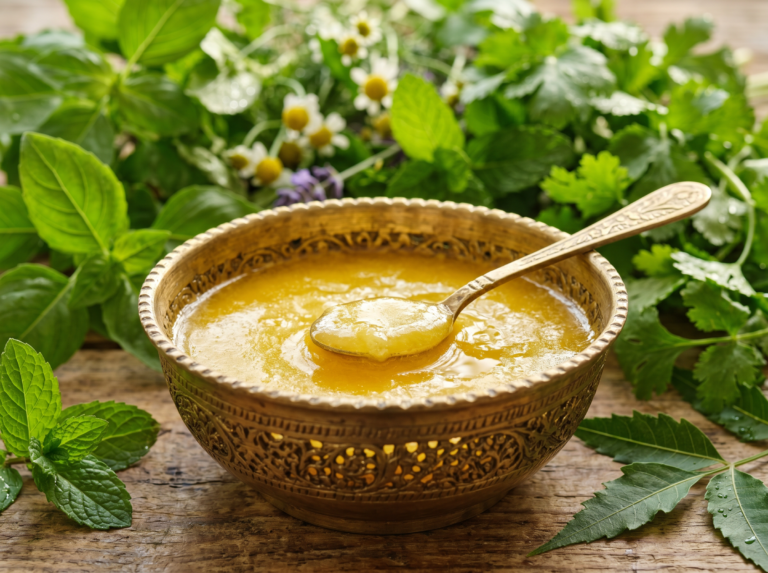
Handmade ghee — essential for spiritual practices
Navratri and Durga Puja
During the nine nights of Navratri:
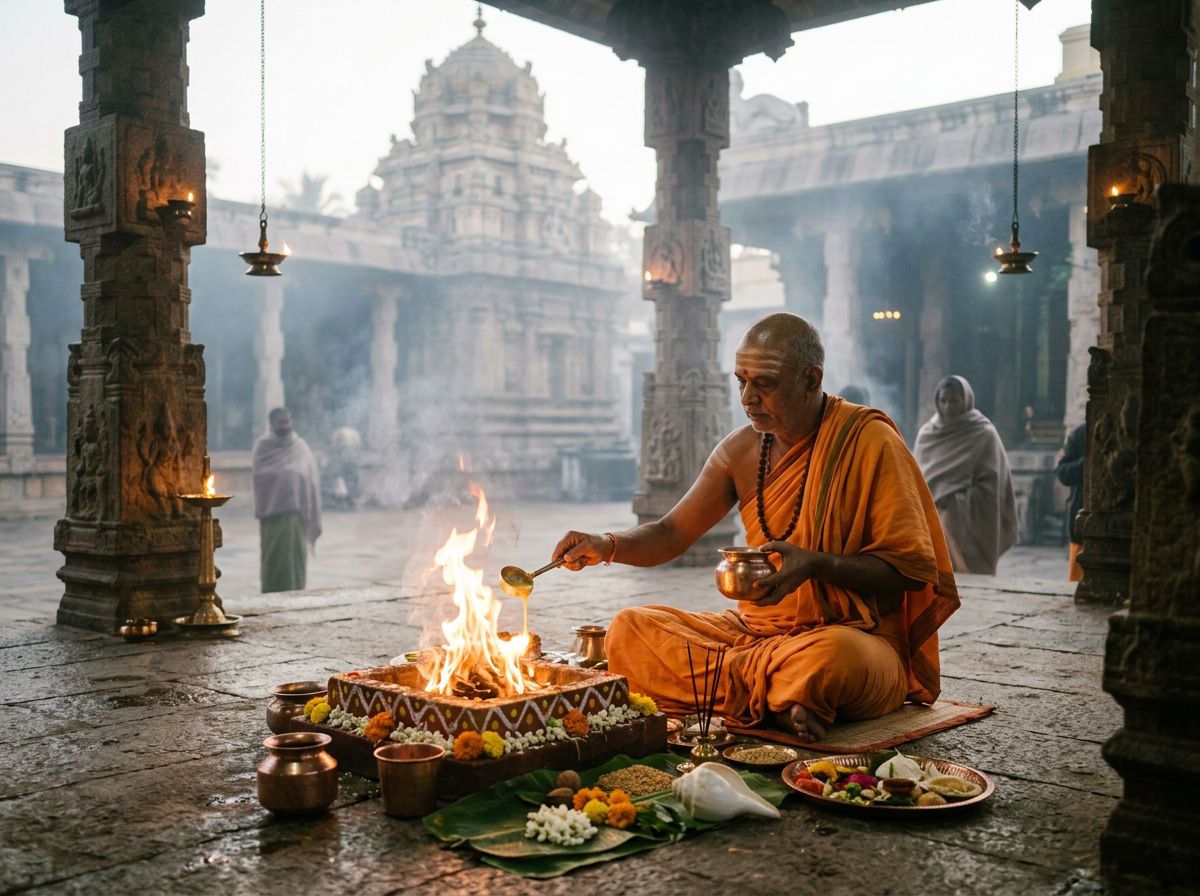
- Havan and homa rituals — Ghee is poured into the sacred fire as an offering. This is one of the oldest Vedic uses of ghee. Only pure cow ghee is considered acceptable.
- Fasting foods — Many Navratri fasters eat sattvic (pure) food. Ghee is one of the few fats permitted during religious fasts — it’s considered sattvic by nature.
- Sundal and kozhukattai — In Tamil Nadu, Navratri (Navaratri Golu) features these traditional snacks, often made with ghee.
- Prasadam distribution — Sweets offered to the goddess are made with pure ghee and distributed to devotees.
Ganesh Chaturthi
Lord Ganesha’s favourite offering? Modak — and the best modaks are made with ghee.
- Steamed modak — Filled with coconut and jaggery, with ghee in the filling.
- Fried modak — Outer shell made with ghee-based dough, deep-fried to golden perfection.
- Ghee modak — Some recipes call for ghee as the primary fat in both the shell and filling.
During the 10-day celebration, temples and homes across India use kilograms of ghee for daily cooking and offerings.
Weddings and Ceremonies
Indian weddings are incomplete without ghee:
- Wedding havan — The sacred fire (agni) in Hindu weddings is fed with ghee. The couple walks around this fire (saptapadi). Pure ghee ensures the ritual is properly conducted.
- Wedding feast — Whether it’s a Tamil Nadu Kalyana Virundhu (wedding feast) or a North Indian wedding buffet, ghee-rich dishes are mandatory. Ghee rice, payasam, and various sweets anchor the menu.
- Grihapravesham — During the housewarming ceremony, ghee lamps are lit throughout the new home.
- Naming ceremonies and anna prashan — A baby’s first solid food often includes ghee-rice, symbolising nourishment and good health.
Other Festivals
Karthigai Deepam
Tamil Nadu’s festival of lights (November/December). Homes are lined with rows of ghee lamps. The giant deepam atop Tiruvannamalai hill is one of India’s most spectacular sights.
Onam
Kerala’s harvest festival. The Onam Sadya (feast) features ghee prominently — payasam, ghee rice, and banana chips fried in ghee are essentials.
Makar Sankranti
Across North India, til (sesame) and jaggery sweets made with ghee are exchanged on this harvest festival.
Raksha Bandhan
Sisters prepare sweets for brothers — and many traditional Rakhi sweets use ghee as the base fat.
Why Pure Ghee Matters for Festivals
Using pure, unadulterated ghee during festivals isn’t just a preference — it’s a principle:
- Religious texts specify cow ghee — Vedic rituals explicitly require pure cow ghee for havan. Adulterated or vanaspati ghee is not considered a valid offering.
- Taste is non-negotiable — Festival sweets made with pure ghee taste fundamentally different from those made with vegetable fat. Your guests will know.
- Health during indulgence — Festival seasons involve eating more sweets than usual. Using pure A2 ghee (with beneficial CLA and butyric acid) is better than using hydrogenated fats.
- Tradition and respect — Using the best ingredients honours the occasion, the guests, and the deities.
Festival-Ready A2 Bilona Ghee
Raghas Dairy A2 Bilona Ghee — made from milk sourced from Tamil Nadu native desi cows in Madurai. Perfect for Pongal, Diwali sweets, pooja lamps, and wedding rituals. Free shipping on orders above ₹1,750.
Frequently Asked Questions
Why is ghee used in Indian festivals?
Ghee is considered sacred in Indian culture — it represents purity, prosperity, and nourishment. It’s used in festival cooking for flavour and richness, in lamps (deepam) for worship, and in havan/homa fire rituals. Vedic and Siddha traditions both regard pure cow ghee as the most auspicious fat.
How much ghee is needed for Pongal festival cooking?
A typical household making Ven Pongal for the family uses 100–200g of ghee. For temple or community preparations, several kilograms may be needed. The quantity depends on the number of servings and how generous you are — and in Pongal, generosity is the tradition.
Can I use regular ghee instead of A2 ghee for festivals?
You can, but traditional texts recommend pure desi cow ghee for religious purposes. A2 ghee from native breeds is considered most auspicious for pooja, havan, and temple offerings. For festival sweets and cooking, A2 ghee also provides better flavour and nutrition.
Written by the Raghas Dairy Team — makers of A2 Bilona ghee from Tamil Nadu native cow breeds, based in Madurai.
Frequently Asked Questions
What makes A2 desi ghee different from regular ghee?
A2 desi ghee is made from milk of indigenous cows that produce A2 beta-casein protein, which is easier to digest and more beneficial for health compared to A1 protein found in regular ghee.
How should I store desi ghee?
Store desi ghee in a cool, dry place away from direct sunlight. It can be kept at room temperature for months without refrigeration due to its natural preservation properties.
What are the traditional food value of consuming desi ghee?
Desi ghee is rich in fat-soluble vitamins (A, D, E, K), helps improve digestion, boosts immunity, and provides healthy fats that support everyday nourishment and overall health.