Ghee in Tamil Nadu: Tradition, Culture & Heritage
Ghee in Tamil Nadu: Tradition, Culture & Heritage
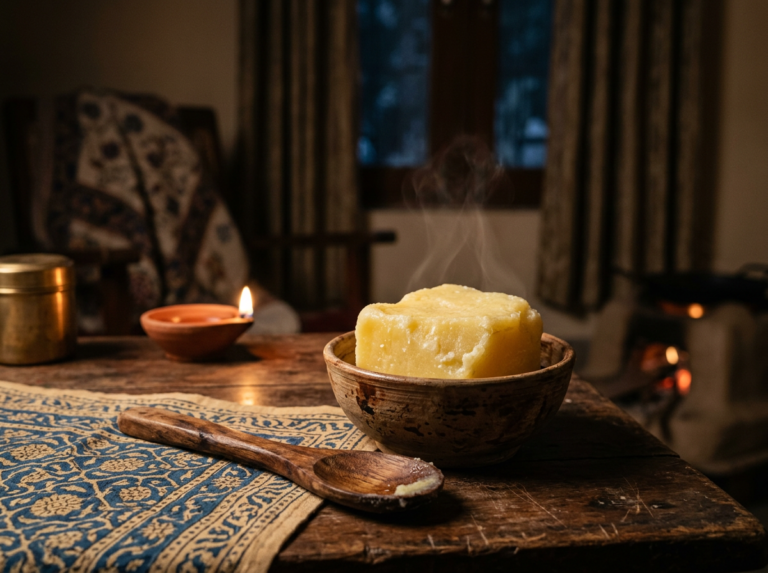
Ghee in Tamil Nadu — known as nei (நெய்) in Tamil — is far more than a cooking fat. It is woven into the state’s festivals, temple rituals, cuisine, and identity. From the Ven Pongal served during Pongal harvest festival to the deepam lamps lit in Madurai Meenakshi Temple, nei has been a part of Tamil life for over two millennia.
At Raghas Dairy, we make our ghee in Madurai from milk sourced from a mixed Tamil Nadu native desi cow herd. This article explores why ghee holds such a special place in Tamil culture.
Table of Contents
Nei: The Tamil Word for Ghee
In Tamil, ghee is called nei (நெய்). The word appears extensively in Sangam literature (300 BCE – 300 CE), the oldest surviving body of Tamil writing. Poets described nei as a symbol of prosperity, purity, and divine offering.
The word is still used daily across Tamil Nadu. “Nei saadham” (ghee rice), “nei pongal” (ghee-laden pongal), and “nei vilakku” (ghee lamp) are phrases every Tamil speaker knows from childhood.
Unlike the Hindi/Sanskrit word “ghee” (from “ghrita”), “nei” is a purely Dravidian word — a reminder that the tradition of clarified butter in South India developed independently and is just as ancient.
Ghee and the Pongal Festival
Pongal is Tamil Nadu’s most important festival — a four-day harvest celebration in January. And ghee is at the heart of it.
Ven Pongal (Ghee Pongal)
The festival’s signature dish is Ven Pongal — a savoury porridge of rice and moong dal, tempered with generous amounts of ghee, black pepper, cumin, and cashews. The dish is incomplete without nei.
- Ven Pongal is offered to Surya (the Sun God) during the festival’s main day.
- Temples across Tamil Nadu prepare it in massive quantities — the Meenakshi Temple in Madurai alone makes hundreds of kilograms.
- Every household makes it fresh on Pongal morning. The quality of the nei directly affects the dish.
Mattu Pongal
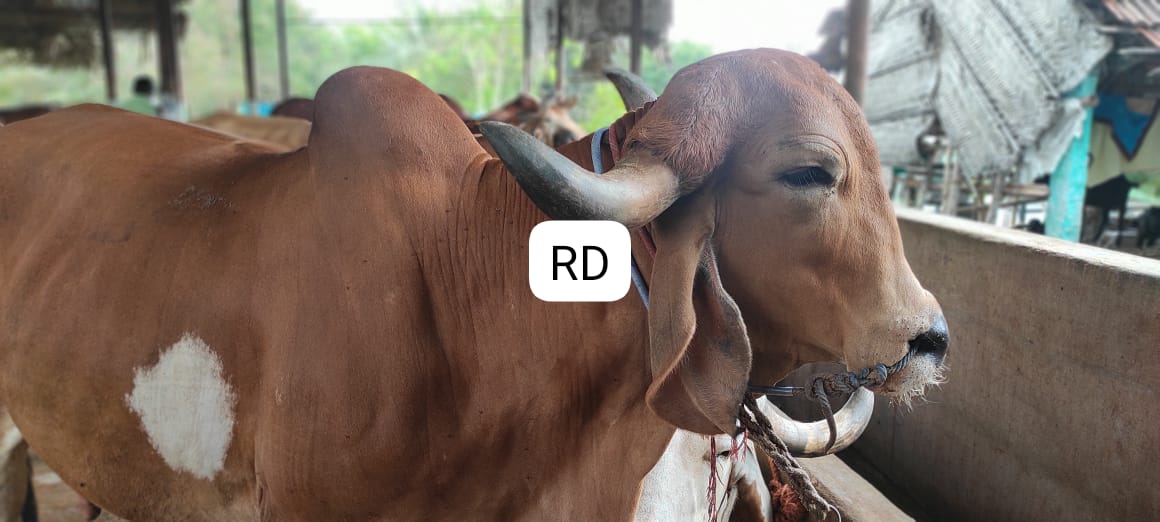
The third day of Pongal, Mattu Pongal, honours cattle. Native breeds like Kangayam and Pulikulam are decorated, worshipped, and celebrated. This festival reminds us that the cows and the nei they provide are inseparable from Tamil identity.
Temple Traditions and Nei
Ghee is essential to Tamil Nadu’s temple culture. Here’s how it’s used:
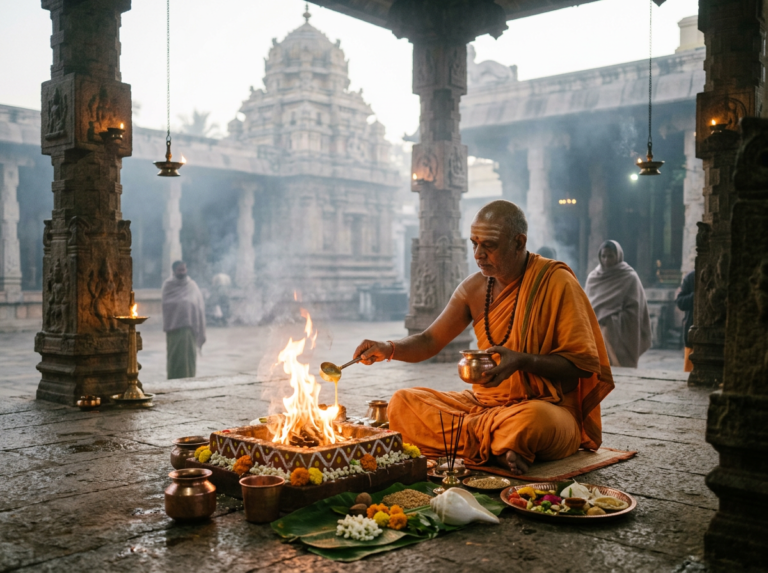
- Nei Vilakku (Ghee lamps) — Lit in homes and temples daily. Ghee lamps are considered more auspicious than oil lamps. The flame burns steadier and brighter.
- Abhishekam — Deities are bathed in pancha-amritam, a mixture that includes ghee, milk, honey, curd, and sugar.
- Annadanam — Temple kitchens (especially in major temples like Tirupati, Meenakshi, and Ramanathaswamy) use pure ghee in prasadam preparation.
- Karthigai Deepam — The famous festival of lights in November/December. The massive deepam atop Tiruvannamalai hill burns with ghee and oil.
For pooja and temple use, the purity of ghee matters enormously. Adulterated ghee is considered inauspicious — another reason why families seek out genuine desi cow ghee.
Ghee in Tamil Cuisine
Tamil cuisine uses nei across both everyday meals and special occasions:
- Nei saadham — Simple ghee rice, often the first solid food given to babies in Tamil families.
- Pongal — Both Ven Pongal (savoury) and Sakkarai Pongal (sweet, with jaggery and ghee).
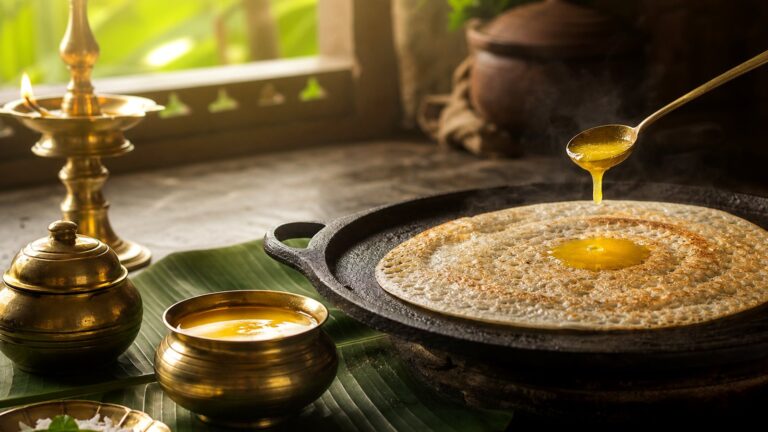
- Dosai and idli — A drizzle of nei on hot dosai is a daily ritual in many households.
- Payasam — Semiya payasam, paruppu payasam — all finish with a spoon of ghee.
- Biryani — Madurai-style biryani uses ghee for dum cooking.
- Chettinad cuisine — Rich Chettinad dishes use ghee as a base fat for their complex spice blends.
In Tamil Brahmin households, a meal without nei is considered incomplete. Ghee is added to rice with sambar, rasam, and curd — every course gets its share.
Tamil Nadu’s Native Cow Breeds
Tamil Nadu is home to four recognised native cow breeds, all producing A2 beta-casein milk:
- Kangayam — From the Kangayam region near Erode. Sturdy, drought-resistant. The most well-known Tamil breed.
- Umbalachery — From the Nagapattinam-Thanjavur delta. Adapted to wet paddy fields.
- Pulikulam — From the Sivaganga-Madurai region. Known for Jallikattu participation.
- Bargur — From the Bargur hills near Erode. Semi-wild, hill-adapted. The rarest of the four.
At Raghas Dairy, we raise all Tamil Nadu native desi cow source. Their milk — rich in A2 protein and fat — produces ghee with a depth of flavour that no crossbreed or HF cow can match. Learn more about each breed in our Tamil Nadu native cow breeds guide.
The Madurai Connection
Madurai — the cultural capital of Tamil Nadu — has a special relationship with dairy.
The city and surrounding districts (Sivaganga, Dindigul, Theni) are traditional grazing grounds for Kangayam and Pulikulam cattle. The dry climate produces hardy grasses that these native breeds thrive on.
Madurai’s famous Meenakshi Temple has used ghee for centuries — in its kitchens, lamps, and abhishekam rituals. The city’s food culture, from Jigarthanda to biryani, is deeply tied to dairy.
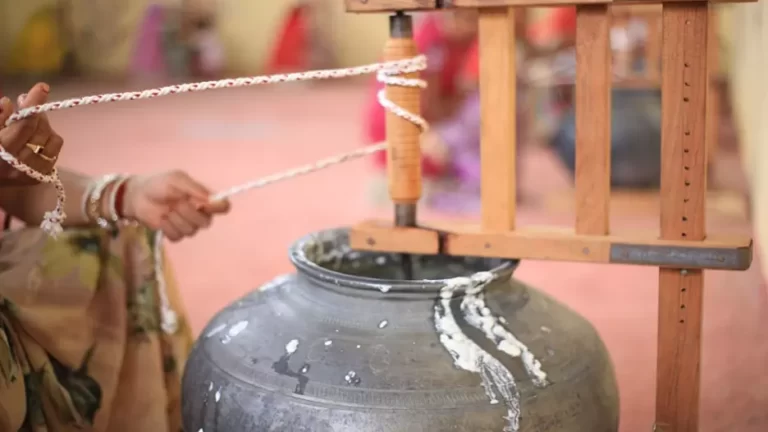
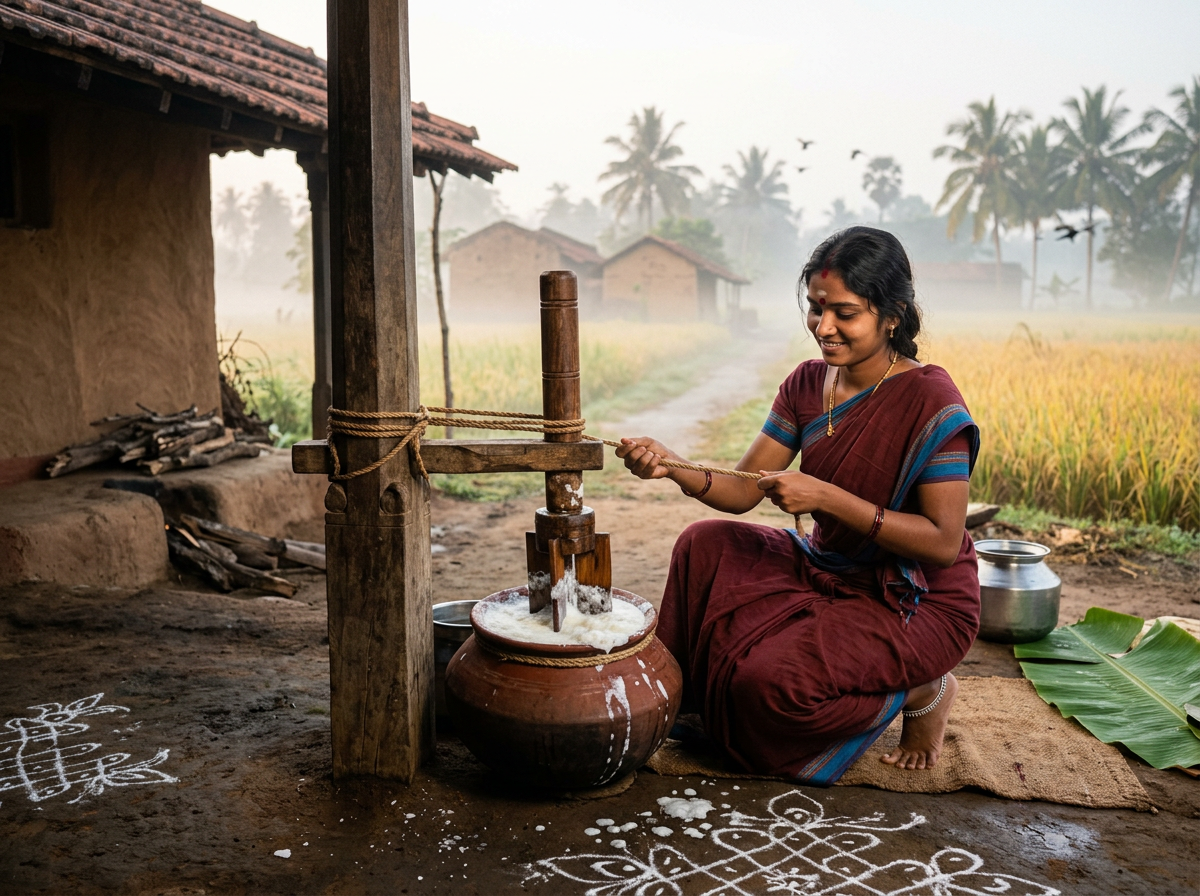
This is why we chose Madurai as our home. The breeds, the tradition, and the knowledge are all here. We make ghee using the Bilona method — the same way it’s been made in Tamil Nadu for generations.
Ghee in Siddha Medicine
While Ayurveda is more widely known, Tamil Nadu has its own traditional medicine system: Siddha. Ghee plays an important role:
- Nei is a base (anupana) for many Siddha preparations, helping deliver medicine into body tissues.
- Medicated ghee formulations are used for digestive issues, skin conditions, and respiratory problems.
- Siddha texts recommend pure nei for improving eyesight, strengthening bones, and enhancing memory.
The requirement in Siddha, as in Ayurveda, is that the ghee must be pure and from desi cows — not crossbreeds. This makes native breed ghee particularly valued.
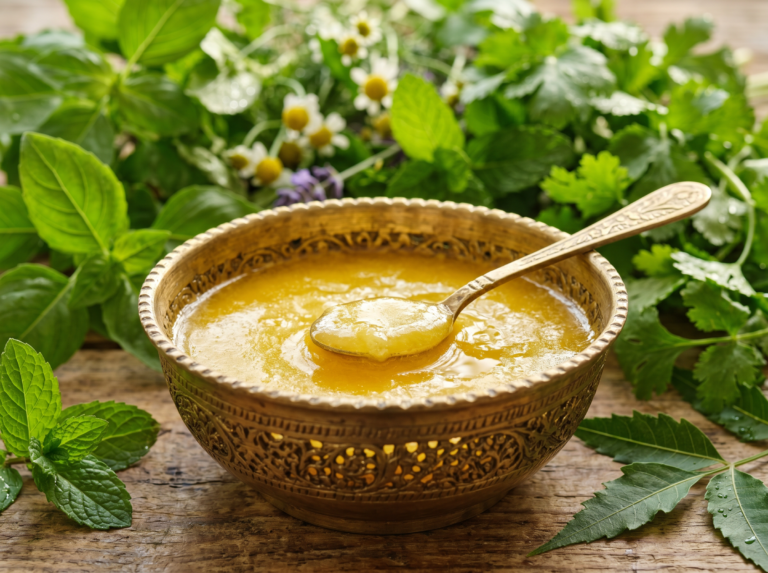
Authentic Tamil Nadu Nei from Raghas Dairy
A2 Bilona ghee made in Madurai from milk sourced from Tamil Nadu native desi cows. The real nei of Tamil Nadu. Free shipping on orders above ₹1,750.
Frequently Asked Questions
What is ghee called in Tamil?
Ghee is called nei (நெய்) in Tamil. The word has been used in Tamil literature for over 2,000 years, appearing in Sangam-era poetry describing food, festivals, and temple offerings.
Why is ghee important in Tamil Nadu culture?
Ghee (nei) is central to Tamil Nadu’s food, festivals, and spiritual life. It’s essential in Pongal celebrations, temple lamp lighting (deepam), Tamil Brahmin cuisine, and Siddha medicine traditions native to the region.
Which native cow breeds are found in Tamil Nadu?
Tamil Nadu is home to four recognised native cow breeds: Kangayam, Umbalachery, Pulikulam, and Bargur. All four produce A2 milk and are well-adapted to the state’s climate and terrain.
Written by the Raghas Dairy Team — makers of A2 Bilona ghee from Tamil Nadu native cow breeds, based in Madurai.
Frequently Asked Questions
What makes A2 desi ghee different from regular ghee?
A2 desi ghee is made from milk of indigenous cows that produce A2 beta-casein protein, which is easier to digest and more beneficial for health compared to A1 protein found in regular ghee.
How should I store desi ghee?
Store desi ghee in a cool, dry place away from direct sunlight. It can be kept at room temperature for months without refrigeration due to its natural preservation properties.
What are the traditional food value of consuming desi ghee?
Desi ghee is rich in fat-soluble vitamins (A, D, E, K), helps improve digestion, boosts immunity, and provides healthy fats that support everyday nourishment and overall health.