Ghee in Ayurvedic Medicine: Ghrita Explained
Ghee in Ayurvedic Medicine: Ghrita Explained
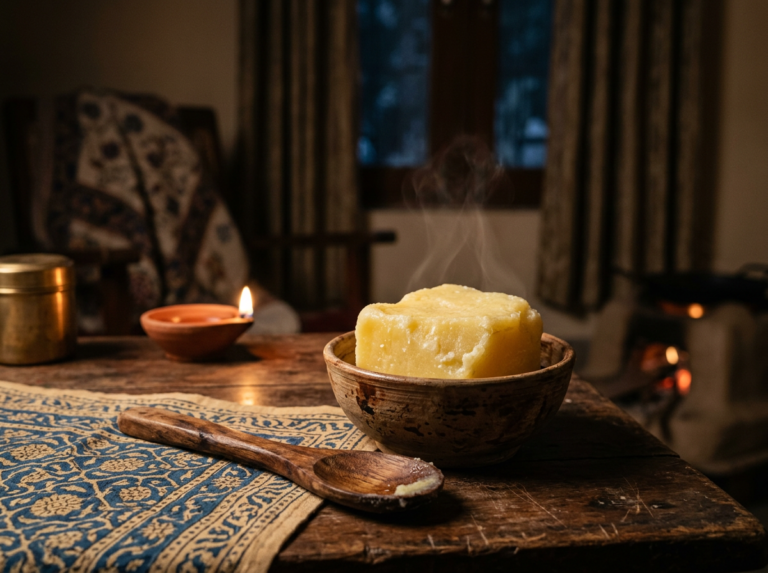
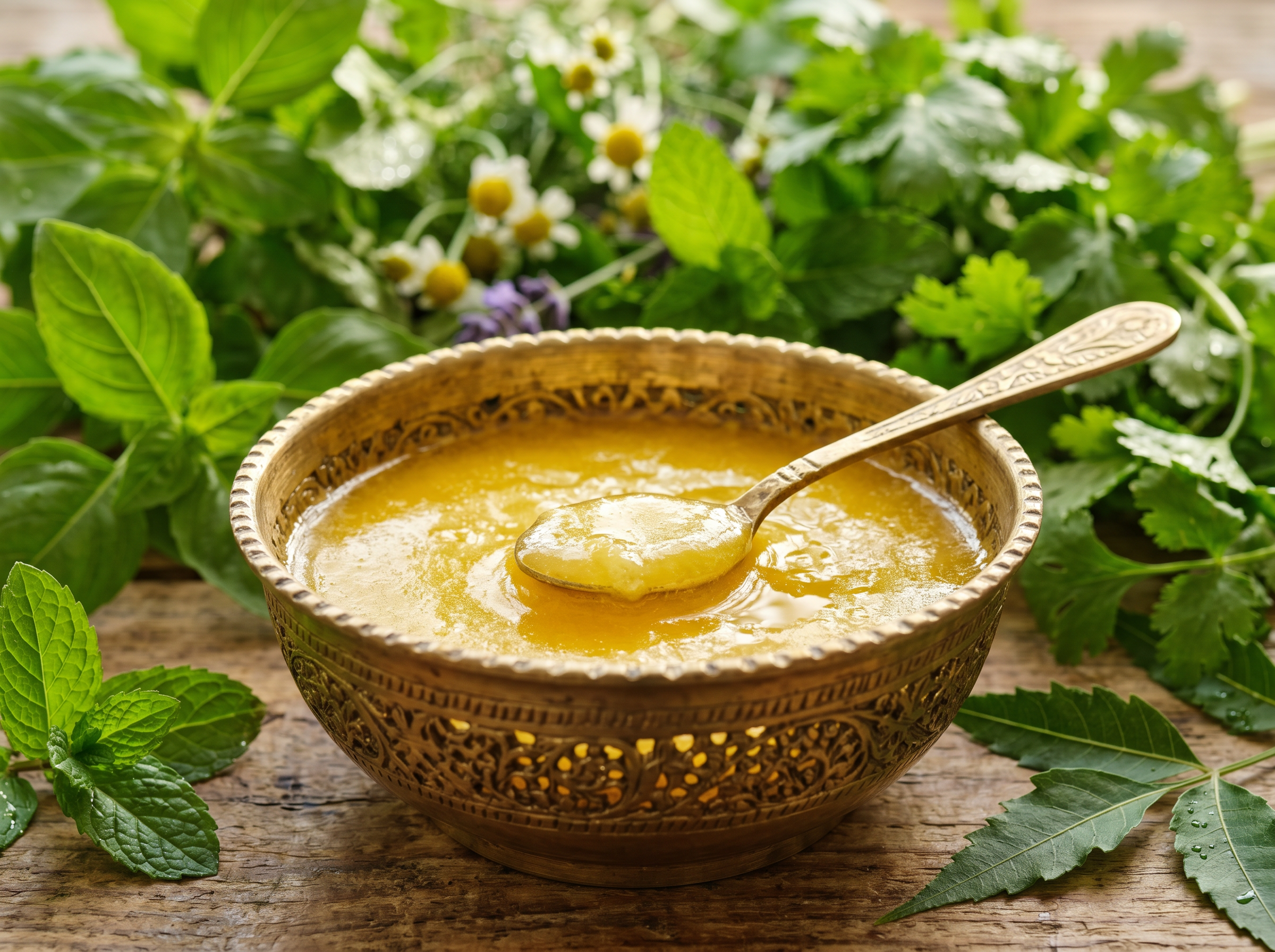
Ghee in Ayurvedic medicine — known as ghrita in Sanskrit — is considered the most important therapeutic fat. The Charaka Samhita, one of Ayurveda’s foundational texts, calls ghrita “the best among all fats” (sarpi sarvesham snehanam shreshtham). It’s used as a standalone medicine, a carrier for herbal formulations, and a key element in Panchakarma detox therapies.
At Raghas Dairy, many of our customers use our A2 Bilona ghee for Ayurvedic purposes. This article explains how ghrita works in traditional medicine and why the quality of ghee matters for therapeutic use.
Table of Contents
What Is Ghrita?
Ghrita (घृत) is the Sanskrit word for clarified butter — what we commonly call ghee. In Ayurveda, it’s classified as a sneha dravya (oleaginous substance) with unique therapeutic properties:
- Rasa (taste): Madhura (sweet)
- Virya (potency): Sheeta (cooling)
- Vipaka (post-digestive effect): Madhura (sweet)
- Guna (qualities): Snigdha (unctuous), guru (heavy), mridu (soft)
These properties make ghrita a Vata and Pitta pacifier. It’s one of the few substances in Ayurveda that doesn’t aggravate any dosha when used in appropriate quantities.
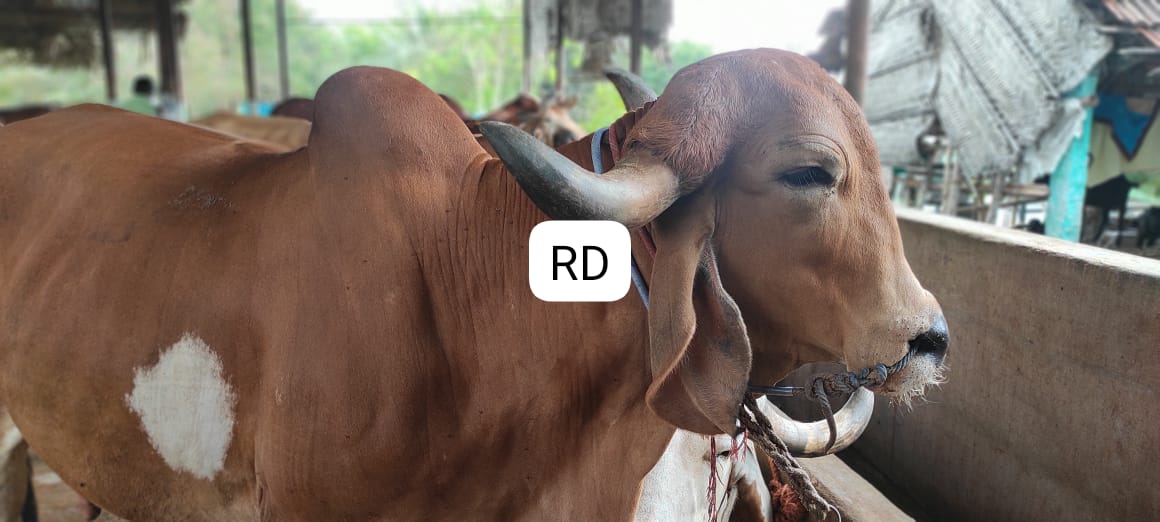
Importantly, Ayurveda distinguishes between different types of ghee. Go-ghrita (cow ghee) is the most valued, followed by buffalo ghee. Within cow ghee, ghee from desi (indigenous) breeds is considered superior to ghee from crossbreed cattle.
Ghrita in the Charaka Samhita
The Charaka Samhita (circa 300 BCE) dedicates significant attention to ghrita. Key references:
Properties Listed by Charaka
- Smriti (memory) — Ghrita enhances memory and cognitive function.
- Medha (intellect) — Improves intellectual capacity and clarity.
- Agni (digestive fire) — Strengthens digestion without aggravating Pitta.
- Ojas (vital energy) — Increases ojas, the essential energy of immunity and vitality.
- Shukra (reproductive tissue) — Nourishes reproductive health.
- Rasayana (rejuvenation) — Acts as a rejuvenative, slowing ageing.
Charaka specifically states: “Ghrita is the best substance for the alleviation of Vata and Pitta, and is beneficial for rasa dhatu, shukra dhatu, and ojas.”
Aged Ghee (Purana Ghrita)
Charaka also describes purana ghrita — ghee aged for 1–100 years. Aged ghee is said to have enhanced medicinal properties, particularly for neurological and psychiatric conditions. While 100-year-old ghee is rare, some Ayurvedic practitioners use ghee aged 1–10 years for specific treatments.
Ghee in Panchakarma Therapy
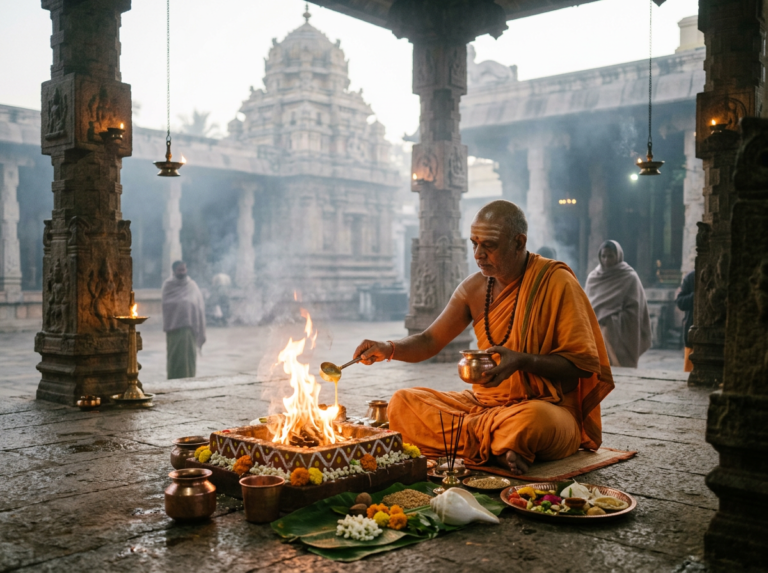
Panchakarma — Ayurveda’s five-fold purification therapy — relies heavily on ghee. Here’s how:
Snehapana (Internal Oleation)
This is the most direct medicinal use of ghee. The process:
- Day 1: Patient drinks 30–50 ml of warm medicated ghee on an empty stomach.
- Days 2–7: Dose increases daily until the body shows signs of saturation (oleation).
- Final dose: Can reach 150–200 ml per day in some protocols.
- Purpose: Ghee penetrates all seven dhatus (tissues), loosens toxins (ama), and prepares the body for elimination.
After Snehapana, the patient undergoes Swedana (sweating therapy) followed by the main purification — usually Virechana (therapeutic purgation) or Vamana (therapeutic emesis).
Why Ghee Works as an Oleation Medium
- Lipophilic carrier: Ghee is fat-soluble and can carry herbal medicines into fat-soluble tissue layers that water-based medicines can’t reach.
- Yogavahi property: Ghrita is called yogavahi — meaning it takes on the properties of whatever is mixed with it, without losing its own beneficial qualities.
- Bioavailability enhancer: Modern quality checks supports this — ghee increases the absorption of fat-soluble compounds, similar to how pharmaceutical lipid carriers work.
Medicated Ghee (Ghrita Preparations)
Ayurveda has hundreds of medicated ghee formulations. Here are some classical ones still used today:
Major Ghrita Preparations
- Brahmi Ghrita — Ghee infused with Brahmi (Bacopa monnieri). Used for memory enhancement, anxiety, and neurological conditions.
- Triphala Ghrita — Ghee processed with Triphala (three fruits). Used for eye health, digestive issues, and as a general rejuvenative.
- Phala Ghrita — Ghee with fertility-supporting herbs. Used in reproductive health treatments for both men and women.
- Mahatiktaka Ghrita — Ghee processed with bitter herbs. Used for skin conditions, blood purification, and liver support.
- Panchatikta Ghrita Guggulu — A powerful formulation for bone and joint health, used in osteoporosis and arthritis management.
- Jatyadi Ghrita — External application for wound healing and skin ulcers.
How Medicated Ghee Is Made
- Herbs are prepared as a kashaya (decoction) or kalka (paste).
- The herbal preparation is mixed with pure ghee in specific ratios (typically 1:4:16 — kalka:ghee:liquid).
- The mixture is slow-cooked until all the water evaporates and the ghee absorbs the herbal properties.
- The finished medicated ghee is strained and stored.
The base ghee must be of the highest quality — pure A2 desi cow ghee made through the Bilona process is the recommended starting material.
Ghrita and the Three Doshas
Ayurveda categorises all individuals into three constitutional types (doshas). Here’s how ghee interacts with each:
Vata Dosha (Air + Space)
Ghee is excellent for Vata. Its warm, unctuous, heavy qualities directly counter Vata’s cold, dry, light nature. Vata-dominant individuals benefit most from regular ghee consumption — in food, as medicine, and even applied externally.
Pitta Dosha (Fire + Water)
Ghee’s cooling virya makes it ideal for Pitta. Unlike most fats, ghee cools the system rather than heating it. Pitta types benefit from ghee in their food and can use it to manage acidity, inflammation, and skin conditions.
Kapha Dosha (Earth + Water)
Ghee should be used in moderation for Kapha. Its heavy, unctuous qualities can increase Kapha if overused. However, small amounts of ghee — especially medicated ghee with warming herbs — are still beneficial. The key is appropriate quantity.
Daily Ayurvedic Uses of Ghee
Beyond therapeutic contexts, Ayurveda recommends ghee for daily health maintenance:
- 1 teaspoon in warm water (morning) — Supports digestion and regular elimination.
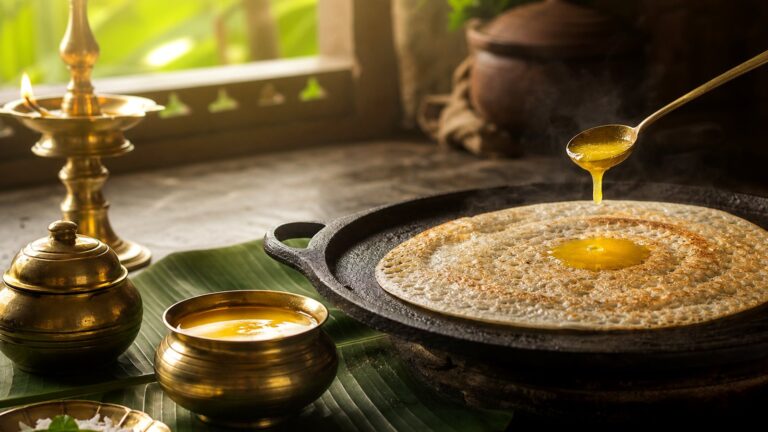
- Ghee with rice and dal — The traditional way to eat ghee. Aids nutrient absorption and satisfies hunger longer.
- Nasya (nasal application) — 2 drops of warm ghee in each nostril daily. Recommended for dry nasal passages, headaches, and mental clarity.
- Pada Abhyanga (foot massage) — Massaging ghee into the soles of the feet before bed. Said to improve sleep and calm the nervous system.
- Eye care — Triphala ghrita or plain ghee is used in Ayurvedic eye washes (netra tarpana).
- Digestive support — A small amount of ghee before meals stimulates agni (digestive fire) without aggravating acidity.
Why Ghee Quality Matters in Ayurveda
Ayurvedic texts are specific about ghee quality:
- Must be from desi (indigenous) cow milk — Not buffalo, not crossbreed (HF/Jersey).
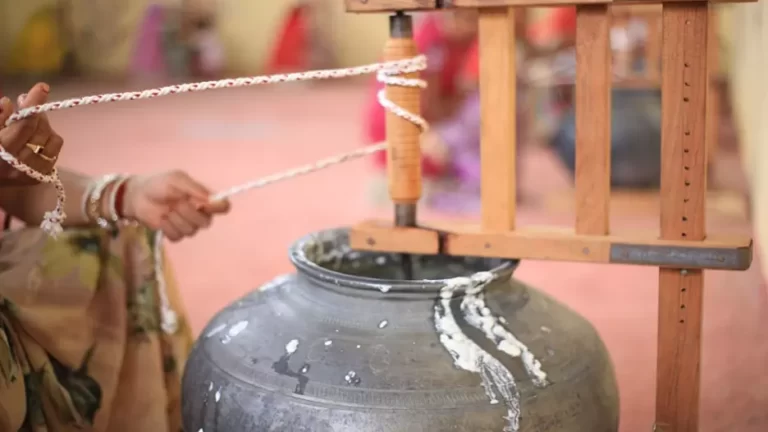
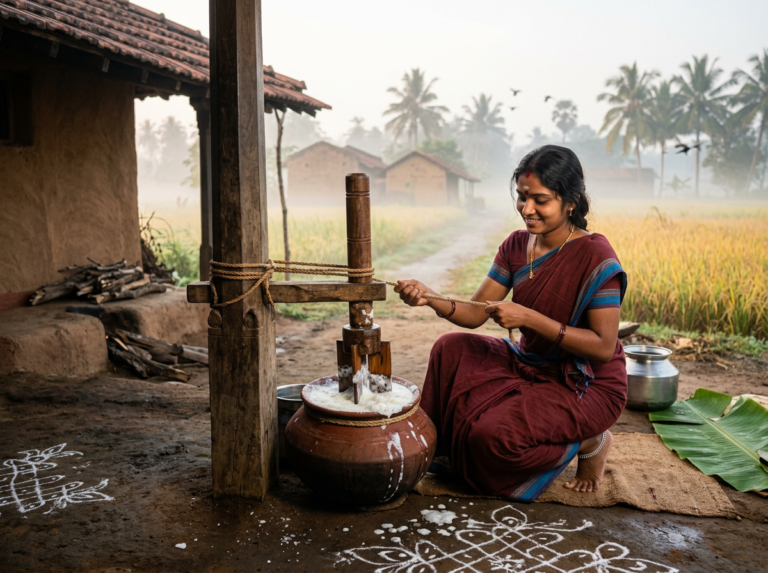
- Should be prepared traditionally — The Bilona method (curd-churning) is the Ayurvedic standard. Cream-separated ghee loses the probiotic benefits of fermentation.
- Must be pure and unadulterated — Adulterated ghee with vanaspati or vegetable oils has no therapeutic value and can be harmful.
- Grass-fed is preferred — Cows that graze on natural pastures produce milk with better fatty acid profiles.
At Raghas Dairy, our ghee meets all these criteria. Made from milk sourced from Tamil Nadu native desi cows in Madurai.
Ayurveda-Grade A2 Bilona Ghee
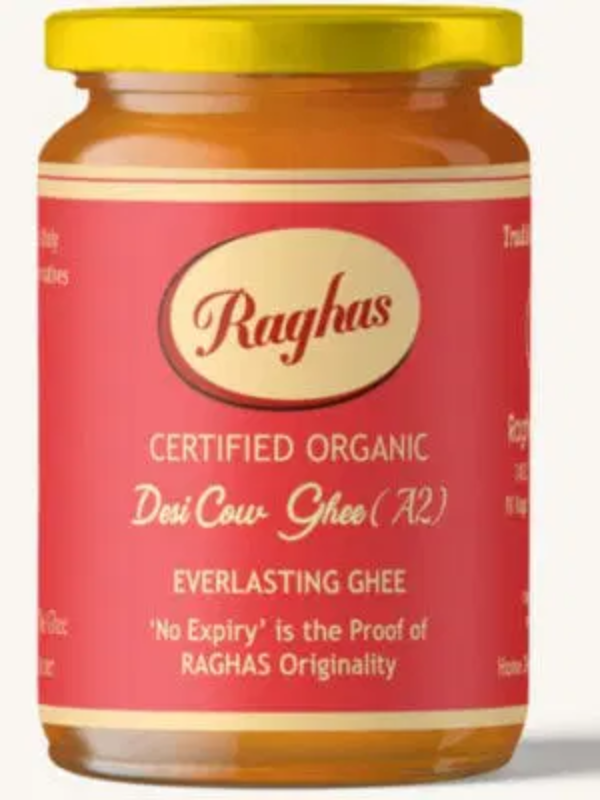
Raghas Dairy A2 Bilona Ghee — pure desi cow ghee suitable for Ayurvedic use, Panchakarma, and daily consumption. Made from native Tamil Nadu breeds. Free shipping on orders above ₹1,750.
Frequently Asked Questions
What is ghrita in Ayurveda?
Ghrita is the Sanskrit term for clarified butter (ghee) used in Ayurvedic medicine. It serves as both a standalone therapeutic substance and a carrier medium (anupana) for herbal medicines. Charaka Samhita calls ghrita “the best among all fats” for its ability to carry medicinal properties deep into body tissues.
How is ghee used in Panchakarma?
In Panchakarma, ghee is used in Snehapana — the internal oleation therapy where patients drink increasing doses of medicated ghee over 3–7 days. This saturates the tissues, mobilises toxins (ama), and prepares the body for purification therapies like Virechana (purgation).
Can I use any ghee for Ayurvedic purposes?
Ayurvedic texts specifically recommend ghee from desi (indigenous) cow milk. A2 ghee from native breeds, made using the traditional Bilona method, is considered ideal. Ghee from crossbreed cows, buffalo, or made with industrial processes is not considered equivalent in Ayurvedic practice.
Written by the Raghas Dairy Team — makers of A2 Bilona ghee from Tamil Nadu native cow breeds, based in Madurai.
Frequently Asked Questions
What makes A2 desi ghee different from regular ghee?
A2 desi ghee is made from milk of indigenous cows that produce A2 beta-casein protein, which is easier to digest and more beneficial for health compared to A1 protein found in regular ghee.
How should I store desi ghee?
Store desi ghee in a cool, dry place away from direct sunlight. It can be kept at room temperature for months without refrigeration due to its natural preservation properties.
What are the traditional food value of consuming desi ghee?
Desi ghee is rich in fat-soluble vitamins (A, D, E, K), helps improve digestion, boosts immunity, and provides healthy fats that support everyday nourishment and overall health.