What Is Bilona Method? Traditional Ghee Making Explained
The bilona method is a traditional way of making ghee from cultured curd, not directly from cream. Milk is set into curd, the curd is churned to separate butter, and the butter is slowly clarified into ghee.
This method matters because it changes the flavour journey. Curd-first ghee usually has a deeper, warmer aroma than fast cream-direct ghee. For many Indian households, that aroma is the point.
Quick answer
- Bilona ghee starts from curd, not shortcut cream separation.
- The process has four main stages: milk, curd, butter and ghee.
- It is slower and labour-intensive, so it often costs more.
- Good bilona claims should be explained clearly on the product page.
The bilona process in simple steps
- Milk is collected and boiled. The milk source should be clear and handled hygienically.
- Milk is cultured into curd. This is the key difference from cream-direct ghee.
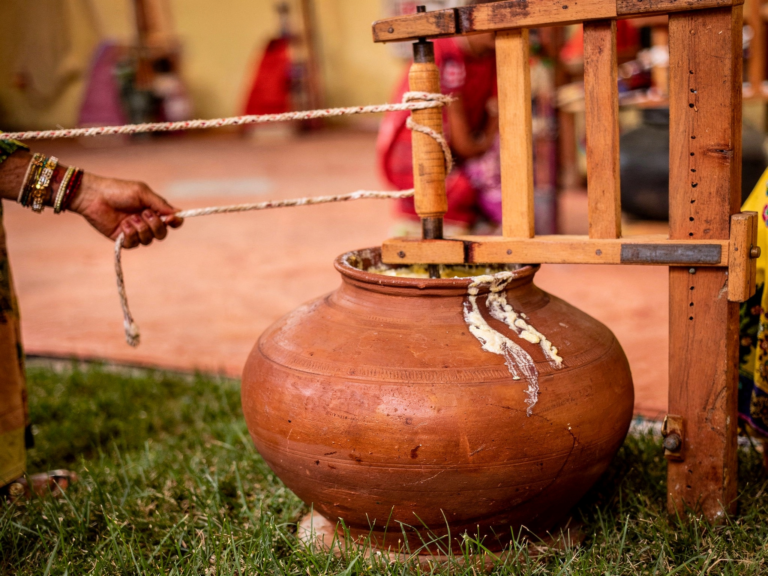
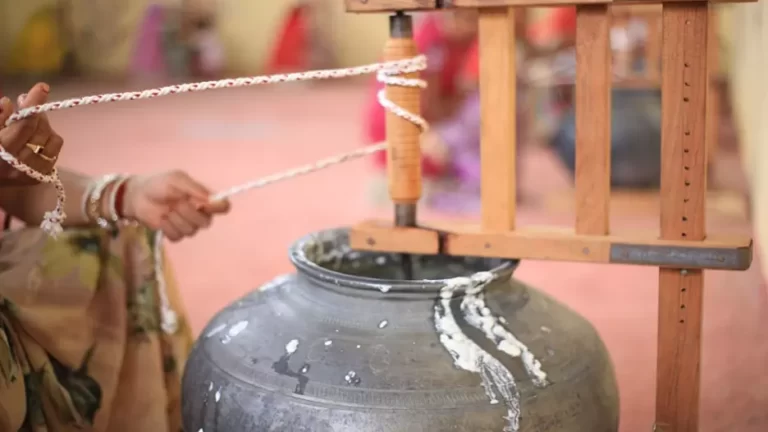
- Curd is churned. Traditional churning separates white butter from buttermilk.
- Butter is clarified. The butter is heated slowly until water leaves and the aroma develops.
- Ghee is filtered and packed. Clean filtration and dry packing matter for shelf stability.
Bilona ghee vs cream-separated ghee
| Point | Bilona method | Cream-separated method |
|---|---|---|
| Starting point | Cultured curd | Separated cream |
| Labour | Higher | Lower |
| Speed | Slower | Faster |
| Flavour | Usually deeper and nuttier | Usually cleaner and simpler |
| Best buyer check | Does the brand explain curd and churning? | Does the brand avoid calling it bilona if it is not? |
Why the method affects price
Bilona-style ghee takes more time, more handling and more supervision. The process is not only about heating butter. It begins earlier, with curd setting and churning. That extra work is why genuine curd-first ghee usually sits at a premium price.
If a jar claims bilona but is priced like mass-market regular ghee, read carefully. Low price is not automatically bad, but the method should still be explained.
How to check a bilona claim online
- Look for the words curd, churning, butter and slow clarification.
- Check whether the product page explains the source of milk.
- Prefer simple process descriptions over exaggerated health claims.
- Check whether customer support is reachable after purchase.
- Compare with the A2 ghee price guide if the price feels unusually high or unusually low.
Raghas Dairy’s bilona positioning
Raghas Dairy’s A2 desi cow ghee is positioned as a traditional, curd-first ghee made from Tamil Nadu native desi cow milk sources. The herd source should be described as a mixed Tamil Nadu native desi cow source, not as one fixed breed.
This matters because good product content should not sound like a debate. It should help the customer understand what they are buying and how to use it.
Best uses for bilona ghee
Bilona ghee is best tested in simple foods because nothing hides the aroma. Try it on hot rice, dal, dosa, idli podi, upma, pongal, millet kanji or sweets. A small spoon is enough to understand the flavour.
For everyday use, keep the jar away from water and use a dry spoon. Ghee is stable when handled properly, but moisture can spoil the experience.
Frequently asked questions
Is bilona ghee the same as A2 ghee?
No. A2 describes milk source. Bilona describes the method.
Does bilona ghee need refrigeration?
No. Store it closed in a cool, dry place with a clean, dry spoon.
Is wood-fire always required?
Wood-fire is a traditional finishing method, but the key bilona distinction is curd-first churning followed by slow clarification.
Why does bilona ghee smell stronger?
The cultured-curd route and slow clarification can create a warmer, nuttier aroma than faster methods.
What bilona should not mean
Bilona should not be used as a decoration word. If a product is made by separating cream and directly heating it into ghee, the page should not present it as curd-churned bilona ghee. The customer does not need dramatic language; the customer needs an accurate process explanation.
A good bilona description should be easy to follow even for someone who has never seen ghee being made. Milk becomes curd, curd is churned, butter separates, and butter is clarified. If those steps are missing, ask more questions before paying a premium.
Why South Indian kitchens notice the difference
In South Indian food, ghee is often used in simple, aroma-sensitive dishes. Pongal, paruppu sadam, podi rice and dosa reveal the character of ghee quickly. A curd-first ghee can feel more rounded in these foods because the flavour is not hidden behind heavy spice.
That is why Raghas Dairy frames its ghee around everyday cooking, not only around a premium label. The best proof is whether the jar improves the food you actually eat at home.
Useful references
Ready to choose your ghee?
Start with Raghas Pure A2 Desi Cow Ghee for everyday cooking, or explore Full Moon Ghee for a richer occasional jar.
Why Bilona Method Matters When Comparing A2 Ghee Brands
Bilona ghee should be explained as a process, not used only as a label. The customer should be able to understand the journey from milk to cultured curd, curd to butter, and butter to ghee.
When you compare the best bilona ghee in India, check whether the brand explains the method in plain language. Raghas Dairy positions its A2 desi cow ghee around a curd-first bilona approach and Tamil Nadu native desi cow milk.
Continue Your A2 Ghee Buying Research
If you are choosing A2 desi cow ghee for your home, compare source clarity, bilona method, price per litre, storage guidance and delivery support before ordering.