Lab-Tested Ghee: How to Read RM, BR, FFA and Moisture Values
Lab-tested ghee can feel confusing because reports use technical terms. RM, BR, FFA and moisture are not everyday kitchen words, but they help explain whether a ghee sample matches expected quality characteristics.
Quick answer
- RM and BR are identity-related readings used in dairy fat analysis.
- FFA and moisture help buyers understand freshness, handling and quality control context.
- Lab values should support trust, not replace taste, source clarity and proper labelling.
RM value
RM stands for Reichert-Meissl value. In simple terms, it relates to certain volatile fatty acids in milk fat. It is one of the classic readings used when testing ghee and milk fat products.
For buyers, the takeaway is not to memorize a number. The useful question is whether the brand understands its quality checks and can explain product standards clearly.
BR reading
BR stands for Butyro-refractometer reading. It is another technical reading used in milk fat analysis. It helps labs understand the character of the fat sample.
BR should not be treated like a taste score. A customer still needs to consider aroma, grain, freshness, storage and whether the ghee works in the food they cook.
FFA and moisture
FFA means free fatty acids. Higher FFA can point toward breakdown of fat over time or handling conditions. Moisture matters because ghee is valued as a low-moisture fat. Good control of moisture supports stability.
These values are useful when read in context. They are not a replacement for proper packaging, storage or food-safety practices.
How to read a report like a buyer
| Value | Plain-English meaning | Buyer use |
|---|---|---|
| RM | Milk-fat identity context | Check that testing follows dairy-fat standards |
| BR | Fat-character reading | Read with other values, not alone |
| FFA | Fat breakdown/freshness context | Useful for quality-control confidence |
| Moisture | Water content in ghee | Lower moisture supports better keeping quality |
What lab values cannot tell you
A lab report cannot tell you whether the ghee tastes right with your idli podi or pongal. It cannot tell you whether the aroma feels nostalgic to your family. It also cannot replace clear sourcing.
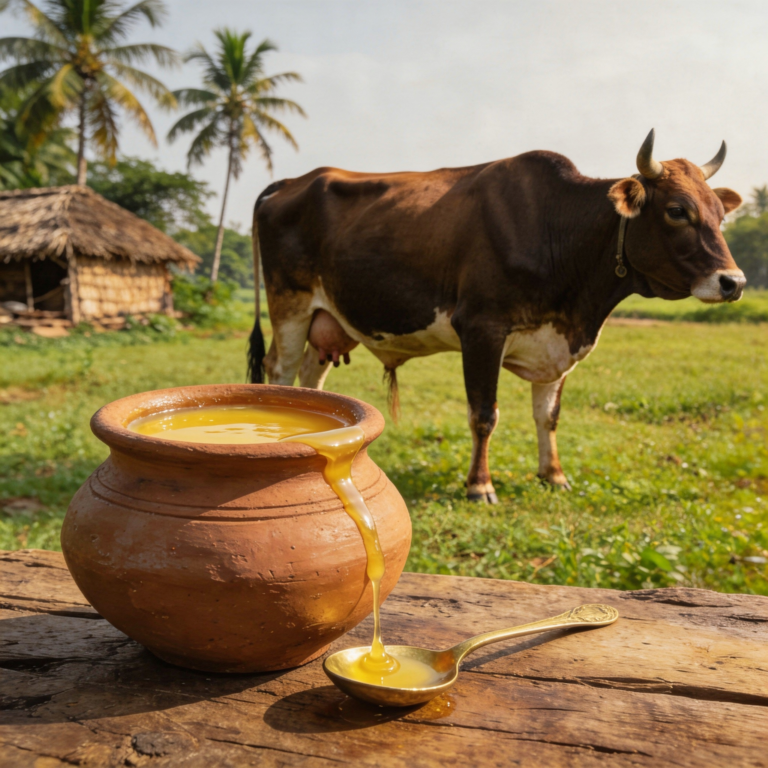
For Raghas Dairy, the source statement is milk from Tamil Nadu native desi cows only, as a mixed native herd. Read more in the complete A2 desi ghee guide.
Helpful next reads
- FSSAI ghee standards in India
- Why real bilona ghee uses curd, not cream
- Ghee smoke point for Indian cooking
Frequently asked questions
Should I buy ghee only because it says lab-tested?
No. Lab testing is useful, but buyers should also check source, process, label, FSSAI information and taste.
Are RM and BR the same as traditional food value?
No. They are technical readings used in dairy-fat analysis, not health claims.
Why does moisture matter in ghee?
Ghee is expected to be low in moisture. Good moisture control supports product stability and quality.
What is the Raghas Dairy source?
Milk from Tamil Nadu native desi cows only, as a mixed native herd.
Useful official references
Shop Raghas Dairy ghee
Raghas Dairy ghee is made from milk sourced from Tamil Nadu native desi cows only, as a mixed native herd. See Pure A2 Desi Cow Ghee or compare it with Full Moon Ghee.
If a lab report is not shown
Not every product page shows a full lab report. In that case, buyers can still make a sensible decision by checking FSSAI details, source clarity, product description, packaging, reviews and customer support.
If you need specific values for personal assurance, ask the brand directly. A clear answer is a good sign. A confusing answer is a reason to pause.
Remember that lab values are part of the trust picture. They support quality control, but the product should also taste good and work in your food.
For normal household buying, the most useful approach is layered: first check food-business details, then method, then source, then taste. No single number should carry the whole decision.
Questions to ask about a ghee lab report
Ask which batch was tested, when the sample was tested and which laboratory issued the report. Check that the product and batch details match the jar you are considering. Ask the seller to explain any result you do not understand.
A report should be read alongside the ingredient label, source, preparation method and storage instructions. Testing one sample does not establish the quality of every batch.
What to save from this guide
When you see RM, BR, FFA and moisture, treat them as quality-control language. They are helpful, but they are not meant to replace the normal buying checks: source, method, FSSAI details, packaging, taste and support. A good ghee brand should be able to explain both the science and the kitchen use in simple words.
For customers, the best outcome is confidence without confusion. Technical values should make the buying decision clearer, not harder.