FSSAI Ghee Standards in India: What Buyers Should Know
FSSAI standards help buyers separate food compliance from marketing language. When you buy ghee online, start with the basics: FSSAI licence, product name, pack details, ingredient clarity, batch information and storage instructions.
Quick answer
- FSSAI licence visibility is a basic trust signal for any food business.
- A2 wording should not replace food-standard checks such as product identity, label clarity and quality values.
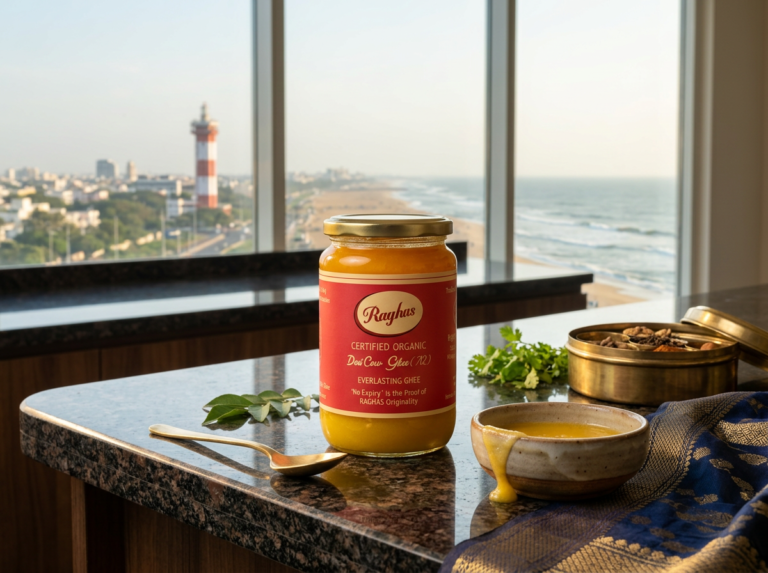
- Raghas Dairy displays FSSAI licence information and positions its ghee by source and method.
Start with the licence
A food business should make its FSSAI licence easy to find. On a website, this can appear in the footer, product page or compliance section. The licence does not tell you everything about taste, but it is the starting point for buyer confidence.
Raghas Dairy’s FSSAI licence number is displayed on the site footer. Buyers can also review product pages for pack size, pricing, delivery and contact details.
What standards can and cannot tell you
Standards help define food identity and quality parameters. They do not replace your own taste preference. Two ghee products can both meet food standards and still differ in aroma, texture, source and method.
This is why a good buyer looks at both sides: compliance first, then source and kitchen fit.
A2 claims need careful reading
A2 should be treated as source-related language, not as a magic quality grade. FSSAI has issued guidance around A1/A2 claims, so responsible brands should avoid confusing medical-style promises and keep the focus on clear sourcing.
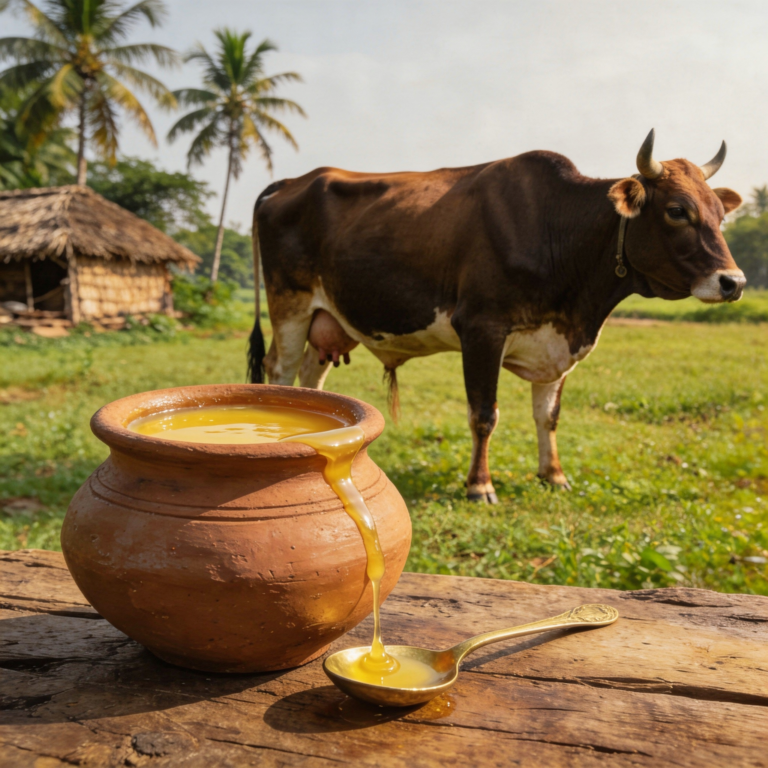
For Raghas Dairy, the customer-facing source statement is: milk from Tamil Nadu native desi cows only, as a mixed native herd. It is not marketed as one fixed breed.
What a good ghee product page should show
| Detail | Why it matters |
|---|---|
| FSSAI licence | Shows the food business is registered/licensed. |
| Pack size and price | Helps compare delivered value clearly. |
| Source statement | Explains where the milk source comes from. |
| Process statement | Shows whether the ghee is curd-churned, cream-based or otherwise prepared. |
| Contact details | Gives buyers a route for product or delivery questions. |
Lab values buyers may see
Some ghee pages or reports mention RM value, BR reading, FFA and moisture. These are technical quality indicators. They should be read along with the official standard context, not as isolated marketing numbers.
To understand these values, read the lab-tested ghee guide. If you are comparing source and method, read curd-churned ghee vs cream-separated ghee.
Helpful next reads
Frequently asked questions
Does FSSAI certify A2 ghee as a separate superior category?
Buyers should read A2 as source-related wording and still check normal food-standard, label and product details.
Is FSSAI licence enough to choose ghee?
It is a starting point, not the whole decision. Taste, source, method, freshness and support also matter.
Where should the FSSAI number appear?
It should be easy for buyers to find on the product, packaging or website.
What is Raghas Dairy’s source statement?
Raghas Dairy uses milk from Tamil Nadu native desi cows only, as a mixed native herd.
Useful official references
Shop Raghas Dairy ghee
Raghas Dairy ghee is made from milk sourced from Tamil Nadu native desi cows only, as a mixed native herd. See Pure A2 Desi Cow Ghee or compare it with Full Moon Ghee.
How to check a ghee page in two minutes
Open the product page and look for five things: product name, pack size, FSSAI licence information, source statement and contact details. If those are easy to find, the page is already more helpful than a listing that depends only on big claims.
Then read the method description. If a page says bilona or curd-churned, it should explain the curd and butter route in simple language.
Finally, compare the product with your use case. A daily cooking ghee, a gifting ghee and a special-occasion ghee may not need to be the same pack or plan.
Good compliance language should feel calm. It should help the buyer verify details without creating fear. The strongest product pages combine standards, source and simple kitchen usefulness.
Compliance first, storytelling second
Premium food brands still need ordinary trust basics. Before the farm story, packaging story or gifting story, buyers should be able to see who is selling the product and under what food-business licence. This is especially important for online orders where the customer cannot inspect the product before purchase.
After compliance, the story can do its work: source, method, taste, kitchen use and gifting value. This order matters because it keeps the article helpful instead of promotional.
Before ordering, compare the information on the product page with the pack label. Contact the seller if the licence, ingredients, source or storage information is unclear.
What this means for Raghas Dairy customers
The useful promise is not that a label word alone makes the ghee better. The useful promise is that the customer can see the food-business details, understand the source, read the method and contact the brand if something is unclear. That combination creates trust before purchase and confidence after delivery.