A2 Ghee for Digestion: Food Notes and Common Questions
Food note: This article is general food information, not medical advice. For babies, pregnancy, liver, heart, or diagnosed health conditions, please follow your doctor or dietitian’s guidance.
A2 Ghee for Digestion & Constipation Relief
Ghee for constipation and digestive issues is one of the oldest remedies in Indian households. A2 desi cow ghee, rich in butyric acid, acts as a natural intestinal lubricant, heals the gut lining, and stimulates healthy bowel movements. If you’ve been struggling with sluggish digestion or irregular motions, A2 ghee might be the simple fix you need.
This guide covers exactly how A2 ghee aids digestion, the science behind butyric acid, traditional Ayurvedic remedies, safe dosage, and who should be cautious.
How A2 Ghee Aids Digestion
A2 ghee supports digestion through multiple mechanisms:
- Stimulates gastric acid — Ghee triggers the secretion of stomach acids needed to break down food properly
- Lubricates the digestive tract — Coats the intestinal walls, allowing food to move smoothly
- Promotes bile secretion — Fat in ghee signals the gallbladder to release bile, essential for fat digestion and nutrient absorption
- Feeds gut bacteria — Butyric acid serves as fuel for beneficial gut bacteria (particularly Lactobacillus and Bifidobacterium)
- Enhances nutrient absorption — Fat-soluble vitamins (A, D, E, K) and minerals absorb better in the presence of healthy fats
This is why Indian cuisine traditionally includes a spoonful of ghee on dal, rice, and rotis — it’s not just flavour, it’s functional nutrition.
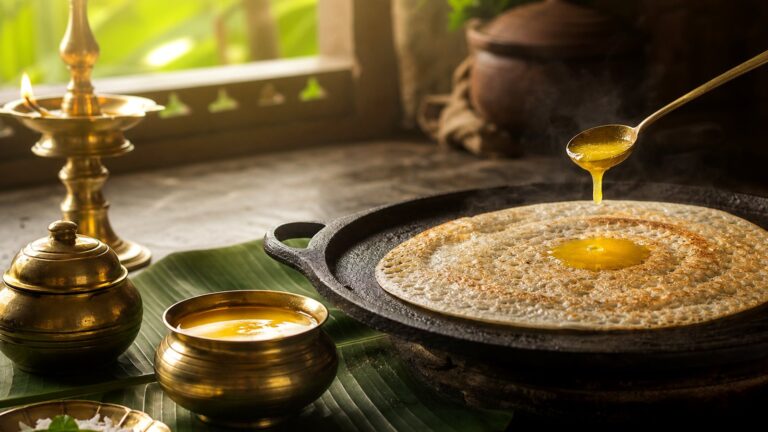
Ghee for digestion — a time-tested Ayurvedic remedy
Butyric Acid and Your Gut Lining
Butyric acid is the most important compound in ghee for digestive health. Here’s what it does:
Your gut lining replaces itself every 3-5 days. Butyric acid is the primary energy source for colonocytes — the cells that line your large intestine. Without adequate butyrate, these cells can’t regenerate properly, leading to a weakened gut barrier.
What butyric acid does for your gut:
- Nourishes intestinal cells — Provides 70% of the energy for colon cells
- Repairs leaky gut — Strengthens tight junctions between intestinal cells
- Reduces inflammation — Inhibits inflammatory pathways (NF-κB) in gut tissue
- Balances gut microbiome — Creates conditions where beneficial bacteria thrive
- Regulates water absorption — Helps the colon absorb the right amount of water, preventing both diarrhoea and hard stools
A2 ghee contains 3-4% butyric acid by weight — one of the highest natural food sources. Our Bilona-method ghee at Raghas Dairy retains this full butyric acid content because the slow churning and gentle heating process preserves short-chain fatty acids.
Ghee for Constipation: How It Works
Constipation happens when stool moves too slowly through the colon, becoming dry and hard. A2 ghee addresses this in three ways:
- Natural lubricant — Ghee coats the intestinal walls, reducing friction and helping stool pass more easily
- Bile stimulation — Bile salts act as natural laxatives by drawing water into the intestine and softening stool
- Gut motility — Butyric acid stimulates peristalsis — the wave-like contractions that move food through your digestive tract
The classic ghee remedy for constipation:
- Mix 1-2 teaspoons of A2 ghee in a glass of warm water or warm milk
- Drink before bedtime
- The warmth helps the ghee spread through the intestinal tract
- Most people experience relief within 1-2 days of consistent use
This remedy has been used in Indian homes for generations. It works especially well for people whose constipation is caused by dry, hard stools rather than structural issues.
Butyric acid in ghee supports digestive health
Ayurvedic Ghee Remedies for Digestion
In Ayurveda, ghee is called “the best of all fats” (ghritam sarvesham snehanam). Here are time-tested remedies:
For Constipation
- Ghee + warm water — 1 tsp ghee in warm water, empty stomach morning or before bed
- Ghee + milk + turmeric — 1 tsp ghee in warm milk with a pinch of turmeric before sleep
- Ghee + triphala — Mix ½ tsp ghee with triphala powder in warm water at bedtime
For Acidity and Heartburn
- Ghee on rice — A teaspoon of ghee on plain rice cools Pitta and soothes acid reflux
- Ghee + fennel water — Helps reduce burning sensation after meals
For Bloating and Gas
- Ghee tadka with cumin and hing — The combination of ghee with carminative spices (cumin, asafoetida, ginger) is the most effective anti-bloating remedy in Indian cooking
- Ghee + ajwain — Roast ajwain in ghee and consume with warm water
For Overall Digestive Fire (Agni)
- A small amount of ghee before meals — Kindles digestive fire without aggravating Pitta
- Ghee with the first bite of food — Traditional practice to signal the stomach to prepare for digestion
Dosage Guide
The right amount of A2 ghee for digestion depends on your goal:
| Purpose | Amount | When |
|---|---|---|
| Daily digestive support | 1-2 tsp/day | With meals (dal, rice, roti) |
| Constipation relief | 1-2 tsp | In warm water/milk before bed |
| Acidity/heartburn | 1 tsp | With plain rice or on empty stomach |
| Gut healing (leaky gut) | 1-2 tsp | Morning empty stomach + with meals |
For detailed guidance, see our complete guide on how much ghee per day.
Start slow: If you’re not used to ghee, begin with ½ teaspoon and increase gradually over a week. This gives your digestive system time to adapt.
A2 Ghee vs Other Fats for Gut Health
Not all fats support digestion equally:
- Refined vegetable oils — High in omega-6, promote gut inflammation, no butyric acid
- Butter — Contains butyric acid but also lactose and casein, which can trigger digestive issues
- Coconut oil — Good medium-chain fats but no butyric acid
- A2 ghee — Rich in butyric acid, lactose-free after clarification, high smoke point, anti-inflammatory
A2 ghee is the clear winner for digestive health because it combines butyric acid content with the absence of dairy irritants (lactose and casein are removed during clarification).
Who Should Be Cautious
- Gallbladder issues or gallstones — Ghee stimulates bile, which can trigger pain if you have gallstones. Consult your doctor first.
- Pancreatitis — Acute pancreatitis requires a low-fat diet. Avoid ghee during flare-ups.
- Severe IBS-D (diarrhoea-predominant) — Start with very small amounts (¼ tsp) as the lubricating effect may worsen loose stools initially.
- Post-surgery — Follow your surgeon’s dietary guidelines before reintroducing fats.
Frequently Asked Questions
Does ghee help with constipation?
Yes. Ghee lubricates the intestinal walls, stimulates bile secretion, and butyric acid promotes peristalsis. Take 1-2 teaspoons in warm water or milk before bed for natural constipation relief.
How does A2 ghee improve digestion?
A2 ghee’s butyric acid nourishes gut lining cells, reduces inflammation, and strengthens the intestinal barrier. It also stimulates gastric acid and bile, improving food breakdown and nutrient absorption.
How much ghee should I take for constipation?
1-2 teaspoons of A2 ghee in warm water or warm milk before bedtime. For ongoing digestive health, use 1-2 teaspoons daily with meals.
Can ghee cause digestive problems?
In moderate amounts, ghee improves digestion. Excessive consumption (3-4+ tablespoons daily) may cause loose stools. People with gallbladder issues should consult their doctor before consuming ghee.
Key Takeaways
- A2 ghee contains butyric acid — the primary fuel source for intestinal cells, essential for gut health
- Ghee + warm water before bed is a proven Ayurvedic remedy for constipation
- Ghee lubricates the digestive tract, stimulates bile, and promotes regular bowel movements
- 1-2 teaspoons daily is the ideal amount for digestive support
- A2 ghee is better than butter or refined oils for gut health — butyric acid without lactose
- Start slow if you’re new to ghee — let your gut adapt
Support Your Gut with Raghas A2 Ghee
Made from milk sourced from Tamil Nadu native desi cows in Madurai. Our slow-churned ghee preserves maximum butyric acid for optimal digestive support.
Free shipping on orders above ₹1,750.
Written by the Raghas Dairy Team from Madurai, Tamil Nadu. We make A2 ghee from milk sourced from Tamil Nadu native desi cows using the traditional Bilona method — hand-churned from curd, slow-cooked over wood fire.
Frequently Asked Questions
What makes A2 desi ghee different from regular ghee?
A2 desi ghee is made from milk of indigenous cows that produce A2 beta-casein protein, which is easier to digest and more beneficial for health compared to A1 protein found in regular ghee.
How should I store desi ghee?
Store desi ghee in a cool, dry place away from direct sunlight. It can be kept at room temperature for months without refrigeration due to its natural preservation properties.
What are the traditional food value of consuming desi ghee?
Desi ghee is rich in fat-soluble vitamins (A, D, E, K), helps improve digestion, boosts immunity, and provides healthy fats that support everyday nourishment and overall health.