10 South Indian Recipes That Taste Better with Desi Ghee
Desi ghee fits naturally into South Indian cooking because many dishes are built around aroma. Rice, dal, pepper, cumin, curry leaves, podi, jaggery and roasted flour all become warmer and more satisfying when the ghee is used at the right moment.
Quick answer
- Use ghee where aroma matters: hot rice, podi, pongal, dosa and sweets.
- Add ghee late when you want fragrance, and earlier when you are making tempering.
- Raghas Dairy ghee is made from Tamil Nadu native desi cow milk from a mixed native herd.
- Use ghee for flavour and keep the total fat in the meal balanced.
This guide is for everyday South Indian kitchens. It is not about turning every dish into a heavy meal. It is about knowing where one small spoon of good ghee makes the most difference.
The 10-dish shortlist
| Recipe | How ghee helps | Best timing |
|---|---|---|
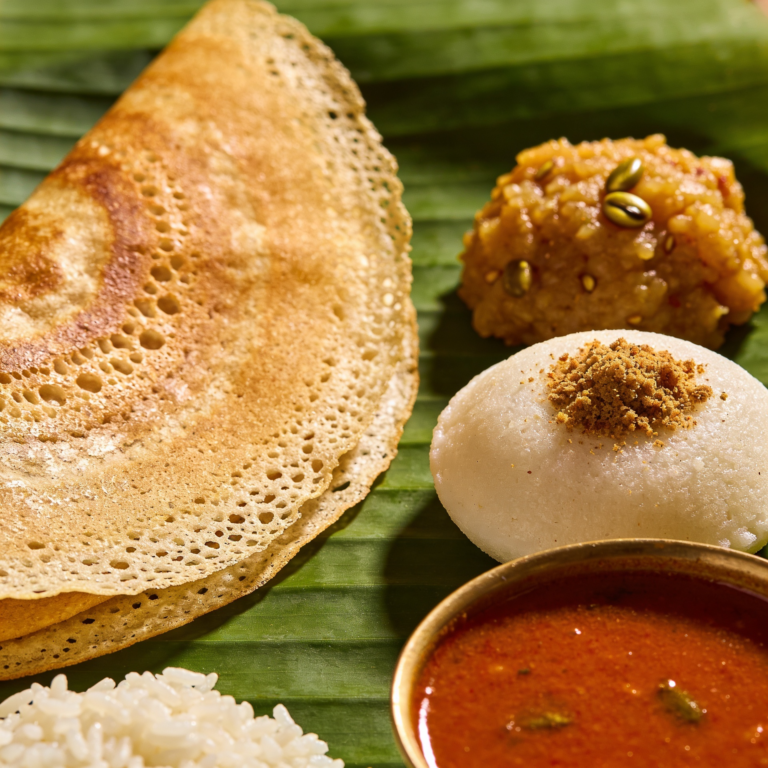
| Idli podi | Brings out roasted dal, chilli and sesame | Mix at the plate |
| Dosa | Improves edge crispness and aroma | Near the end |
| Ven pongal | Rounds pepper, cumin and dal | Tempering and finish |
| Ghee rice | Gives the main flavour | At the start with spices |
| Sambar rice | Softens tamarind and dal notes | After mixing |
| Rasam rice | Adds a light finish | At serving |
| Paruppu sadam | Makes dal rice comforting | On hot rice |
| Sakkarai pongal | Carries jaggery and cardamom | During cooking and finish |
| Adai | Balances lentil flavour | On the tawa |
| Kesari or halwa | Improves roast aroma | While roasting and finishing |
1. Idli podi with ghee
Idli podi and ghee is one of the clearest tests of ghee quality. The podi has roasted ingredients; the ghee carries those flavours. Mix it fresh on the plate instead of storing podi already mixed with ghee.
For soft idli, keep the mixture slightly loose. For dosa or uthappam, make it thicker so it spreads without running.
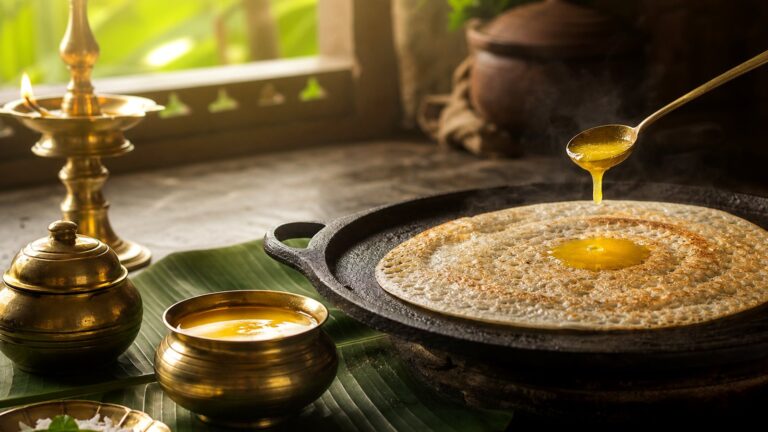
2. Ghee dosa
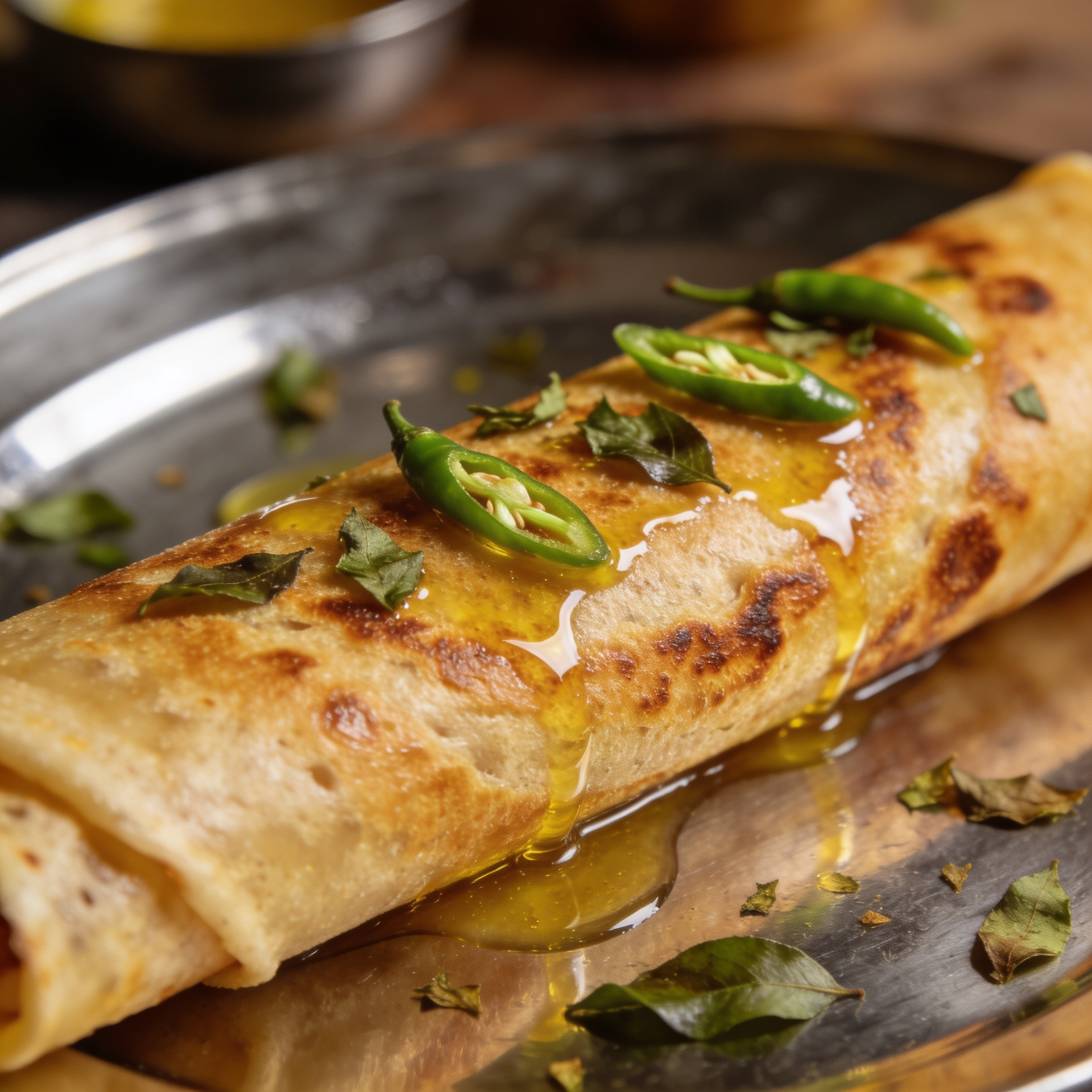
For ghee dosa, let the batter set before adding ghee. Add a small spoon around the edges, then let the dosa crisp. If you are making podi dosa, sprinkle podi first and finish with ghee so the spice aroma opens up.
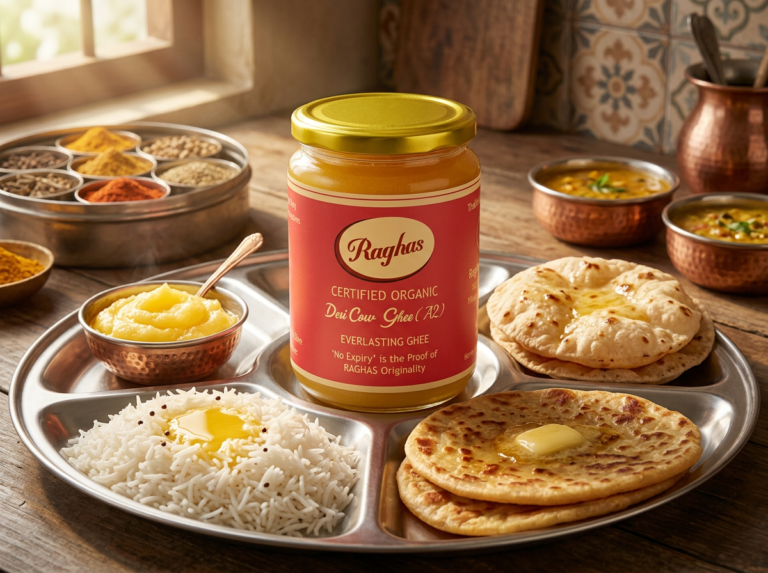
For daily dosa, Raghas Pure A2 Desi Cow Ghee is the best starting point because it is balanced enough for everyday use.
3. Ven pongal
Ven pongal needs ghee for its signature aroma. Pepper, cumin, ginger, curry leaves and cashew all bloom well in ghee. Use it in the tempering and add a small finishing spoon before serving.
If the pongal is for a festival meal or special breakfast, Full Moon Ghee gives a deeper finish.
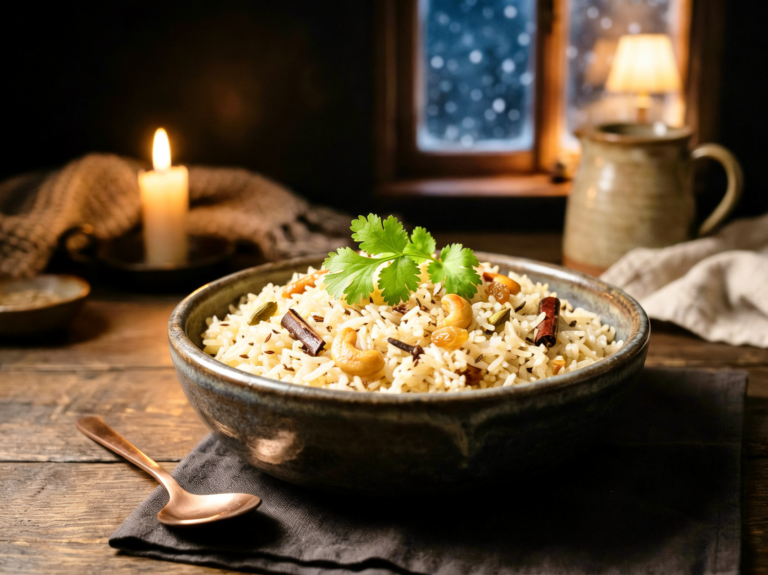
4. Ghee rice
Ghee rice is simple, so the ghee has nowhere to hide. Warm the ghee first, add whole spices if you use them, then add rice. The goal is fragrance, not oiliness.
For a South Indian version, keep the seasoning gentle: bay leaf, cinnamon, clove, cashew and a few raisins if your family likes a sweeter note.
5. Sambar rice
Sambar rice becomes more rounded with a small spoon of ghee after mixing. This is especially useful when the sambar has strong tamarind or chilli. The ghee softens the edges without changing the dish.
6. Rasam rice
Rasam rice needs less ghee than sambar rice. Add a little after the rice is mixed and hot. The ghee should support the pepper, cumin and tomato, not dominate them.
7. Paruppu sadam
Dal rice with ghee is a comfort food across many Tamil homes. Hot rice, cooked dal, salt and a spoon of ghee can make a complete, familiar plate. Add vegetable poriyal or kootu alongside it for balance.
8. Sakkarai pongal
Sakkarai pongal needs ghee at more than one stage. Use it while cooking the dal-rice mixture and again when roasting cashews. A small finishing spoon helps cardamom and jaggery feel complete.
9. Adai
Adai has a stronger lentil flavour than dosa. Ghee helps round that flavour and improves the outer texture. Use a little on the tawa after the adai sets.
10. Kesari, halwa and festive sweets
Ghee is important in many South Indian sweets because it helps roast rava, flour or dal properly. Add it gradually instead of all at once. This gives better control over texture and aroma.
How much ghee should you use?
There is no single amount that fits every home. The better rule is to use ghee where it is most noticeable. A small spoon on hot rice can be more satisfying than adding a large amount during cooking.
The ICMR-NIN Dietary Guidelines for Indians recommend moderation with oils and fats. That is a practical way to use ghee too: keep it as a flavour-rich part of the meal, not the whole meal.
Which Raghas product fits these recipes?
| Cooking need | Product | Best for |
|---|---|---|
| Daily rice, dosa and podi | Pure A2 Desi Cow Ghee | Everyday South Indian meals |
| Festival pongal and sweets | Full Moon Ghee | Special dishes where aroma leads |
| Family pantry stocking | Ghee and Butter Family Pack | Regular cooking households |
Buyer checks for cooking ghee
- Choose a ghee whose aroma suits your actual cooking.
- Check the FSSAI licence and label details on the pack.
- Prefer clean, transparent source information over vague claims.
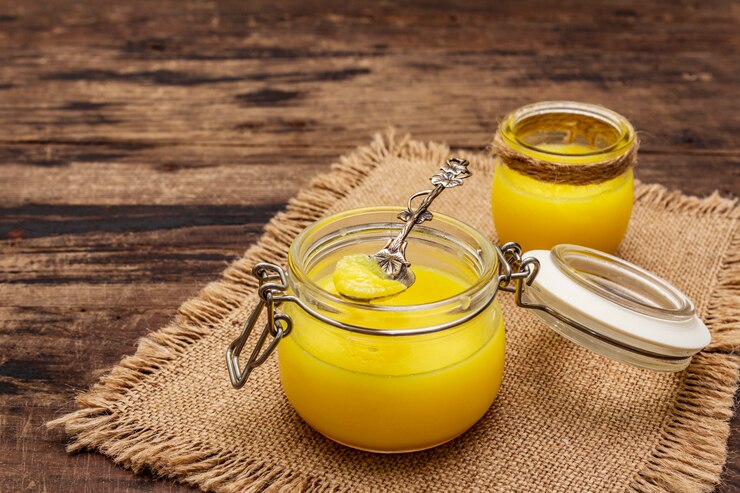
- Store the jar with a dry spoon to protect aroma and texture.
For food labels and packaged-food information, the FSSAI labelling regulations are a useful official reference. For a broader buying guide, read The A2 Desi Ghee: Complete Guide.
Final recommendation
If you cook South Indian food often, choose one everyday ghee that works across dosa, podi, rice and pongal. Then keep a deeper-aroma ghee for festival dishes, sweets and gifting. That gives you flexibility without overcomplicating the pantry.
You can browse the full Raghas Dairy product range to choose the ghee, butter and family pack that fits your kitchen.