Best Ghee for Dosa, Idli Podi, Pongal and Sambar Rice
The best ghee for dosa, idli podi, pongal and sambar is the one that adds a clean roasted aroma without making the food feel heavy. In South Indian cooking, ghee is usually a finishing note. That means the quality of the aroma matters as much as the quantity you use.
Quick answer
- For dosa, add ghee near the end so the edges turn crisp and aromatic.
- For idli podi, mix ghee fresh on the plate so the podi stays fragrant.
- For pongal and rice dishes, use a curd-churned desi cow ghee with a warm, nutty finish.
- For everyday cooking, use ghee in moderation and balance it with the rest of the meal.
Raghas Dairy ghee is made from milk sourced from Tamil Nadu native desi cows only, as a mixed native herd. The goal is not to market one single breed name. The goal is a clear South Indian ghee profile: aromatic, traditional, and suited to home food like dosa, idli podi, ven pongal, sambar rice and rasam rice.
What makes a ghee good for South Indian food?
South Indian dishes are often built on rice, dal, fermented batters, spices, curry leaves, pepper, cumin, coconut and tamarind. Ghee should support these flavours. It should not cover them.
| Dish | Best ghee quality | When to add it |
|---|---|---|
| Dosa | Clean aroma, good browning | After the dosa sets |
| Idli podi | Nutty aroma, smooth mouthfeel | At the plate |
| Ven pongal | Warm finish for pepper and cumin | In tempering and at serving |
| Sambar rice | Balanced aroma, not too sharp | Just before serving |
| Rasam rice | Light finish | After mixing hot rice |
Best ghee for dosa
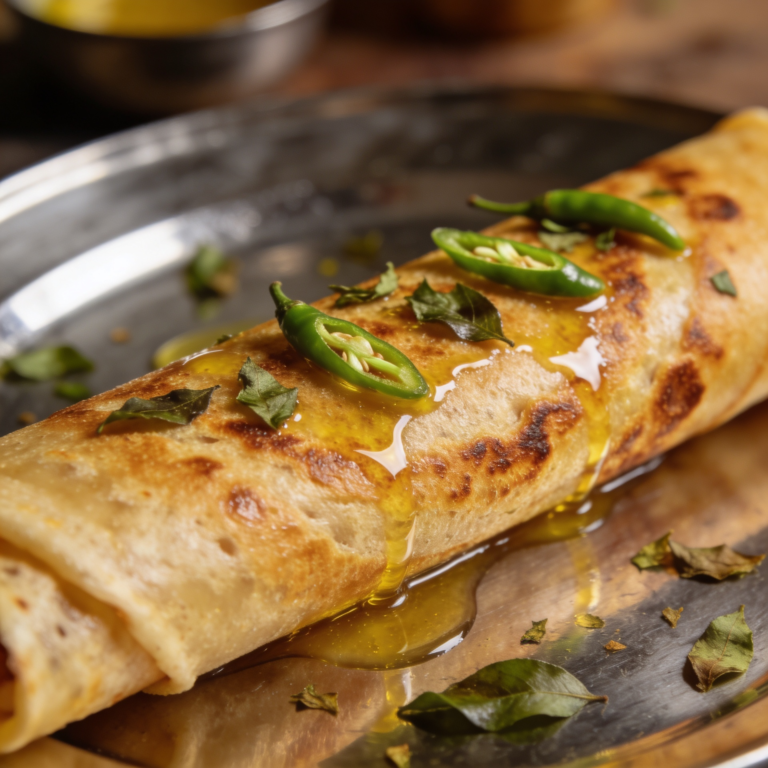
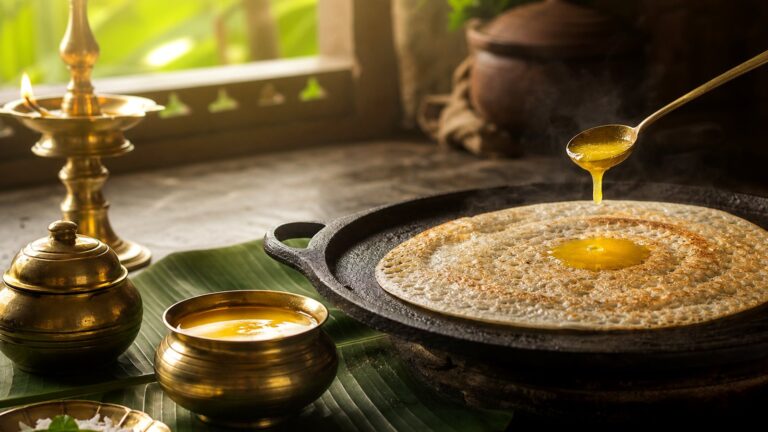
Dosa needs heat control. If ghee is added too early, the aroma can flatten before the dosa is ready. Let the batter spread and set first. Then add a small amount of ghee around the edges. This helps the rim crisp up while keeping the centre soft.
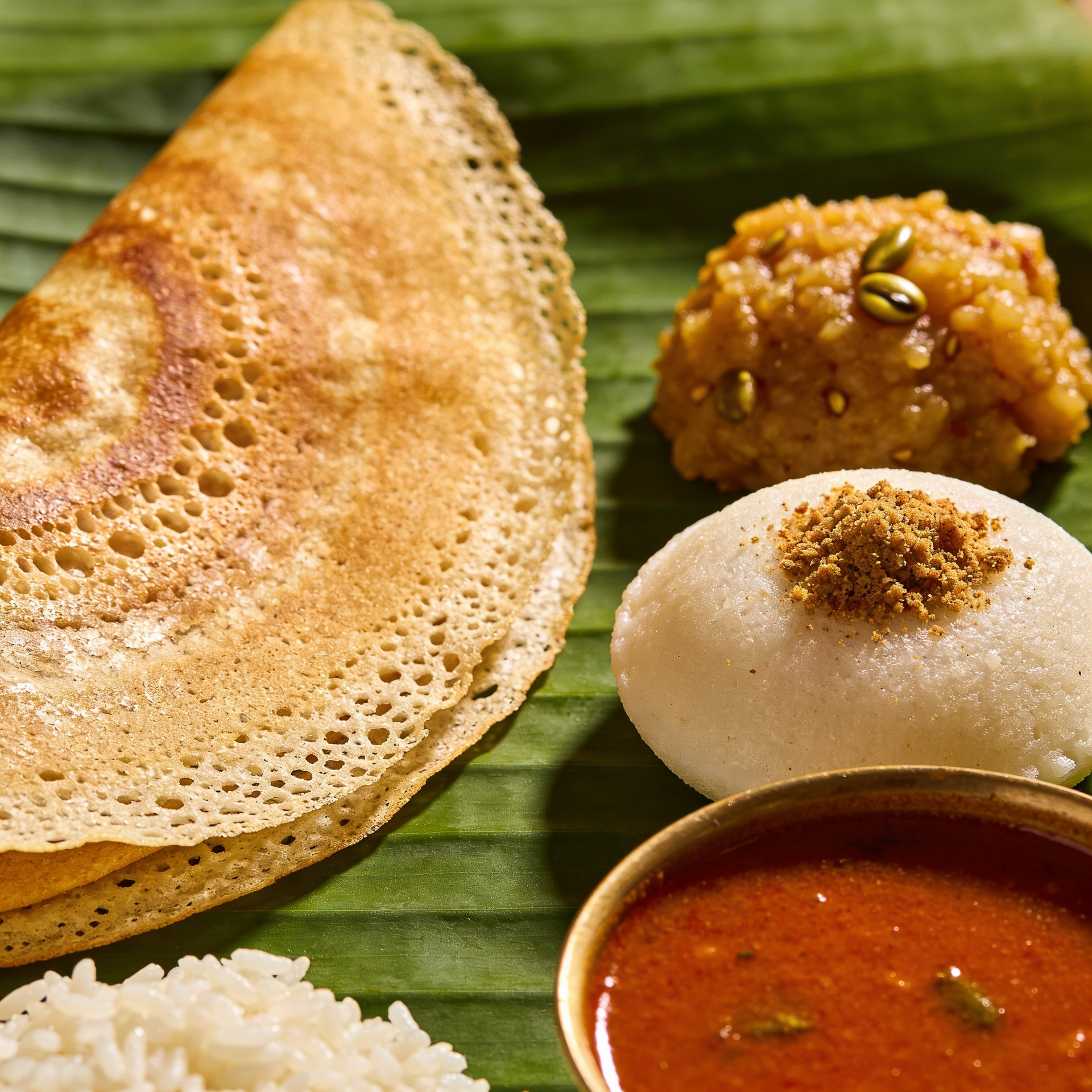
For plain dosa, a little ghee at the edges is enough. For podi dosa, spread the podi after the dosa has partly cooked, then finish with ghee so the spice mix opens up. For thick kal dosa, brush ghee lightly over the top after flipping.
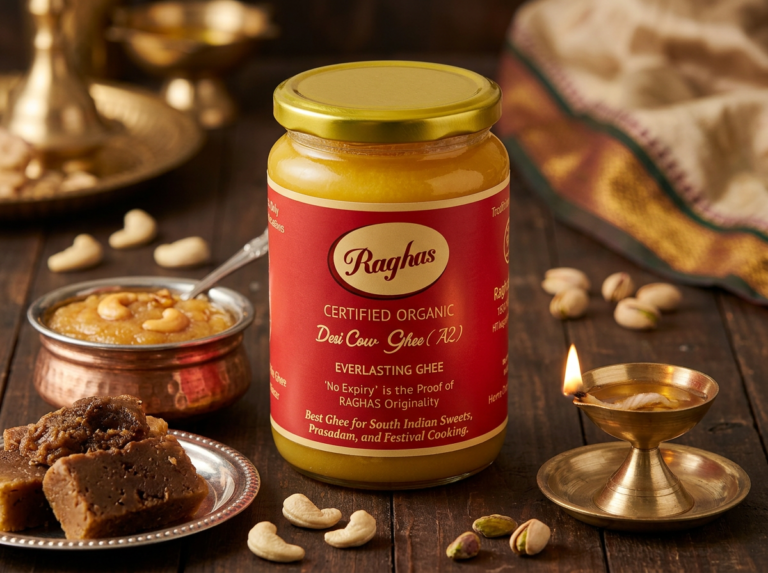
If you are choosing ghee mainly for dosa, look for aroma clarity. A good desi ghee should smell warm and cooked, not oily or flat. You can start with Pure A2 Desi Cow Ghee for everyday dosa, podi dosa and rice meals.
Best ghee for idli podi
Idli podi is one of the simplest ways to judge ghee. The podi already has roasted dal, chilli, sesame, curry leaves and salt. Ghee should bind those flavours and make them rounder.
Mix podi and ghee only when serving. If you mix it too early, the podi can become dull and heavy. The best texture is soft enough to coat idli, but not so thin that the podi turns oily.
For children and family meals, start with a small spoon and adjust by taste. The ICMR-NIN Dietary Guidelines for Indians advise using oils and fats in moderation, so the best habit is to use ghee for flavour rather than volume.
Best ghee for ven pongal
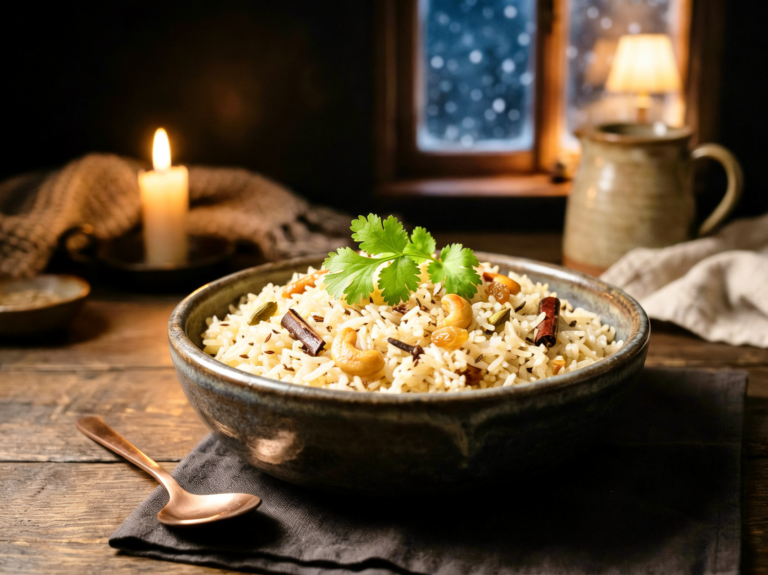
Ven pongal depends on pepper, cumin, ginger, curry leaves and dal. Ghee helps these flavours feel complete. Use it in two places: first in the tempering, and then as a small finishing spoon before serving.
The tempering should be aromatic, not burnt. Warm the ghee, add pepper and cumin, then ginger, curry leaves and cashew if you use it. Pour it over hot pongal and mix gently. A final spoon on top gives the dish the temple-style aroma many people look for.
For a deeper festive aroma, you may also consider Full Moon Ghee. It is best used where the ghee flavour is meant to be noticed.
Best ghee for sambar rice and rasam rice
Sambar rice and rasam rice need restraint. Too much ghee can cover the tamarind, dal and spice notes. A small spoon added after mixing hot rice is usually enough.
For sambar rice, ghee softens the sharpness of tamarind and helps the dal feel richer. For rasam rice, use less. Rasam is lighter and more peppery, so the ghee should sit in the background.
Buyer checks before choosing ghee
When buying ghee online, do not rely only on words like premium or traditional. Use practical checks:
- Milk source: choose desi cow milk if you want an A2 desi ghee profile.
- Method: curd-churned or bilona-style ghee usually has a more layered aroma than plain cream-based ghee.
- Label information: check FSSAI licence details, pack size, batch details and manufacturer information.
- Cooking fit: choose a ghee that works with the food you actually cook.
- Freshness and storage: keep the jar clean and dry after opening.
FSSAI explains food business licensing on its official licensing page, and its labelling rules describe the information buyers should expect on packaged foods. These are useful checks for any food product, not just ghee.
Which Raghas ghee should you choose?
| Use case | Suggested choice | Why |
|---|---|---|
| Daily dosa, idli podi and rice | Pure A2 Desi Cow Ghee | Balanced aroma for everyday meals |
| Festive pongal, sweets and gifting | Full Moon Ghee | Deeper, more noticeable finish |
| Family stocking | Ghee and Butter Family Pack | Useful for households that cook regularly |
Common questions
Can I use ghee directly on hot dosa tawa?
Yes, but add it after the dosa sets. This keeps the aroma brighter and helps the edges crisp without burning the ghee.
Should idli podi be mixed with hot or room-temperature ghee?
Slightly warm ghee works well. It mixes smoothly and carries the podi aroma better than very cold ghee.
Is A2 ghee necessary for South Indian food?
It is not necessary for every kitchen, but many buyers choose A2 desi cow ghee for its traditional source, aroma and cooking profile. The practical test is whether you enjoy the taste in the food you cook most often.
Final recommendation
If your main foods are dosa, idli podi, pongal, sambar rice and rasam rice, choose a ghee that is aromatic, clean and not overpowering. Use it at the end of cooking where possible. That is where good desi cow ghee makes the biggest difference.
Start with Raghas Pure A2 Desi Cow Ghee, or explore the full Raghas Dairy shop if you want ghee, butter and family packs together.